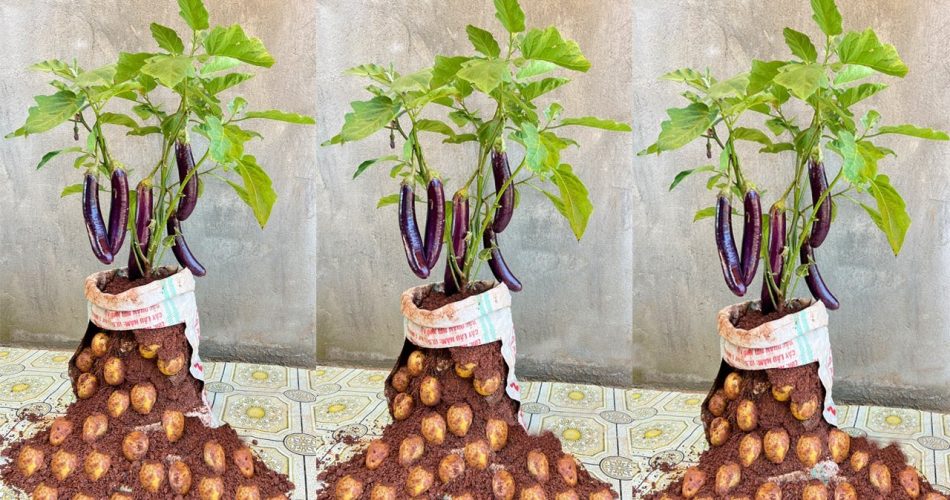
Growing potatoes and eggplants together can be a unique and rewarding experience. Here’s a beginner’s guide to cultivating these two vegetables in the same garden:
1. Choosing Varieties:
- Select potato and eggplant varieties that are suitable for your growing region and climate. Both vegetables come in various types, so choose those that meet your preferences and local conditions.
2. Soil Preparation:
- Potatoes and eggplants prefer well-draining soil rich in organic matter. Prepare the soil by adding compost or well-rotted manure to improve fertility and structure.
- Aim for a slightly acidic to neutral pH.
3. Planting:
- Potatoes can be grown from seed potatoes, which are small, whole potatoes, or from pieces of larger potatoes with “eyes” (sprouts). Plant potatoes in trenches or hilled rows.
- Eggplants are typically started from seeds indoors before the growing season. Transplant seedlings outdoors after the last frost when the soil has warmed up.
4. Sunlight:
- Both potatoes and eggplants thrive in full sunlight. Choose a sunny location for your garden.
5. Spacing:
- Provide adequate spacing for both potatoes and eggplants. Potatoes should be spaced about 12-15 inches apart in rows, while eggplants need about 18-24 inches between plants.
6. Watering:
- Both vegetables require consistent moisture. Keep the soil evenly moist but not waterlogged, especially during the growing season.
- Avoid overhead watering for potatoes to reduce the risk of fungal diseases.
7. Mulching:
- Apply a layer of organic mulch, such as straw or shredded leaves, around both potato and eggplant plants. Mulching helps conserve moisture, suppress weeds, and regulate soil temperature.
8. Fertilization:
- Prioritize soil fertility. Add a balanced fertilizer before planting, and consider side-dressing with additional fertilizer during the growing season, especially for potatoes.
- Avoid excessive nitrogen, as it may lead to excessive foliage growth at the expense of potato tuber development.
9. Support for Eggplants:
- While potatoes don’t require support, certain eggplant varieties benefit from staking or caging to prevent them from sprawling on the ground.
10. Pest and Disease Management:
- Keep an eye out for common pests like potato beetles for potatoes and aphids for eggplants. Use organic or chemical solutions as needed, and consider companion planting to deter pests.
- Rotate crops each year to minimize the risk of soil-borne diseases.
11. Harvesting:
- Harvest potatoes when the plants start to yellow and die back. Gently dig around the plants to avoid damaging the tubers.
- Harvest eggplants when they reach a mature size and have a glossy appearance.
By providing suitable growing conditions and attending to the specific needs of both potatoes and eggplants, you can enjoy a bountiful harvest of these delicious vegetables. Happy gardening!
Show Comments


