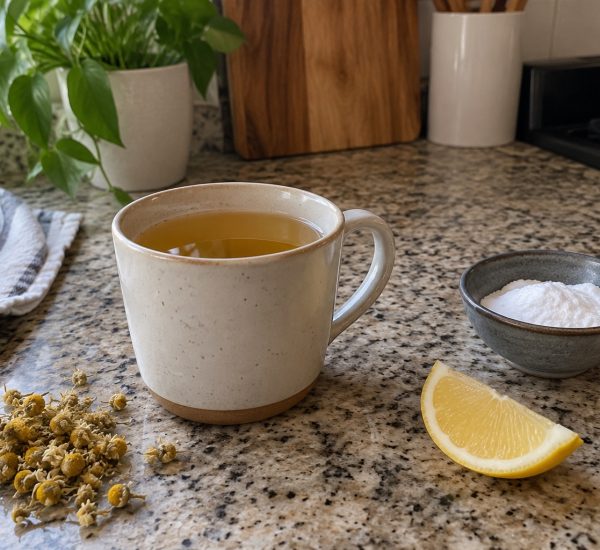
Five quiet minutes can improve your foot-care routine, but a harsh paste is not the shortcut that cracked heels need. Lemon, toothpaste, sugar, and baking soda can irritate already damaged skin. For ordinary dry heels, use those minutes to inspect your feet, wash gently, dry carefully, and apply a suitable moisturizer. Softness may improve before the skin fully recovers, so avoid treating a quick change in appearance as complete healing.
If you have diabetes, reduced sensation, poor circulation, deep cracks, or an open wound, ask a clinician or podiatrist about appropriate care. Do not scrub, peel, or cover damaged skin with an improvised mixture. Redness spreading around a crack, warmth, discharge, or worsening pain needs medical attention.
Set up a comfortable place
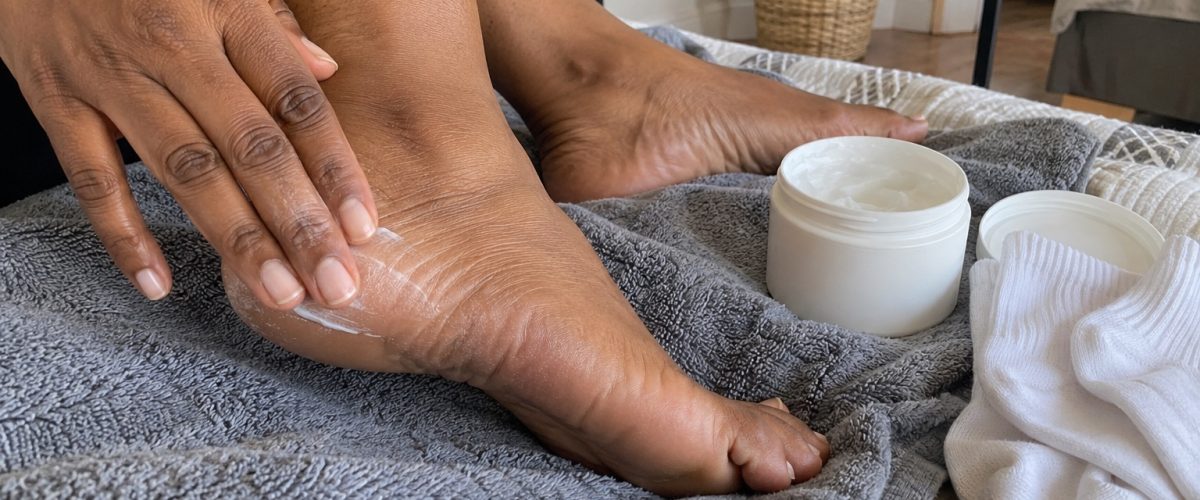
Sit in a stable chair where you can see your feet without balancing awkwardly. Place a clean towel beneath them and keep the floor dry. Have your moisturizer, a soft washcloth, and clean socks within reach so you do not have to walk with slippery feet.
Good light matters. A heel can look merely rough from a distance while a small fissure becomes visible up close. If reaching or seeing your feet is difficult, ask for help rather than twisting or standing on one leg to inspect them.
Make the first minute an inspection
Look at the heels, soles, sides of the feet, and between the toes. Notice cracks, redness, blisters, unusual scaling, or changes in the nails. The purpose is not to diagnose yourself but to avoid putting an ordinary cosmetic routine over a problem that needs different care.
Dryness and a fungal skin condition can both involve flaky skin, but they are not interchangeable. A moisturizer may make skin feel less tight without treating an infection. Persistent itching, peeling between the toes, or changes that keep returning deserve professional advice.
Wash gently and dry properly
Use comfortably warm water and a gentle cleanser when washing is needed. Avoid very hot water and prolonged soaking. You do not need to soften the skin until it becomes waterlogged, and you do not need gritty sugar or a toothbrush to make the wash count.
Pat dry rather than rubbing aggressively. Pay attention between the toes, where moisture can remain after the rest of the foot seems dry. Use a clean towel and do not share foot-care tools with other people.
Apply a product made for the job
Choose a fragrance-free moisturizer or an appropriate heel-care product and follow its directions. Apply it to the dry heel and surrounding intact skin. Keep the amount manageable: the goal is an even layer, not a thick slippery coating that spreads onto the floor.
Some heel products contain ingredients intended to soften thickened skin. Those products have specific instructions and may not suit broken or sensitive skin. Ask a pharmacist or clinician if you are unsure, especially when a medical condition affects your feet.
Do not add toothpaste, lemon, baking soda, or loose sugar to a finished cream. Combining kitchen ingredients with a formulated product changes it and may make it more irritating. A tingling or stinging feeling is a reason to stop and rinse, not evidence that the mixture is renewing the skin.
Finish without trapping irritation
- Let the product settle while you remain seated.
- If appropriate for the product and your skin, put on clean, comfortably fitting socks.
- Make sure socks are not tight around the ankle and do not bunch beneath the foot.
- Wipe any cream from the floor and wash your hands.
- Put the product away where it remains easy to find for the next routine.
Avoid plastic wraps or improvised sealed patches. They can trap moisture and keep an irritating ingredient against the skin. Do not sleep with a homemade acidic or abrasive paste covered beneath socks.
Protect the progress during the day
Choose shoes that fit well and do not repeatedly rub the heel. Check the inside for rough seams or worn areas. If your feet are uncomfortable after a particular pair of shoes, address the footwear rather than expecting evening cream to cancel the pressure.
Keep the routine consistent and observe the trend over several days. A simple note about discomfort, cracking, and the product used can help if you need advice. Avoid changing several products at once, since that makes it harder to identify what irritates your skin.
If the heels remain painful, cracks deepen, or the condition repeatedly returns, arrange an assessment. Removing thick skin with a blade or peeling it away by hand can cause injury. Five minutes of careful care should make the routine calmer, not more forceful.
Does this really work?
Gentle washing, appropriate moisturizing, and protection from repeated friction can help ordinary dry heels feel softer over time. A five-minute session does not guarantee deep hydration or complete renewal, and the toothpaste, lemon, sugar, and baking-soda paste can irritate damaged skin. Use a product intended for foot care, inspect the skin regularly, and seek tailored advice for deep cracks, infection signs, or medical conditions that affect the feet.