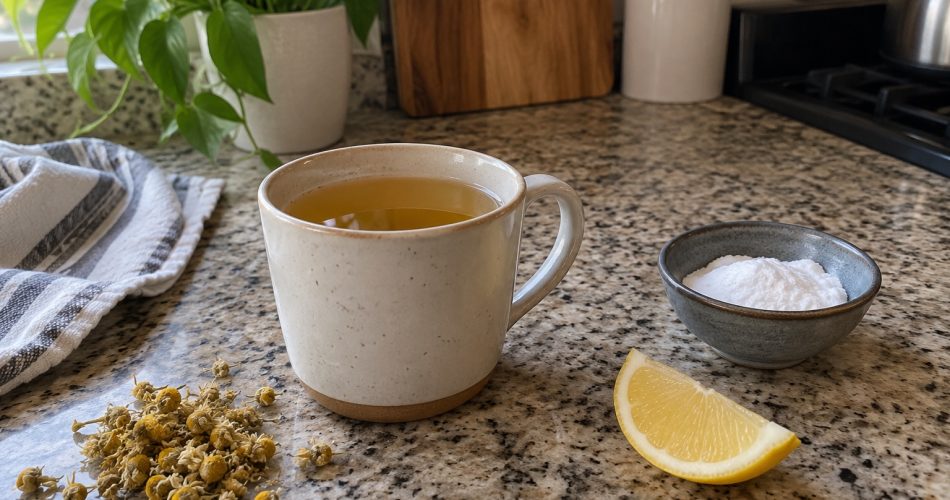
Feeling bloated does not mean your stomach needs a stronger fizz. Chamomile, lemon, and baking soda are not a proven combination for removing gas or its smell. Baking soda used as a homemade antacid can cause harmful effects, including rapid gas formation when misused. Leave it out of the drink and focus on a comfortable routine while you work out what is causing the symptoms.
An occasional cup of a suitable tea may be pleasant, but it should not become a treatment promise. Persistent bloating, unexplained weight loss, blood in the stool, or a marked change in symptoms needs medical advice. Sudden severe pain, vomiting blood, or serious breathing difficulty requires urgent help.
Notice the pattern without blaming every food
Write down when the bloating happens, how long it lasts, and whether it follows a particular meal or drink. Include bowel changes and any medicines you take. A brief record is more useful than removing several food groups after one uncomfortable evening.
Gas and bloating can have different causes, including swallowed air, constipation, food intolerance, and other digestive conditions. The smell alone does not identify the cause. Avoid assuming that a stronger-smelling episode proves toxins need to be flushed from the body.
Choose a drink that suits you
Plain water is a simple option. If you already enjoy chamomile tea and it is suitable for you, prepare a normal food-style serving according to the package directions. Use a clean mug and drinking water, then allow the tea to cool to a comfortable temperature.
Chamomile is not appropriate for everyone. People allergic to related plants such as ragweed may react to it, and interactions with some medicines have been reported. Ask a pharmacist or clinician before using it regularly if you take medicines, are pregnant or breastfeeding, or are considering it for a child.
A little lemon is optional for flavor, not required for an effect. Leave it out if acidic drinks trigger burning or reflux. Do not add baking soda to create bubbles or assume that fizzing means trapped intestinal gas is being removed.
Prepare a calm drink break
- Choose plain water or a tea that is appropriate for you.
- Prepare one ordinary serving rather than a concentrated jug.
- Check the temperature before drinking.
- Sit comfortably and sip at a relaxed pace.
- Stop if the drink worsens discomfort, and note that response.
There is no need to drink on an empty stomach, force a full mug, or repeat the preparation every hour. A comfortable beverage is not a dose schedule. If your clinician has limited your fluid intake, keep the drink within that plan.
Give meals a little more attention
Eat at a manageable pace and notice whether rushing, large portions, or fizzy drinks make you uncomfortable. Try changing one habit at a time. This makes it easier to see a pattern without turning every meal into an elaborate experiment.
Choose familiar food while you observe symptoms, but do not make the diet increasingly narrow without advice. If constipation is part of the problem, ask about an appropriate approach. Adding a large amount of fiber all at once is not necessarily comfortable or suitable for everyone.
Keep movement gentle and optional
If you feel well enough, ordinary gentle movement after a meal may be more comfortable than remaining folded over a tight waistband. Choose an activity that suits your health and stop if pain increases. Do not press hard on a swollen abdomen or perform forceful exercises to push gas out.
Comfort measures should remain comfortable. Severe pain, a rigid or rapidly swelling abdomen, or an inability to pass stool or gas with worsening symptoms is not a reason to intensify a home routine. Seek medical advice promptly.
Use pharmacy products as directed
If you want a medicine for gas or indigestion, ask a pharmacist which option fits your symptoms and other medicines. Read the label and use it only as directed. A household baking ingredient is not automatically interchangeable with a formulated product carrying specific dosing instructions.
Do not combine several remedies because the first one has not worked immediately. Keep a list of what you have taken and when. That information is useful if a pharmacist or clinician needs to assess the next step.
Know when to arrange an assessment
Regular or persistent bloating deserves attention, especially if it is new, worsening, or affecting appetite and daily life. Bring the symptom record and medication list. A clinician can decide whether dietary support, tests, or treatment for an underlying condition is needed.
Temporary improvement after a drink does not prove the cause has gone away. Keep the wider pattern in view rather than judging the entire problem by one comfortable hour.
Does this really work?
A suitable warm drink and a calmer meal routine may feel comforting, but chamomile, lemon, and baking soda have not been established as a reliable cure for bloating or smelly gas. Baking soda is not a safe ingredient to improvise as a home antacid. Choose drinks you tolerate, look for useful patterns, and seek advice for recurring symptoms or warning signs instead of relying on a fizzing mixture.


