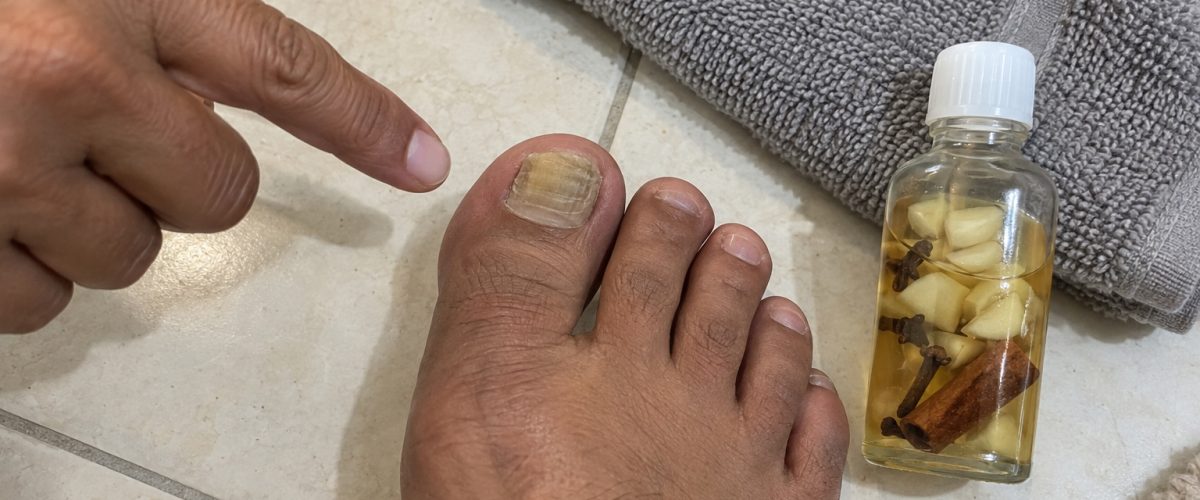
Stop ignoring the yellow, thickened nail that keeps catching on your socks. Giving your feet a consistent routine is a practical first step toward more comfortable nail care. Start with gentle cleaning, careful drying, and attention to the changes you can see.
Home care can support hygiene, but a homemade preparation has not been shown to clear a fungal nail infection. A garlic, peroxide, alcohol, clove, and cinnamon mixture should not replace diagnosis or appropriate treatment. You can still take useful action today without putting an irritating mixture on the toe.
Get your nail-care supplies ready
Choose a comfortable place with good lighting and gather a clean towel, a gentle cleanser, fresh socks, and your own nail-care tools. Keep everything within easy reach so you can inspect the nail without twisting awkwardly or rushing.
A routine does not need to be complicated to be useful. The aim is to leave the foot clean and dry, protect the surrounding skin, and make it easier to notice whether the condition is changing. If a clinician has prescribed treatment, keep its instructions with your supplies.
Use separate, personal nail tools rather than sharing clippers or files. Clean them according to their care instructions, and put them away dry. Do not use a damaged or blunt tool that makes you squeeze harder than necessary.
Wash gently and dry thoroughly
- Clean the foot. Use comfortably warm water and a gentle cleanser. Wash without digging under the nail or trying to scrub the yellow color away.
- Rinse away the cleanser. Pay attention to any residue around the toes, where it can be easy to miss.
- Dry with a clean towel. Pat the foot dry and carefully dry between the toes. Do not rub an irritated area aggressively.
- Inspect before trimming. Look for lifting, tenderness, cracks, swelling, or broken skin. Leave painful or difficult areas to a professional.
- Follow treatment directions. Apply a prescribed or recommended nail treatment exactly as instructed, rather than adding homemade ingredients to it.
A brief, repeatable routine is easier to maintain than a long soaking session. Choose a time when you can complete it comfortably, and keep the steps consistent. Missing an elaborate ritual should never become a reason to neglect basic care.
Protect the nail while it grows
Trim only what you can reach comfortably. Do not tear away a lifted section, peel off a thickened nail, or force clippers through a hard area. A painful nail or one that is difficult to cut is a good reason to arrange professional help.
Wear shoes that give your toes room and change socks when they become damp. Let footwear dry between uses where possible. Pressure and persistent moisture make foot care harder, so small changes to daily habits can make the routine more comfortable.
Keep a fresh pair of socks available if you spend long hours in shoes. After swimming or bathing, take the extra moment to dry your feet carefully. These are useful habits alongside treatment, even though they do not cure an infection by themselves.
Leave harsh ingredients off the toe
Chopped garlic, whole cloves, cinnamon sticks, peroxide, and alcohol may be familiar household ingredients, but familiarity does not make their combination suitable for skin. Raw garlic can cause irritation and burns. Alcohol and peroxide can also irritate skin, especially around a damaged nail.
Do not apply this mixture or hold it against the toe under a dressing. Resting the ingredients for three hours does not establish a safe concentration or turn them into an effective nail treatment. Avoid interpreting tingling, stinging, or peeling as signs that fungus is being removed.
If anything you apply causes burning, redness, or blistering, stop using it and seek advice about the reaction. Adding another ingredient to neutralize the discomfort can make the situation more complicated.
Find out what is changing the nail
Fungus is one possible explanation for a thickened, discolored nail, but injury and other nail conditions can look similar. A clinician can examine the nail and may take a small sample to help identify the cause. That is more useful than choosing treatment from color alone.
For a confirmed fungal infection, treatment may involve medicine applied to the nail or an oral antifungal. The suitable option depends on the nail, the extent of the problem, and your health. A product for athlete’s foot is not automatically a treatment for nail fungus.
Take an occasional photograph in similar lighting so you have a clear record to discuss. Toenails grow slowly, and an already damaged section does not turn into a healthy new nail within days. Follow the treatment course rather than switching methods whenever the appearance changes slightly.
Seek advice promptly for pain, discharge, swelling, spreading redness, or worsening damage. If you have diabetes, poor circulation, or reduced immunity, get advice early about a changed nail or broken skin.
Does this really work?
A consistent home routine helps you keep feet clean, manage moisture, protect the nail, and follow treatment properly. The garlic, peroxide, alcohol, clove, and cinnamon preparation has not been established as a safe, effective fungus cure, and a three-hour resting period does not change that. Clearing an infection requires an appropriate treatment, while a healthier-looking nail takes time to grow. Use home care to support that process, with realistic expectations and attention to any new symptoms.