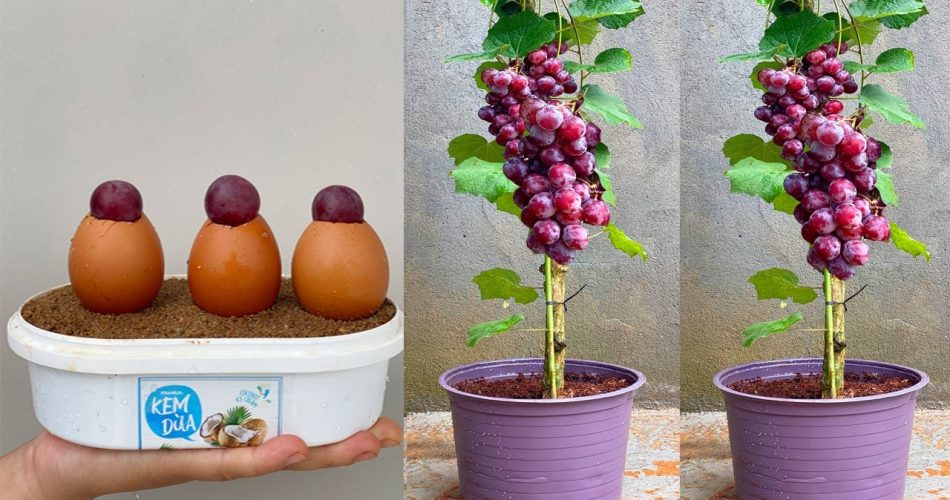
Growing grapes in eggshells is not a common or practical method due to the small size of eggshells and the limited space they provide for root development. Grapes are typically grown in larger containers or directly in the ground. However, if you’re interested in growing grapes for your family, here’s a general guide for beginners using more conventional methods:
Materials Needed:
- Grapevines: Purchase grapevine cuttings or potted grape plants from a reputable nursery. Choose a variety suitable for your climate.
- Containers or Garden Bed: Select large containers or prepare a well-draining garden bed with good sunlight exposure.
- Soil: Use well-draining soil with good fertility. Amend the soil with compost for added nutrients.
- Support Structures: Grapevines need support as they grow. Install trellises, stakes, or an arbor for the vines to climb.
- Mulch: Apply organic mulch around the grape plants to retain soil moisture and suppress weeds.
- Fertilizer: Use a balanced fertilizer formulated for fruit-bearing plants. Follow package instructions for application rates.
Steps:
- Planting:
- If using containers, fill them with the prepared soil. If planting in a garden bed, ensure the soil is well-prepared.
- Plant grapevines in early spring or fall, allowing enough space between plants to accommodate their mature size.
- Support Structures:
- Install trellises, stakes, or an arbor for the grapevines to climb. Ensure the support structures are sturdy enough to bear the weight of the vines and grapes.
- Watering:
- Water the grapevines regularly, especially during dry periods. Keep the soil consistently moist but not waterlogged.
- Fertilizing:
- Fertilize the grapevines in early spring with a balanced fertilizer. Follow up with additional applications according to the package instructions throughout the growing season.
- Pruning:
- Prune grapevines in late winter or early spring to encourage healthy growth and fruit production. Remove dead or diseased wood and shape the vines as needed.
- Training Vines:
- Train the grapevines to climb the support structures. Prune lateral shoots to encourage the development of the main vine.
- Mulching:
- Apply a layer of organic mulch around the grape plants to retain moisture, regulate soil temperature, and suppress weeds.
- Harvesting:
- Grapes are typically ready for harvest in late summer or early fall, depending on the grape variety. Harvest when the grapes are fully colored and slightly soft to the touch.
- Curing and Storing:
- Rinse the harvested grapes and allow them to air-dry. Store grapes in the refrigerator for short-term use or consider preserving them as jams or raisins.
- Winter Care:
- In colder climates, protect grapevines from winter frost by covering them with burlap or providing additional insulation.
By following these steps, you can successfully grow grapes for your family. Remember to choose grape varieties that are well-suited to your climate and provide the necessary care throughout the growing season.
Show Comments


