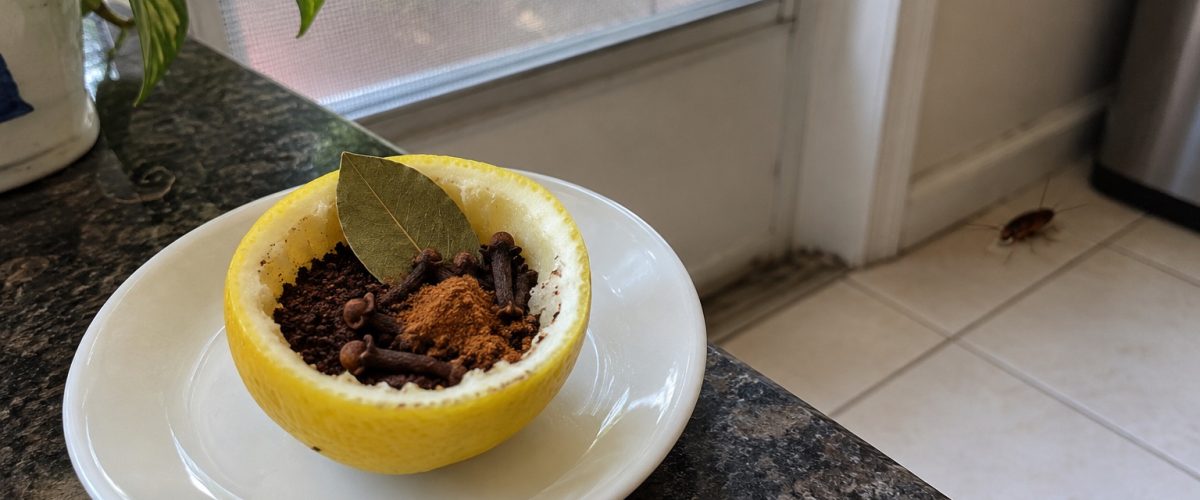
A lemon shell can become a surprisingly simple home fragrance dish. Add familiar dry spices, place it on a saucer, and you have a small countertop project that takes little equipment. Keep it unlit: burning coffee, cinnamon, and leaves indoors adds smoke and fire risk without establishing reliable pest control.
If cockroaches or mosquitoes are the reason you are looking for a household trick, give the fragrance dish a modest role. It can provide a scent you enjoy, while cleaning, screens, and attention to water sources do the practical work of making the space less welcoming to insects.
Prepare the citrus shell
Wash a lemon and cut it across the middle on a stable cutting board. Use a spoon to remove the pulp from one half without cutting through the peel. Keep any usable juice for ordinary food preparation before the shell becomes a household decoration.
Set the empty half on a small washable saucer. If it rolls or tips, choose a different dish that supports it securely rather than trying to balance it near an edge. Keep the preparation away from food-contact utensils once it is in use.
Add the dry ingredients
The fragrance combination uses ground cinnamon, ground coffee, whole cloves, and bay leaves. Two tablespoons of cinnamon and three tablespoons of coffee are more than some lemon halves can hold, so use only enough to fit loosely. A few whole cloves and a small bay leaf can sit on top.
Mix the powders gently in a separate bowl before spooning in a little at a time. Avoid puffing dust into the air or packing the shell tightly. There is no need to add alcohol, cooking oil, or another liquid to intensify the scent.
Place the saucer somewhere stable, dry, and inaccessible to children and animals. Do not put the dish inside food cupboards or anywhere it could be mistaken for food. A fresh peel is perishable, so this is a short-lived decoration rather than a permanent room freshener.
Keep the setup unlit
Do not ignite the coffee or dry leaves. An improvised citrus burner has no controlled fuel supply, stable holder, or tested burn characteristics. A strong smell or visible smoke is not evidence that insects are being eliminated.
Indoor smoke can make a room uncomfortable, particularly for someone with sensitive airways. If the unlit fragrance itself bothers anyone, remove it and ventilate the room. You do not need to tolerate irritation to make a household project worthwhile.
Check the lemon frequently. Discard it if it becomes soft, wet, moldy, or unpleasant-smelling, and wash the saucer. Do not add fresh spices on top of a deteriorating shell or leave it hidden behind an appliance.
Deal with cockroaches at their source
Start with the places where food and water collect: the bin rim, sink surround, accessible appliance edges, and the bottom of cupboards. Remove ordinary crumbs and sticky spills, dry standing water, and put open foods into securely closed containers.
Use a torch to check accessible gaps without dismantling equipment. Note where you see activity rather than placing scented items randomly throughout the kitchen. A monitoring trap can help you identify patterns when used according to its instructions.
Persistent activity may need a suitable labeled cockroach bait or professional assessment. Do not add homemade spices to a commercial bait or spray cleaners over it. The treatment needs to be used as directed, with children and animals kept away from the application area.
Make the room harder for mosquitoes to enter
Check window and door screens for gaps, and repair them where practical. A screen that fits poorly around the edge leaves an opening even if the mesh itself is intact. Close unscreened doors promptly when mosquitoes are active nearby.
Look for containers that hold standing water around the home, such as plant saucers, buckets, and neglected outdoor items. Empty or manage them as appropriate. A lemon on the counter does not address a nearby breeding site.
For personal bite protection, use a repellent approved for that purpose and follow its label, including any age restrictions. Household spice preparations are not substitutes for suitable protection in areas where mosquitoes transmit disease.
Keep the routine easy to repeat
Use your next kitchen cleanup as a short inspection: close food containers, empty the bin if needed, wipe spills, and check that the sink area is dry. Outside, include water-holding containers in the same routine instead of waiting until insects become noticeable.
Keep a simple note of repeated sightings and where they happen. A change over several checks is more informative than a single quiet evening. If the problem continues, focus on the entry point or breeding source rather than making the fragrance stronger.
Does this really work?
An unlit lemon filled with coffee and spices may add a temporary aroma, but it does not establish immediate control of cockroaches or mosquitoes. Burning it is not a dependable or appropriate indoor pest treatment. The practical improvements come from removing food and water, maintaining screens, identifying the insects, and using suitable control when needed. Enjoy the citrus dish as a small fragrance project if it suits your household, while keeping pest management a separate, purposeful routine.


