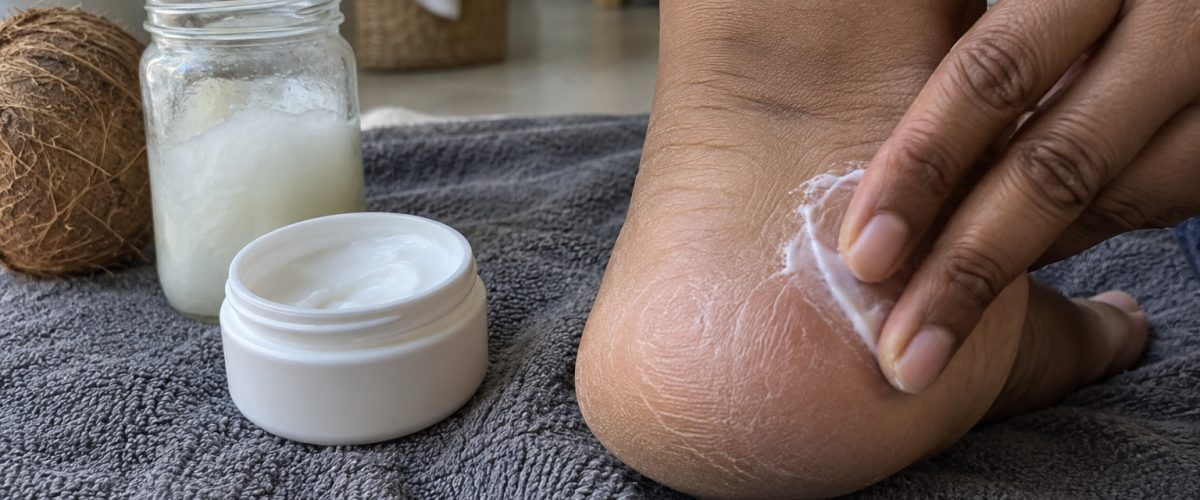
Rough feet can make clean socks feel scratchy and an ordinary evening feel less comfortable. A simple moisturizing routine gives that dry skin regular attention without a drawer full of products. Start with a plain body cream that already suits your skin and use it carefully on the areas that need it.
You can keep the routine simple with the cream alone. If coconut oil agrees with your skin, a tiny amount can be used separately on intact dry areas. Leave baking soda out: adding an alkaline powder does not turn a moisturizer into a better treatment for cracked heels.
Choose a suitable base cream
Look for a plain, fragrance-free cream intended for ordinary skin moisturizing. Read the directions and avoid using an unfamiliar medicated product as the base of a homemade mixture. A cream that stings your hands is not a promising choice for a sensitive heel.
Keep the original container and ingredient label. Knowing exactly what you used is helpful if irritation develops. Do not combine half-empty products from several jars or add oil to the entire container; changing a finished formula can affect its texture and storage characteristics.
Prepare a small amount for one use
Wash your hands and place a small dollop of cream on a clean palm. Start with enough for a thin layer over the dry heel rather than a large handful. If you want additional oil and already tolerate it, use a tiny amount afterward instead of mixing a stored batch.
Keep any coconut oil in its own clean container and use a clean utensil. It may be solid or liquid depending on room temperature; that change alone does not mean you need to heat it. Never apply hot oil to the skin.
Try an unfamiliar product on a small intact area first and watch for a reaction. A small test cannot guarantee that a larger application will suit you, but discomfort is a good reason not to continue.
Check the skin before applying cream
This routine is for mild dryness on intact skin. Bleeding cracks, open sores, spreading redness, drainage, or significant pain need a different approach. Do not pack cream, powder, or kitchen ingredients into an open fissure and cover it tightly.
If you have diabetes, poor circulation, reduced sensation, or another condition affecting foot health, ask a clinician or podiatrist which products and routines are appropriate. Looking after the skin early is useful; aggressive home treatment can make a small problem harder to manage.
Use the cream step by step
- Wash gently. Use comfortably warm water and a mild cleanser, keeping the wash brief rather than soaking for a long time.
- Blot the skin dry. Use a clean towel and take care between the toes. Avoid rubbing flaky areas until they feel raw.
- Apply a thin layer. Smooth the cream over the heel and other intact dry patches, following its directions.
- Massage lightly. Use comfortable pressure. The goal is to spread the moisturizer, not force it deeply into the skin or remove callus.
- Keep the toes comfortable. Avoid leaving a thick, wet coating between them, where moisture can collect.
- Prevent slips. Stay seated until you can stand safely. Remove excess product from the sole and clean any oily marks on the floor.
A convenient time is after an evening wash, when you are not about to rush across a tiled room. Clean socks can help keep moisturizer from transferring to bedding, provided they are comfortable and not tight.
Let consistency do the work
A softer feeling after application can be encouraging, but it does not mean thickened or cracked skin has fully recovered. Use the cream regularly according to its directions and watch how your feet feel over time.
Keep the product somewhere that reminds you to use it, away from heat and contamination. A routine you can maintain is more useful than an elaborate mixture prepared once and forgotten. Replace a product that has changed unusually in smell or appearance.
Do not combine moisturizing with forceful scrubbing, cutting away skin, or peeling loose edges. If callus is uncomfortable or difficult to manage, ask for professional advice instead of trying to remove everything in one session.
Make daytime care easier
Choose shoes that fit properly and do not repeatedly rub the heel. Notice whether a particular pair leaves the skin more sore or dry. Change damp socks and give footwear a chance to dry before wearing it again.
Check the feet regularly in good light. If the dryness persists, spreads, becomes painful, or is accompanied by itching or other changes, arrange an assessment. Not every rough patch is simply a shortage of moisturizer.
Does this really work?
A suitable cream can help dry skin retain moisture and feel more comfortable, especially when used consistently. A little tolerated oil may add a smoother surface feel, but neither approach promises to end dryness instantly or remove all dead skin. Baking soda is unnecessary and may irritate. For mild roughness, gentle washing, regular moisturizing, and appropriate footwear are practical foundations; painful cracks or persistent changes need advice rather than a stronger homemade formula.


