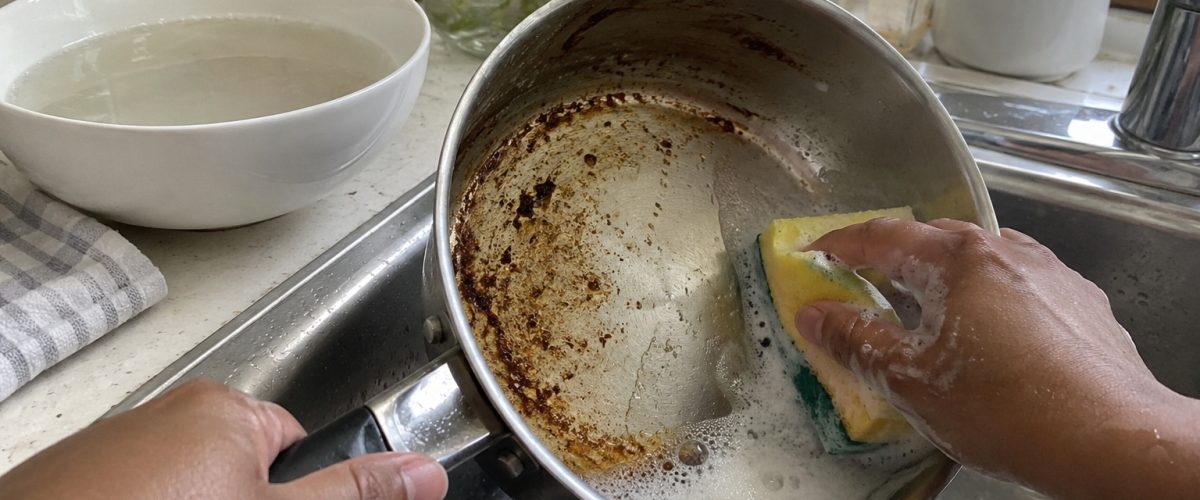
That greasy brown layer on your favorite pot does not have to win the next round at the sink. Before you reach for a harsher scrubber, give the residue a chance to soften. Warm water, a suitable dishwashing detergent, and patient wiping can make a dramatic difference to everyday grease without turning the pan into a scratched cleaning experiment.
The important distinction is between removing dirt and changing the metal itself. A clean pan may still have heat marks, scratches, or age-related dullness. Those marks do not all respond to the same treatment, and an aluminum pot cannot be guaranteed a mirror finish simply by adding more ingredients.
Identify the surface before you begin
Look at the maker’s care guidance and identify whether the cooking surface is stainless steel, aluminum, enamel, seasoned cast iron, or a nonstick coating. The outside and inside may require different care. A pad that is acceptable on one exposed metal surface may damage a coated rim or polished exterior.
Let the cookware cool before washing. Plunging a very hot pan into cold water can damage it, and hot handles can burn your hands long after the food has been served. Remove loose food with a utensil that will not scratch the surface, then dispose of cooled excess grease in the rubbish rather than down the drain.
Keep the mixture simple
For cookware that permits ordinary handwashing, gather warm water, dishwashing detergent, a soft sponge, and a nonabrasive cloth. Use the detergent in the amount recommended for washing dishes. You do not need a cupful to clean one pan; a concentrated bath can create unnecessary foam and extra rinsing.
Charcoal and cola are not essential degreasers. Ground charcoal can introduce gritty particles and dark residue, while cola brings sugar and acidity into the wash. Straining charcoal does not make every remaining particle gentle enough for every finish. Keep those ingredients out of nonstick cookware and follow the pan’s approved cleaning method.
Loosen the grease in stages
- Add warm soapy water to a pan that allows soaking. Keep wooden handles, electrical components, or other water-sensitive parts out of the water.
- Allow the food residue to soften for the interval permitted by the care instructions. While you wait, wash the lid and clear a drying space.
- Use the soft side of a sponge to lift loosened grease. Work around the pan rather than grinding one stubborn spot with heavy pressure.
- Empty the dirty water and inspect the surface in ordinary light. Repeat a gentle pass if residue remains.
- Rinse thoroughly and dry with a clean cloth so you can see the actual finish without soap film or water droplets.
Seasoned cast iron needs its own care routine and should not sit soaking in the sink. Nonstick cookware also calls for gentle tools. Treat the staged soak as a method for compatible pans, not a universal instruction for every item in the cupboard.
Deal with the outside separately
The underside of a pot often has a different problem from the cooking surface. Burned grease can form around the base, while the handle attachments collect a thinner sticky film. Support the cooled pot securely and clean these areas with a cloth or a brush approved for the finish.
Do not scrape around rivets with a knife. Sharp improvised tools can scratch the metal and slip toward your hand. If a residue does not move after gentle cleaning, check whether the manufacturer recommends a specific cookware cleaner. Use that product by itself, following its instructions and compatibility limits.
Know when the mark is not grease
A rainbow cast on stainless steel, a pale mineral deposit, and a blackened food crust are different things. Repeating the same aggressive scrub on all three can waste effort. Examine the clean, dry pan before deciding that it needs another treatment.
Deep pitting, flaking coatings, loose handles, or a warped base are maintenance issues rather than ordinary washing problems. Cleaning cannot rebuild a missing coating or tighten a damaged attachment. Check whether the pan needs professional advice, a replacement part, or retirement from cooking use.
Make the next wash easier
After cooking, remove food once serving is finished and let the pan cool safely. Avoid leaving sticky sauces to dry overnight when a timely wash is possible. Use cooking temperatures appropriate to the cookware, and keep utensils compatible with its finish.
Store pans dry. If you stack them, use a suitable soft separator to prevent the base of one pan from scraping the next. A little care between uses often preserves the appearance better than an occasional harsh attempt to polish away months of buildup.
Does this really work?
Warm water, appropriate detergent, gentle contact time, and thorough rinsing can remove ordinary grease and improve the appearance of compatible pots. They cannot guarantee that every burned stain disappears or that old aluminum becomes mirror-polished. Adding charcoal and cola does not establish a special cleaning advantage and can complicate surface care. Match the method to the cookware, stop before damaging the finish, and judge success by a clean, usable pan rather than an impossible promise of looking brand new.


