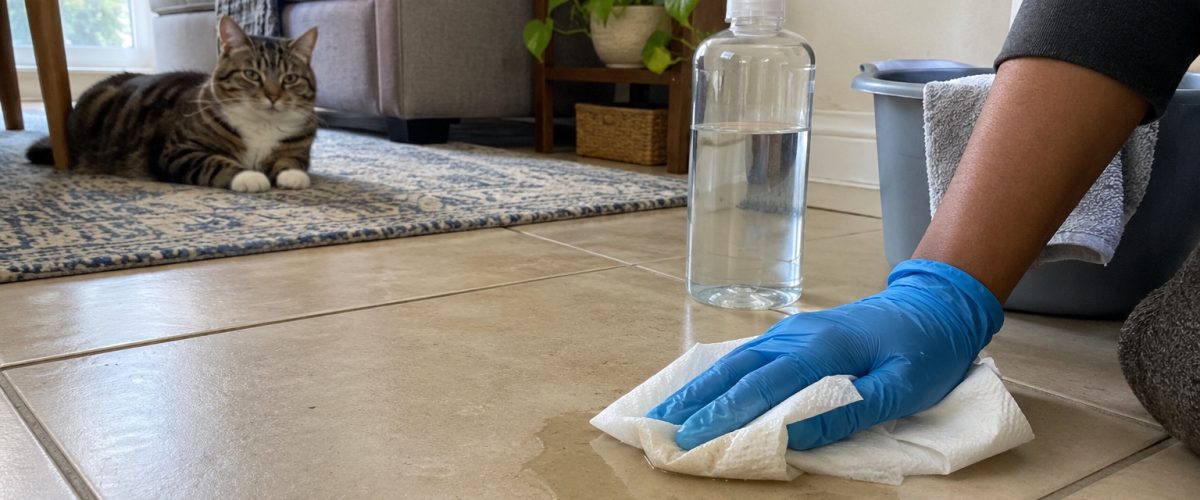
If your pet keeps returning to the same indoor spot, covering the smell with a stronger fragrance can leave the real problem untouched. The useful routine is to remove the urine residue, protect the surface, and find out why the accidents are happening. A carefully chosen cleaner and a consistent household plan can do much more than a bottle filled with competing scents.
Fabric softener, alcohol, cloves, vinegar, soap, and cinnamon do not form a reliable universal pet deterrent. Do not spray that combination onto an animal, its bedding, or a floor it may lick. For indoor accidents, build your cleanup around a product intended for pet urine and approved for the material you are cleaning.
Check the pet before blaming the carpet
A new accident can be a practical problem, a sign of stress, or a health issue. Notice whether your pet is drinking differently, asking to go out more often, avoiding the litter box, or appearing uncomfortable. A previously reliable animal that suddenly starts having accidents deserves a veterinary check.
A cat repeatedly straining to urinate while producing little or no urine needs immediate veterinary attention. Do not spend the evening testing deterrent sprays while waiting for this to resolve. Once urgent health concerns are addressed, cleaning and changes to the home can be considered alongside the veterinary advice.
Gather the right cleanup supplies
Prepare gloves, absorbent paper towels or washable cloths, a rubbish bag, and an enzymatic cleaner labeled for pet urine and the affected surface. Read its directions before opening the bottle. Some products need a particular contact time, and others should not be used on certain fabrics or finishes.
Keep pets and children away from the wet cleaning area until the label says it is suitable to return. Store cleaners in their original containers. An unlabeled homemade bottle makes accidental misuse easier, particularly when several people share responsibility for cleaning and feeding the animals.
Blot fresh accidents before rubbing
Absorb fresh liquid with gentle pressure. Work from the outside toward the center on fabric so you do not spread the wet patch. Replace saturated towels promptly. Vigorous scrubbing can push liquid deeper into carpet or upholstery and damage the fibers without removing the underlying residue.
On a hard floor, check the joints and edges as well as the visible puddle. Urine may have reached an unsealed seam or the space beneath a skirting board. Avoid flooding the area to compensate, since excessive water can create another problem in wood, laminate, or the material underneath.
Give the cleaner time to work
- Test the product on an inconspicuous area and follow any colorfastness instructions.
- Apply it to the affected area as directed, including the recommended coverage. A light perfume mist may not reach the residue.
- Allow the specified contact time. Do not add vinegar, disinfectant, fabric softener, or another cleaner to the treatment.
- Blot, rinse, extract, or air-dry only as the label and material instructions require.
- Check the area again once it is fully dry. Repeat only if permitted, or seek professional cleaning for contamination beneath the surface.
Do not judge the result while a strong cleaning fragrance is still present. A dry assessment is more useful. If an old spot repeatedly smells again, the carpet backing, underlay, or another concealed layer may need attention rather than another surface spray.
Reduce the reason to return
For dogs, offer regular toilet opportunities and reward the behavior you want promptly. Pay attention to predictable times such as waking, eating, and returning from a long rest. Punishment after an accident does not explain where the animal should go and can add stress to the situation.
For cats, examine the litter box arrangement. Cleanliness, access, location, and conflict with other animals can all matter. A box beside a noisy machine or in a place where another pet blocks the exit may be difficult to use comfortably. Make changes gradually and seek tailored advice for persistent problems.
Keep a short household record
Write down the time, location, and circumstances of repeated accidents. Include changes such as visitors, building work, a new pet, or longer periods alone. This information can help a veterinarian or qualified behavior professional identify a pattern that a stronger-smelling cleaner would never resolve.
Wash contaminated washable items according to their care labels and keep the cleaned area accessible for inspection. Avoid piling rugs or furniture over a damp patch. Once the cause is addressed, a steady routine is easier to maintain than repeatedly experimenting with homemade repellents.
Does this really work?
Thorough cleaning with a suitable pet-urine product can reduce leftover odor, while veterinary assessment and practical changes can address repeat accidents. No household spray guarantees that marking stops forever, and a fabric-softener mixture is not a dependable treatment for pets or household pests. The strongest approach combines appropriate cleanup with attention to the animal’s health, comfort, access, and daily routine.


