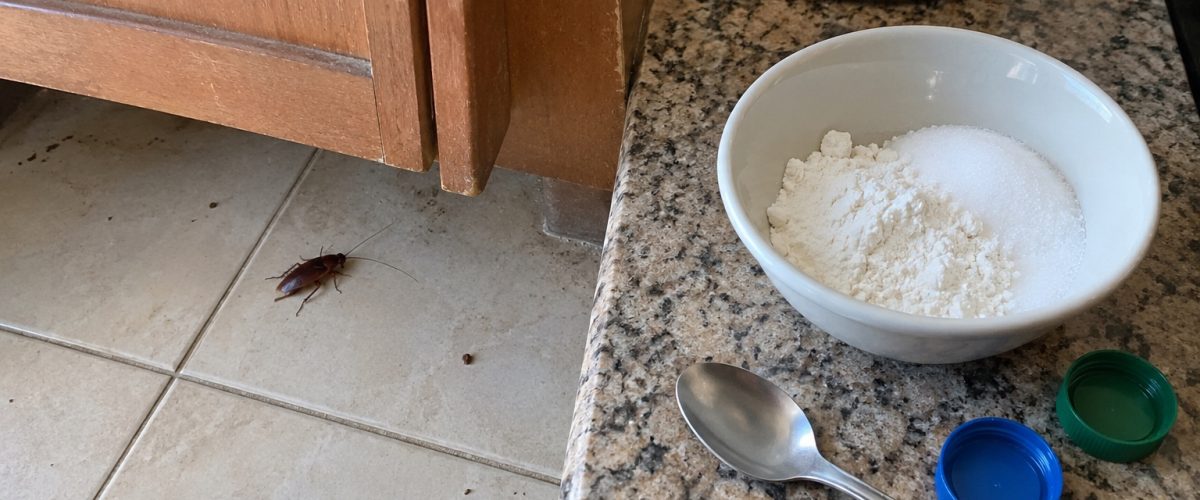
One cockroach vanishing beneath the refrigerator can make every dark kitchen corner feel suspicious. The best response is to turn that sighting into useful information. Find the hiding places, remove competing food and water, and place appropriate control products where the insects actually travel. Precision matters more than scattering powder throughout the room.
Flour, sugar, and baking soda make an inexpensive kitchen mixture, but they are not a dependable substitute for a tested cockroach bait. There is no reliable reason to promise that insects will carry this combination home and eliminate an entire colony. A household plan should not depend on that assumption while the infestation continues.
Read the corners before treating them
Use a flashlight to inspect accessible gaps beside the refrigerator, around cupboard hinges, and beneath the sink. Look for live insects, small dark droppings, shed skins, and egg cases. Take photographs of what you find so identification does not depend on a hurried glimpse.
Do not move a heavy refrigerator or cooker without considering its connections and stability. Accessible edges often provide enough information to start. If the main activity is behind a connected appliance, arrange safe access or ask a pest professional to inspect it.
Separate attraction from effective control
Sugar and flour can offer food, but attracting a cockroach is only one part of a bait system. An effective product also needs an appropriate active ingredient, a suitable formulation, and correct placement. A kitchen powder does not become equivalent merely because an insect approaches it.
Leaving open bottle caps of sweet powder around a kitchen also creates more small items to spill, overlook, or mistake for something else. Do not put homemade bait on food counters, inside utensil drawers, or within reach of children and pets. Remove abandoned mixtures rather than allowing them to accumulate.
Set up a useful monitoring station
Choose cockroach monitoring traps labeled for indoor use and follow the placement instructions. Number them and sketch their positions on a sheet of paper. Include dates and observations so you can see whether activity remains concentrated in one area or appears across several rooms.
Place monitors on suitable dry surfaces near suspected travel routes, avoiding splashes and loose dust. Check them at the interval directed by the manufacturer. Replace damaged or dirty traps when needed. Monitoring catches can guide the next step, but an empty trap is not a certificate that the home has no cockroaches.
Make the kitchen less welcoming
- Seal opened cereal, flour, sugar, and snacks in appropriate food-storage containers.
- Clean crumbs from the toaster area, table edges, and accessible appliance gaps after the appliances are safely switched off.
- Wash food residue from the rubbish bin and keep its lid working properly.
- Repair leaks and dry persistent wet areas under the sink.
- Reduce cardboard and paper clutter that creates undisturbed hiding places.
Do not remove a pet’s drinking water as a pest-control shortcut. Instead, clean the feeding area, remove leftover food promptly, and address leaks elsewhere. A plan that the household can maintain every day is more useful than a dramatic cleanup that lasts one evening.
Use labeled bait correctly when needed
If monitoring confirms activity, select a product intended for cockroaches in the particular location. Read the entire label, including restrictions around food, animals, and children. Enclosed bait stations and gel products have different placement requirements; they are not interchangeable simply because both use the word bait.
Do not combine products or add kitchen ingredients to them. Avoid applying sprays over or around bait unless the product directions specifically allow the combination. Keep the packaging so you can identify what was used and share that information if professional treatment becomes necessary.
Expect to monitor progress over time. Continuing sightings do not justify applying ever larger amounts. Follow the replacement schedule, check food and water sources again, and reassess whether the pest has been correctly identified. Different cockroach species and building conditions may require different approaches.
Close the route and coordinate the response
Seal suitable cracks around pipes and cupboards after checking that they are not required ventilation or service openings. Repair door gaps where appropriate. In an apartment building, insects may move through shared spaces, so a single kitchen treatment may not address the full source.
Contact the property manager or a qualified pest professional when sightings continue, several rooms are affected, or safe treatment access is difficult. Your trap map and dated photographs can help explain the pattern quickly. Keep cleaning and monitoring during the process rather than assuming one visit ends the need for upkeep.
Does this really work?
Inspection, sanitation, monitoring, entry-point repairs, and correctly used cockroach baits can form an effective control plan. The flour, sugar, and baking soda mixture does not provide a dependable colony-elimination guarantee. Success means a sustained reduction in activity confirmed over time, not merely seeing an insect approach a sweet powder. If the pattern persists, professional assessment is more useful than increasing the quantity of a homemade mixture.


