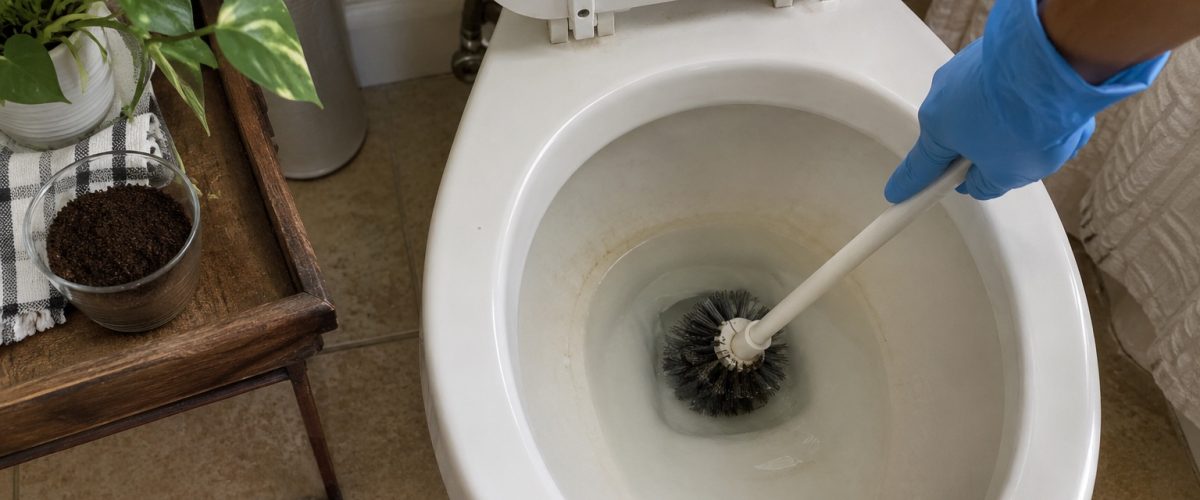
If the toilet still smells after you scrub the bowl, the missing step may be outside the waterline. Urine residue can collect around hinges, beneath the seat, and on the floor beside the toilet. Cleaning only the visible bowl leaves those places untouched. A focused top-to-bottom routine can reveal the source and make the room feel noticeably fresher.
Coffee grounds, baking soda, detergent, and vinegar are not needed as a combined treatment. Keep used coffee grounds out of the toilet, where they add unnecessary solids to the waste system. Use one compatible cleaning product at a time, and never mix vinegar or another cleaner with bleach.
Locate the smell before pouring anything
Remove the bathmat, empty nearby rubbish, and check the toilet brush holder. A wet, dirty brush container can be a source of odor even when the bowl is clean. Wash removable items according to their instructions and allow them to dry where appropriate.
Look around the base for moisture or staining. Notice whether the toilet rocks, whether the smell is strongest after flushing, and whether it resembles urine or sewage. These observations can help distinguish ordinary surface residue from a seal, drainage, or plumbing problem that cleaning alone will not fix.
Prepare separate tools for separate areas
Gather household cleaning gloves, a toilet brush, a surface-compatible cleaner, disposable towels or dedicated toilet cloths, and a small soft brush for accessible crevices. Keep these tools separate from the cloth used on the sink or kitchen. Ventilate the bathroom as the product instructions require.
Read the cleaner label before applying it. Toilet bowls, plastic seats, painted lids, metal fittings, and stone floors may tolerate different products. Do not assume that a product safe inside the ceramic bowl is equally suitable for every surface around it.
Clean the seat and hinges carefully
Start with the higher, less dirty outer surfaces and work downward. Wipe the lid, top of the seat, underside of the seat, and accessible hinge area using the appropriate cleaner. Give the product its directed contact time and remove residue as instructed.
If the seat has a quick-release feature, use the manufacturer’s directions to remove it for cleaning. Do not force unfamiliar clips or dismantle a fitting that is already cracked. Cleaning the accessible space beneath the hinges can make more difference than adding another bowl treatment.
Check the rear ledge of the toilet and the sides below the seat. Use a fresh section of cloth as you move between areas. Repeatedly wiping with the same dirty surface can spread residue rather than remove it.
Give the bowl an ordinary, thorough clean
- Check that no incompatible cleaner or treatment is already present in the bowl or cistern.
- Apply one bowl cleaner approved for the toilet, following its directions.
- Brush the accessible interior, including beneath the rim where the toilet design permits.
- Allow only the specified contact time, then flush as directed.
- Inspect the bowl after the water settles and repeat only within the product instructions.
Do not add vinegar, bleach, coffee, or extra detergent because the first pass seems slow. Foaming is not proof of better odor removal. If mineral deposits remain, use a compatible scale-removal method as a separate job, following the toilet and product guidance.
Finish the floor and nearby surfaces
Clean the floor around the base, the nearby wall if splashed, and the accessible exterior of the pedestal. Use a cleaner suitable for the flooring and avoid flooding joints or gaps. Dry the area so a new leak can be distinguished from water left by cleaning.
Wash the bathmat according to its care label and return it only when it is fully dry. Clean or replace a persistently contaminated brush holder. Empty the waste bin, wash it if necessary, and dry it before fitting a fresh liner.
Know when another scrub is not the answer
If a sewage-like smell remains, a plumber may need to inspect the toilet seal, nearby traps, or ventilation. Do not cover a recurring wet patch with a mat or seal over unexplained leakage. A loose toilet also needs attention beyond ordinary cleaning.
Keep a short note of when the odor appears and what has already been cleaned. This can save time during a repair visit. A bathroom used infrequently may have different drainage issues from a heavily used family bathroom, so the timing and location of the smell are useful details.
Between deeper cleans, wipe fresh splashes promptly and let cleaning tools dry as their instructions allow. This small maintenance habit reduces the need for harsh, improvised treatments later.
Does this really work?
Cleaning the actual residue on the bowl, seat, hinges, surrounding floor, and accessories can reduce stubborn toilet odors. A coffee-ground mixture does not reliably solve the problem and adds material that should not be flushed. If the source is a leak, damaged seal, or drainage fault, the smell can persist until that fault is repaired. The useful test is whether the room remains fresh after everything is dry, without relying on a covering fragrance.


