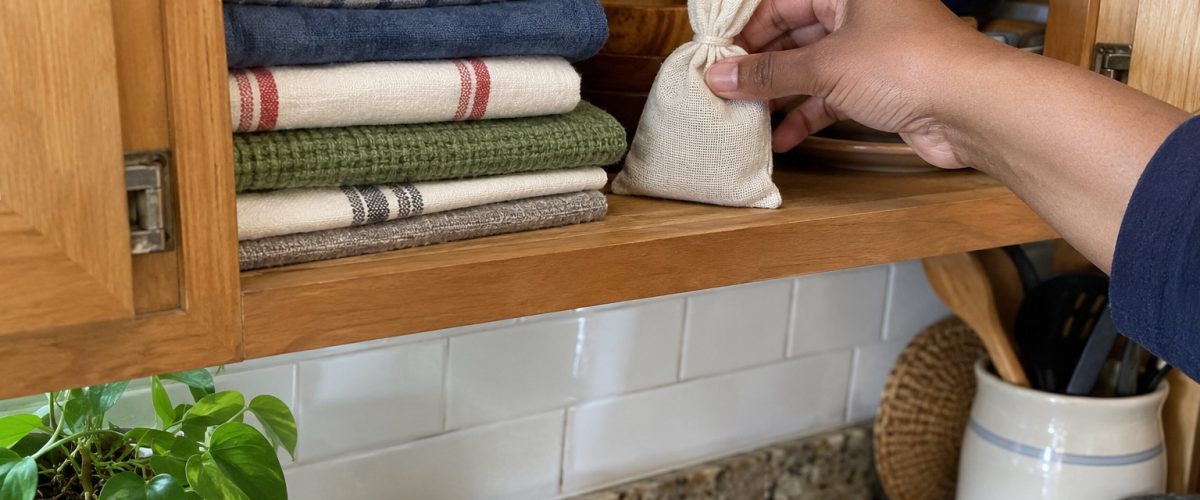
Opening a cupboard should not release a cloud of stale, damp air. Before adding a scent sachet, empty the shelf and find out what is holding that smell. A forgotten cloth, a tiny leak, or dishes put away while still wet can keep the space musty. Once the cupboard is clean and dry, a small homemade sachet can add a light fragrance to a suitable nonfood storage area.
The aim is a tidy, removable scent accent. It should not coat dishes, contaminate food, or hide ongoing moisture. Keep the preparation dry and simple so you can inspect the cupboard easily and replace the sachet without leaving a sticky ball behind.
Empty and inspect the cupboard
Take everything out and check the back corners, underside of shelves, and space around nearby pipes. Look for damp patches, swelling, damaged finishes, or visible mold. If water is entering the cupboard, deal with that source before returning the contents.
Discard spoiled food and inspect packaging separately if the cupboard stores groceries. A fragrant sachet is not an insect treatment. Pantry pests need identification and removal of affected products, and continuing moisture may require repairs rather than stronger scent.
Clean without soaking the cabinet
Vacuum or brush out loose dust and crumbs using tools appropriate for the finish. Wipe the shelf with a cleaner approved for the cabinet material. Avoid saturating unfinished wood, particleboard edges, or joints where water can be absorbed.
Remove cleaner residue as directed and allow the cupboard to dry thoroughly before restocking. Wash and fully dry reusable shelf liners if they are suitable for washing. Replace a liner that traps moisture or hides damage rather than treating it as a permanent solution.
Choose the right place for a sachet
A cupboard holding clean, dry household linens is a better location than one storing uncovered food. Fragrance can transfer to nearby materials, so keep the sachet away from drinking glasses, dishes, utensils, and ingredients. If the smell changes the way a stored item feels or tastes, the location is unsuitable.
Choose a place beyond the reach of children and animals. The sachet should not look like a snack or be accessible for chewing. Avoid shelves above heat-producing appliances and any area that regularly gets splashed.
Gather a small dry batch
- A clean, dry, closely woven fabric sachet with a secure closure.
- A small handful of dry shavings from a bar soap whose scent you already tolerate.
- An optional short cinnamon stick and a few whole cloves.
- A small washable dish to keep the sachet off the cabinet finish.
You do not need alcohol, scented essence, or water to bind the ingredients into a ball. Loose dry contents are easier to remove and inspect. Baking soda is also unnecessary for the fragrance arrangement and may escape through a fabric weave, leaving powder on the shelf.
If you shave a bar of soap, use a suitable tool carefully and keep fingers away from its edge. Work over a washable surface and clean the tool afterward. Do not use a fragrance that already irritates your skin or breathing simply because it smells strong.
Assemble the sachet
- Check that the fabric bag and all ingredients are completely dry.
- Add a modest amount of soap shavings, leaving enough room for a secure closure.
- Add the optional whole spices only if you enjoy the combined scent.
- Close the bag firmly and shake it gently over a tray to check for escaping particles.
- Set it on its dish in the chosen nonfood storage space, with room around it for inspection.
Do not press the sachet against a delicate fabric or painted cabinet wall. Soap and spices can leave marks if damp or compressed against another material. The protective dish makes removal easy when it is time to clean the shelf.
Keep the cupboard dry after restocking
Return only fully dry items. Leave a little space around stored linens so an unnoticed wet cloth is easier to find. Avoid filling the cupboard so tightly that the back wall cannot be checked without a complete rearrangement.
Inspect the sachet during routine cleaning. Replace contents that become damp, dusty, or stale, and wash and dry the bag between uses where its fabric allows. Do not repeatedly add perfume to an old damp sachet. A fresh batch should begin with a clean container and a dry shelf.
If mustiness returns quickly, remove the sachet and investigate again. Check neighboring walls, pipes, and the condition of the stored items. A recurring odor is useful information; covering it with stronger fragrance can delay finding the source.
Does this really work?
A dry soap-and-spice sachet can add a mild fragrance to suitable nonfood storage, but it does not remove mold, repair leaks, or instantly repel insects. Cleaning and drying the cupboard provide the main improvement. Keep the sachet contained, separate from food and eating equipment, and easy to remove. If the musty smell returns, address the moisture or contamination instead of treating fragrance as a permanent fix.


