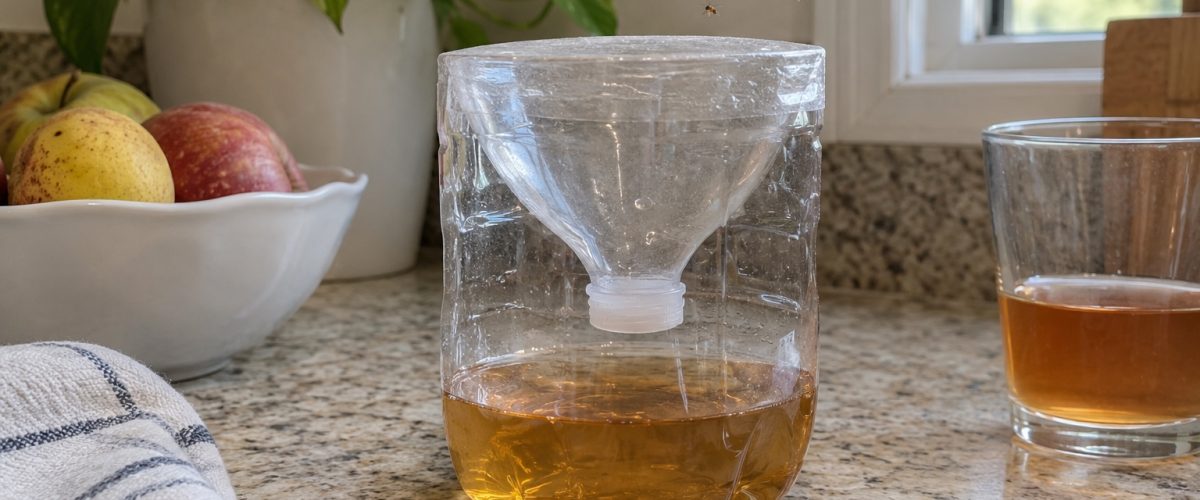
An empty plastic bottle can become a useful trap for the tiny fruit flies hovering around the kitchen. A little apple cider vinegar supplies an attractive smell, while a drop of dish soap helps flies that contact the liquid become trapped. The bottle’s inverted top creates a funnel that makes the opening easier to enter than to find again.
This setup is aimed at fruit flies, not every flying insect. It can help catch adults, but it will not solve an infestation while a forgotten piece of fruit or dirty recycling container keeps producing more. Build the trap and remove the breeding source as one job.
Check which flies you are seeing
Fruit flies are small and often gather near ripe produce, fermenting spills, or food waste. Larger houseflies, fuzzy drain flies, and insects hovering around damp potting soil may need different approaches. Notice where the insects concentrate before deciding that one vinegar trap is the answer.
Look in the fruit bowl, beneath loose produce, inside recycling containers, and around the compost caddy. A single soft onion or forgotten piece of fruit can be easy to miss. Dispose of spoiled material and clean the container that held it.
Gather the bottle and bait
- One clean, empty plastic drinks bottle with a stable base.
- Apple cider vinegar, enough to form a shallow layer in the bottom.
- One drop of ordinary dishwashing liquid.
- An optional small amount of honey if you want to try it as an addition.
- Scissors suitable for the bottle, strong tape, and a stable work surface.
A full tablespoon of dish soap is unnecessary for this small trap. A drop is enough for the intended change to the liquid’s surface. Honey is optional rather than essential; apple cider vinegar can attract fruit flies without turning the container into a thick syrup mixture.
Make the funnel safely
Have an adult cut the bottle across its upper section, below the shoulder, on a stable surface. Choose a bottle that can be cut without excessive force. If the plastic cracks or leaves awkward sharp points, stop and use a safer container rather than trying to make it work.
Cover accessible cut edges with tape. Remove the cap and turn the top section upside down so its neck points into the lower section. Check the fit before adding liquid. The opening should remain above the bait rather than disappearing beneath its surface.
If cutting plastic is inconvenient, a commercial fruit-fly trap is a reasonable alternative. The useful part of the project is monitoring and reducing flies, not using a tool or material that is difficult to handle safely.
Add the bait and close the trap
Pour a shallow layer of apple cider vinegar into the bottle base and stir in one drop of dishwashing liquid. If using a little honey, dissolve it into the liquid rather than leaving a sticky lump on the rim. Wipe away any spills outside the bottle.
Fit the inverted top into the base and secure the join with tape. Leave the neck opening clear. Keep the trap upright and identify it clearly as a trap so nobody mistakes the liquid for a drink. Do not store it beside cups intended for use.
Place it near activity, away from food preparation
Choose a stable location near the problem area but away from open food, utensils, and surfaces where a spill would cause damage. Keep it beyond the reach of children and pets. Do not place it on the edge of a counter or where it obstructs the sink.
Check the trap regularly. The liquid can evaporate, collect debris, or become unpleasant. Replace it as needed, clean the container appropriately, and discard a damaged bottle. Never add pesticides or other household chemicals to the bait.
Remove the next generation at its source
Wash fruit-storage surfaces, clean sticky bottle rims, and rinse recyclable drinks containers before storing them. Empty food waste frequently and wash the caddy itself. Keep suitable ripe produce refrigerated and avoid leaving cut fruit exposed.
If flies remain concentrated near a drain, inspect the area rather than pouring random chemicals down it. Different small flies can use different breeding sites, and cleaning needs to address the actual residue or source. Persistent activity may need identification by a qualified pest professional.
Give the cleanup time and watch the trend. Catching flies confirms activity but does not prove the kitchen is clear. A trap that fills repeatedly suggests that an ongoing source may still be present.
Does this really work?
Apple cider vinegar traps can catch adult fruit flies, and a drop of dish soap helps retain flies that contact the liquid. The bottle funnel can make escape less straightforward, but it does not guarantee that all flies disappear within twenty-four hours. The most important step is removing breeding material and food residue. Use the trap as a small part of that cleanup, and reassess the insect type if the result does not match the problem.


