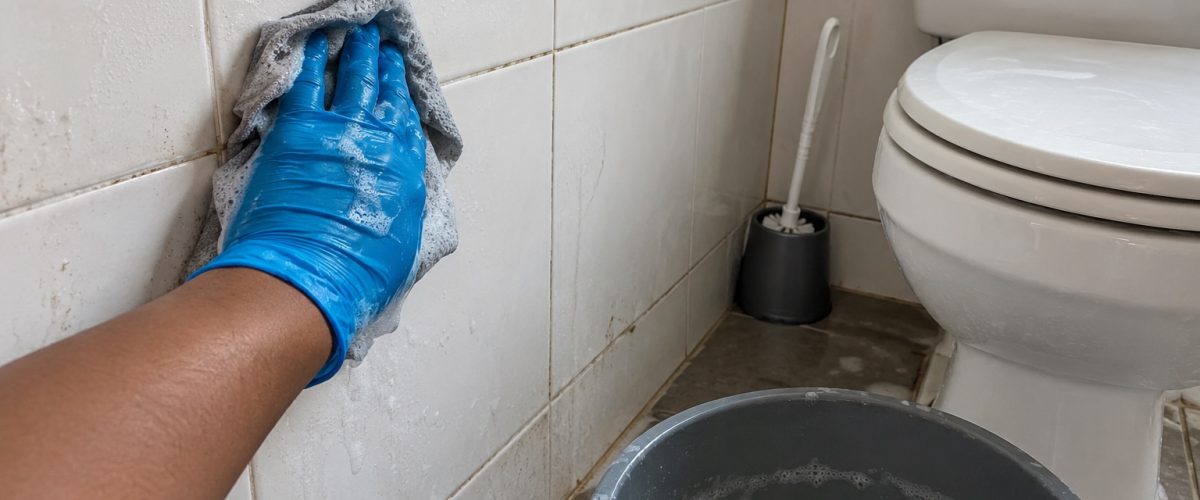
Bathroom shine disappears beneath layers of soap film, body oils, and mineral residue long before the surfaces themselves wear out. A careful clean can bring back a brighter appearance, but the right method depends on what is covering the surface. Start with compatible cleaning, give it time, and remove the residue instead of making a stronger mixture at every step.
Do not combine bleach with soap, salt, baking soda, or other cleaners. Bleach should only be used according to its own label, and mixing cleaning chemicals can create hazards. Keep cleaning and any necessary disinfection as separate, properly directed tasks rather than making one improvised product for the whole bathroom.
Sort the surfaces before the supplies
Identify the tile, shower screen, tap finish, toilet seat, and bowl. Natural stone, coated glass, acrylic, chrome, and ceramic do not all tolerate the same products. A cleaner that works on one part of the room may scratch, dull, or discolor another.
Read the surface-care and product instructions, especially around coated shower screens and decorative metal. If you are unsure, start with a small inconspicuous test and inspect it after drying. Do not interpret a temporary wet shine as proof that the finish has been improved.
Prepare a simple cleaning station
Gather appropriate gloves, microfiber cloths, a soft compatible sponge, a toilet brush, and a cleaner suitable for each intended surface. Use separate cloths for toilet areas. Have clean water available for rinsing where required and a dry cloth for finishing taps and glass.
Ventilate the room as directed and remove towels, bathmats, and loose toiletries from the working area. Keep bottles in their original containers. A clear label makes it easier to avoid mixing products or forgetting what is already on a surface.
Lift ordinary grime first
Remove loose hair and dust before wet cleaning. Apply a suitable cleaner to tiles and washable surfaces in manageable sections. Use the recommended dilution and allow the directed contact time. Immediately scrubbing with heavy pressure can waste effort that a short, proper contact period would save.
Wipe with a soft cloth or sponge and remove dirty liquid. Rinse where required, then inspect. If ordinary soap film remains, repeat within the product’s directions rather than adding abrasive salt or powder. Large crystals and gritty particles can scratch finishes that looked tough enough to tolerate them.
Clean the shower screen thoughtfully
Check whether the glass has a protective coating. Use only products and tools compatible with it. Avoid metal scourers and improvised blades unless the manufacturer specifically permits a particular tool and method. Scratches become more visible in bright bathroom light.
Work from the upper section downward, wipe loosened residue, and rinse as directed. Finish with a clean microfiber cloth or suitable squeegee. If mineral deposits remain, choose a compatible descaling method as a separate task. Never combine an acidic descaler with bleach or another cleaner.
Give the toilet its own tools
- Clean the lid, seat, hinges, and outer bowl with products approved for those materials.
- Use fresh cloth sections as you move toward dirtier areas.
- Apply one compatible bowl cleaner, making sure no incompatible product is already present.
- Brush and allow the specified contact time before flushing as directed.
- Finish the surrounding floor without flooding gaps around the base.
Do not use the toilet brush on tile, shower glass, or the sink. Clean its holder when needed and follow the tool’s care instructions. A dirty container beside a bright bowl can remain an overlooked odor source.
Disinfect only in the appropriate way
Cleaning removes dirt and residue; disinfection is a different process with its own instructions. If disinfection is needed, use a suitable labeled product after cleaning and rinsing as directed. Follow its contact time, ventilation requirements, and restrictions on the surfaces it can touch.
Do not add extra bleach to make a result happen faster. Keep people and animals away as the label requires. If you have already applied an unknown product, stop and identify it before putting another chemical onto the same area.
Make the shine easier to keep
Dry taps and remove shower water with a suitable squeegee after use when practical. Let towels and bathmats dry, and keep the ventilation system working. These habits reduce the buildup that later demands a longer cleaning session.
Check grout, seals, and fittings as you clean. A recurring dark patch, leaking joint, or worn coating needs a different response from ordinary dirt. Cleaning can reveal these problems, but it cannot replace missing sealant or restore a damaged finish.
Does this really work?
Compatible cleaning products, proper contact time, gentle tools, and thorough residue removal can brighten a bathroom and lift ordinary grime. No baking-soda, soap, salt, and bleach mixture safely guarantees a white finish in seconds. Keep bleach separate from other cleaners and follow its label if disinfection is needed. The best result is a clean, dry surface with its finish intact, not a dramatic reaction in a mixing bowl.


