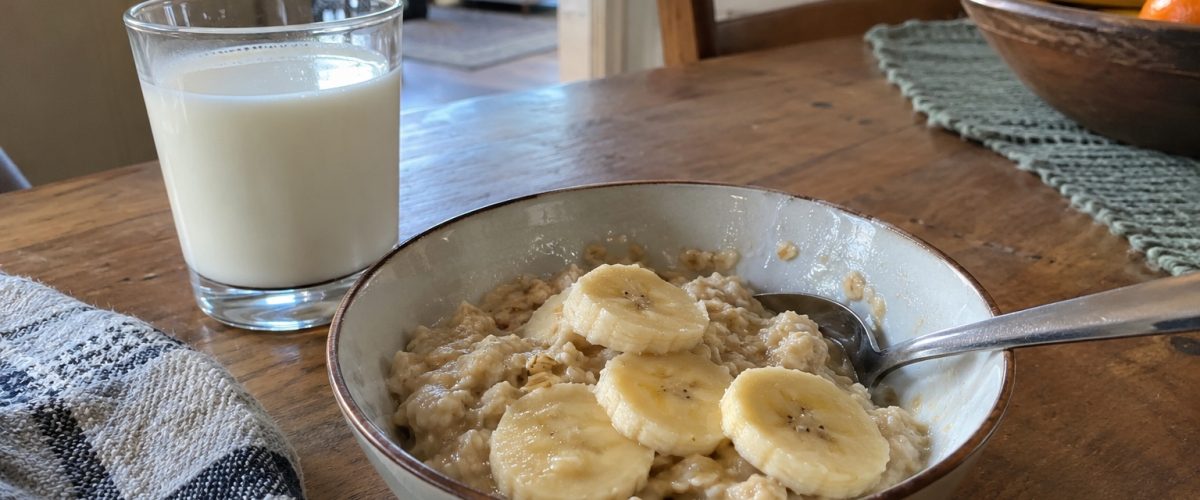
A bag of plain oats can turn an uncertain breakfast into a simple meal you know how to make. With water or a suitable milk, a pan, and a few minutes of attention, you can prepare a warm bowl with a texture and portion that suit you. The useful promise is convenience and dietary fiber, not an instant reset of blood sugar or digestion.
Oats can be part of a varied eating pattern, but no special stirring method guarantees that everyone’s bowels move immediately or that glucose stays perfectly controlled. Build the breakfast around ordinary cooking, sensible portions, and your own needs rather than a dramatic one-day result.
Choose plain oats that fit your morning
Rolled oats, quick oats, and steel-cut oats have different textures and cooking times. Read the packet so you know what you have before starting. Plain oats give you more control over the final sweetness than a heavily sweetened flavored mixture.
Pick the type you will realistically cook and enjoy. A long-cooking product may suit a relaxed morning but become inconvenient on a busy day. There is no need to make breakfast difficult in order to feel that it counts as a useful habit.
Prepare one comfortable portion
Use the serving size and liquid ratio on your oat packet as a starting point, then adjust within your dietary needs and appetite. Water gives a simple base; milk or an appropriate alternative changes the flavor and nutritional content. Check labels if allergies or dietary restrictions matter.
Set out a small pan, spoon, bowl, and your chosen liquid. Keep optional toppings modest and ready before cooking. This prevents the warm oats from sitting on the stove while you search through several cupboards.
Cook a basic bowl
- Measure the oats and liquid according to the packet’s instructions.
- Combine them in a suitable saucepan and heat gently as directed.
- Stir often enough to prevent sticking, watching the pan rather than walking away.
- When the oats reach the recommended cooked texture, adjust thickness with a little extra liquid if needed.
- Transfer to a bowl and allow the food to cool to a comfortable eating temperature.
If you use a microwave, choose a large enough microwave-safe bowl and follow the packet and appliance guidance. Oats can rise and overflow, so leave room above the mixture. Handle the bowl carefully and stir before eating to check for hot spots.
Add flavor without burying the oats
A little sliced fruit, a spoonful of plain yogurt, or a topping you already enjoy can make the bowl appealing. Choose additions that fit your dietary plan and any allergies. You do not need several sweeteners to make a basic breakfast worth eating.
Try changing one element at a time: texture, fruit, or the amount of liquid. This makes it easier to find a version you like. If a large thick bowl feels too heavy, serve a smaller portion alongside another food rather than forcing the full amount.
Increase fiber gradually
If your usual meals contain little fiber, a sudden large increase can feel uncomfortable. Introduce changes gradually and keep fluids consistent with your health needs. People with prescribed fluid limits should follow their care plan rather than simply drinking extra water.
Oats are one source of fiber among many. Fruit, vegetables, beans, lentils, and other whole grains can contribute across the day. A single breakfast does not need to carry the entire responsibility for bowel regularity or compensate for everything else you eat.
Keep blood-glucose expectations realistic
Oats contain carbohydrate, so portion size and toppings still matter for blood glucose. A food being whole grain does not make its carbohydrate disappear. If you have diabetes, fit the meal into your established plan and use the monitoring advice you have been given.
Do not change medication or skip recommended checks because you have started eating porridge. Different people can respond differently to the same meal, and the rest of the plate matters too. A dietitian or diabetes care professional can help adjust a breakfast that repeatedly causes problems.
Make the routine easy to repeat
Keep the oats in a closed container, note the cooking directions, and use a familiar bowl or measuring scoop. A small amount of preparation reduces morning decisions. Buy quantities you can store and use without letting the package become a forgotten cupboard item.
Refrigerate cooked leftovers promptly in a clean covered container and follow appropriate food-storage guidance. Reheat safely when suitable. Do not leave a milk-based bowl on the counter overnight and assume it is safe because oats began as a dry food.
Persistent constipation, blood in the stool, severe pain, or an unexplained change in bowel habits needs medical advice. Breakfast changes can support everyday nutrition, but they should not delay finding the reason for ongoing symptoms.
Does this really work?
Plain oats can add fiber and make breakfast convenient, especially when the portion and preparation suit your routine. They do not guarantee immediate bowel relief or automatically regulate blood sugar. Increase fiber gradually, consider the whole meal, and follow individualized advice for diabetes or digestive symptoms. The benefit is a repeatable food habit, not a secret technique that transforms the body after one bowl.


