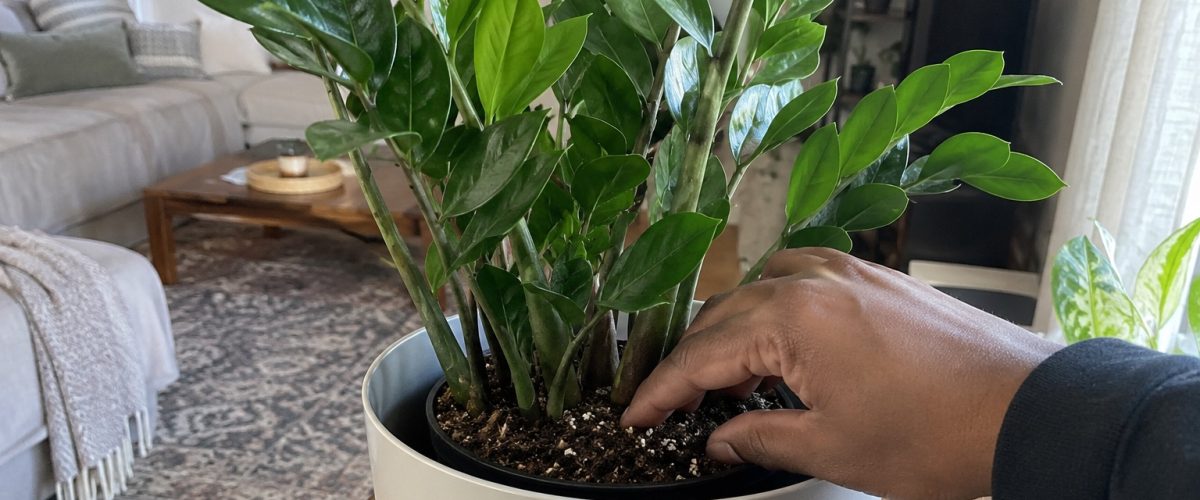
A tired corner can look completely different with one glossy green plant. The ZZ plant brings upright stems, rich color, and an easy presence to an ordinary room. You do not need a collection of expensive planters or a complicated watering routine to enjoy it. Start with one healthy plant, a container that drains, and a suitable place near indirect light.
Known botanically as Zamioculcas zamiifolia, this plant suits people who enjoy greenery but do not want daily maintenance. Its appeal is visible: shiny leaflets, a strong shape, and an ability to tolerate less attention than many fussier houseplants. Give it sensible care, and it can become a lasting part of your home.
Choose the spot before buying the pot
Look around the room during daylight. A place with bright, indirect light is a good starting point. Avoid putting the leaves against a window that receives fierce afternoon sun. The ZZ plant tolerates lower light, but a dark cupboard is not a growing space, and slow growth in a dim corner does not mean it needs more water.
Give the stems room to spread without brushing against a doorway or being knocked whenever someone passes. A side table beside a chair, an uncluttered shelf with suitable light, or a stable stand can work beautifully. Keep it away from children and pets that might chew the leaves: the plant is harmful if eaten, and its sap can irritate skin and eyes.
Start with a healthy plant
At the shop, look for firm stems and foliage without extensive yellowing or damage. Check the undersides of leaves and the stem bases for pests. Avoid a pot that smells unpleasant or has soft, collapsing growth. Take a moment to inspect the drainage holes as well as the decorative container around them.
You can leave the plant in its nursery pot and place that inside a plain outer planter. This makes watering and draining easier. Choose a stable container that suits the size of the plant without swallowing the foliage. Cream, clay, or a simple dark finish lets the leaves provide most of the visual interest.
Check weekly, water when needed
The most useful weekly habit is checking the plant, not automatically pouring in water. The ZZ plant stores moisture in thick underground rhizomes and prefers its potting mix to dry between waterings. Room temperature, light, pot size, and the growing medium all affect how quickly that happens.
When the mix has dried adequately, water thoroughly and let excess water drain away. Empty the saucer or outer planter. A plant standing in leftover water can remain wet around the roots even when its surface looks dry. If the mix still feels damp and the pot is heavy, wait and check again.
A simple care routine
- Look at the leaves. Check for dust, pests, yellowing, or damage. A quick inspection helps you notice changes before several stems are affected.
- Check the potting mix. Assess moisture before reaching for the watering can. Do not add water simply because another plant nearby needed a drink.
- Drain after watering. Lift the nursery pot out of its cover when practical, water it, and allow the excess to escape before putting it back.
- Clean gently when dusty. Support each leaflet and wipe it with a soft, damp cloth. The natural shine is enough; kitchen oil or furniture polish has no place on the foliage.
- Leave room for growth. Keep surrounding objects from pressing into the stems. Move the plant only when its location needs improvement, rather than rearranging it every day.
Make the greenery part of the room
A single plant can provide a focal point without adding clutter. Try setting it beside a stack of books or a simple bowl, leaving clear space around the leaves. If the corner already contains several ornaments, remove one or two before adding the planter. The outline will be easier to appreciate.
Choose a position you can enjoy from where you normally sit. That might be across from the sofa or beside a desk where you take short breaks. Protect furniture with a suitable waterproof tray, and check for drips after watering. Attractive plant styling should still make everyday cleaning straightforward.
Respond to changes without overdoing it
ZZ plants can grow slowly and produce new shoots in bursts. A quiet month is not automatically a problem. During active growth, a suitable houseplant fertilizer used according to its label can support care; extra fertilizer will not compensate for a dark position or continually wet roots.
If leaves turn yellow, first review moisture, drainage, and light rather than reaching for a homemade tonic. When the plant eventually becomes crowded, consider repotting into an appropriately sized container with well-draining mix. Wear gloves when cutting or dividing, and wash your hands afterward.
Does this really work?
Yes, a healthy ZZ plant can make a room look greener and more inviting with relatively little maintenance. Its glossy leaves and tolerance of occasional neglect explain its popularity. Prosperity and good energy are symbolic associations, however; the plant cannot reveal a visitor’s intentions or guarantee financial luck. It is also not immortal, and no fixed weekly watering rule or fifteen-year lifespan applies to every home. Suitable light, drainage, and attention to actual moisture are what help it stay attractive.


