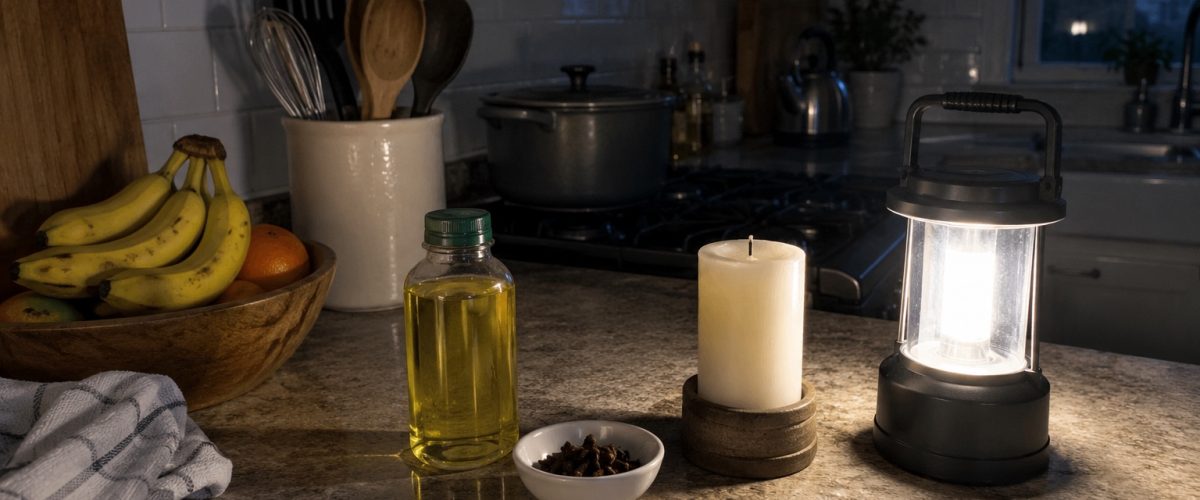
When the lights go out, the best household trick is the one you can use calmly in the dark. A clean kitchen jar, a stable tray, and a battery-operated candle can become a simple emergency light station. Prepare it before an outage so you are not searching drawers while everyone waits.
Keep cooking oil, spices, and improvised cotton-swab wicks out of the lighting setup. A drinking glass filled with oil is not a tested candle system, and adding aromatic ingredients does not make an open flame safer or protect the room from insects. Use familiar kitchen supplies as holders and organizers instead.
Gather a small emergency-lighting kit
Choose a battery-operated LED candle or a compact lantern, compatible spare batteries, a clean wide-mouthed jar, and a small stable tray. The light should be designed for ordinary household use and have clear operating instructions. A flashlight is useful alongside it for moving between rooms.
The jar is optional. Use it only if the light fits comfortably, its instructions allow that placement, and the controls remain accessible. Do not force a device into a container, seal it inside, or modify the light to make it fit.
Set aside a pouch or box for spare batteries and keep the packaging that identifies the correct type. Button batteries are particularly dangerous if swallowed, so keep them and any device with an unsecured battery compartment away from children.
Prepare the kitchen container
Wash the jar, remove oily residue, and let it dry completely. Check for cracks, chips, and an unstable base. A container that rocks on the table is a poor choice, even when it is only holding a small battery light.
Use a jar with an opening wide enough to remove the light without tipping or shaking it. Keep the arrangement plain: no loose paper, fabric, cooking oil, or botanical decorations inside. The aim is dependable access, not a decorative project that becomes awkward during an emergency.
Place the jar or the light directly on a tray that is easy to locate by touch. Keep a clear area around it so nobody has to reach between knives, hot cookware, or breakable dishes to switch it on.
Set it up and test it
- Fit the batteries correctly. Follow the markings and the manufacturer’s directions. Close and secure the battery compartment.
- Switch the light on. Check every available setting while the room is still normally lit, then try it in a dim area.
- Check useful visibility. Make sure you can see the table, doorway, and nearby obstacles. A decorative glow may be too weak for practical tasks.
- Choose a permanent storage spot. Use a reachable shelf or cupboard that everyone in the household can identify.
- Keep a flashlight alongside it. A stationary light helps the room feel usable; a flashlight helps you move safely.
- Write a short reminder. Note the battery type and the date you checked the kit. Keep the reminder with the supplies.
Do not assume an advertised battery life applies to every brightness setting or battery brand. Check the product’s information, keep suitable replacements, and test the setup periodically. A lamp that worked last winter may have exhausted batteries today.
Make the room easier to navigate
During an outage, put the light on a stable surface away from the edge. Clear bags, shoes, and other trip hazards from the route to the bathroom or exit. Avoid carrying a glass container through a cluttered room if the light can be carried safely on its own.
Keep the refrigerator and freezer closed as much as practical while you organize the household. Use the light to find essential items, not as a reason to leave appliance doors open. Keep phones charged when possible and reserve their batteries for communication.
If someone relies on powered medical equipment, an LED candle is not an emergency power plan. Follow the person’s established backup arrangements and contact the appropriate service when needed.
If you already use ordinary candles
Battery lights are the simpler choice during a blackout. If an ordinary candle is used, choose a purpose-made product in a stable holder and follow its instructions. Keep it well away from combustible items, children, and animals, and never leave it burning unattended.
Extinguish every flame before leaving the room or going to sleep. Do not move a burning candle or top up a hot oil container. Never use candles where a gas leak may be present; leave the area and obtain emergency help instead.
Does this really work?
A clean kitchen container can organize a battery-operated candle into a convenient emergency-lighting station, provided the device is used as intended. It does not increase battery life or turn a decorative light into a powerful lantern. Cooking oil, salt, cloves, bay leaves, and a cotton-swab wick do not establish a safe five-day candle or a pest repellent. The dependable result comes from a suitable light, a stable location, spare power, and a kit you have already tested.


