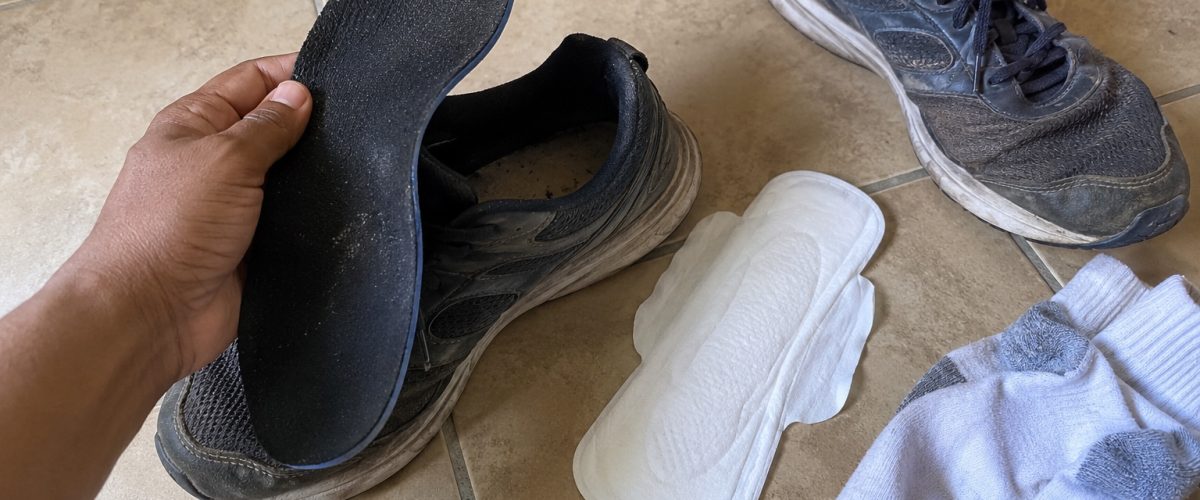
Long hours in closed shoes can leave your socks damp and your feet uncomfortable before the day is over. An extra absorbent layer sounds like an easy fix, and a sanitary pad is an everyday item that can absorb liquid. The important question is whether it fits without creating pressure, friction, or trapped moisture.
A pad is not designed as a shoe insole, so a purpose-made absorbent insert is usually the more practical choice. If you consider the household alternative, treat fit and skin comfort as the deciding factors. It is not a treatment for excessive sweating, infection, or a persistent foot problem.
Check the shoe before adding anything
Start with a clean, dry shoe and inspect the inside. Look for a folded lining, a worn seam, grit, or a damaged insole that might already be causing irritation. Adding padding over an existing problem can hide it without improving the fit.
Try the shoe with your usual socks and check the space around the toes and heel. If it is already snug, there may be no room for another layer. A small increase in thickness can change how the shoe presses against the foot.
Understand what the extra layer can do
An absorbent material can hold some moisture that reaches it. It does not stop the sweat glands from producing sweat, and it cannot keep a shoe dry indefinitely. Once the material becomes damp, leaving it in place defeats the purpose of a fresh layer.
A sanitary pad may also have an impermeable backing, adhesive, or a shape that does not suit the shoe. Fragrance and textured edges can be undesirable around sensitive skin. Avoid scented products and never stick adhesive directly to the sole of the foot.
Do not wrap a pad around the foot, tape it in place against skin, or squeeze it into a shoe where it bunches. If it cannot lie flat without changing the fit, skip the experiment and choose a suitable shoe insert instead.
Keep any trial brief and easy to stop
If you still want to assess the idea, first place the dry pad inside an empty shoe to see whether its size and shape are workable. Keep the absorbent side toward the sock and any adhesive away from skin. Do not cut it open or expose its filling.
Put on clean socks and check the fit while seated. Stand and take a few careful steps indoors. Stop if you notice a ridge, slipping, rubbing, tightness, or an unfamiliar pressure point. Do not make a long workday the first trial.
Remove the extra layer if it moves or becomes damp. Use a fresh product if another trial is appropriate, and never leave a used pad in the shoe to dry for reuse. Keep any adhesive residue from damaging a removable insole or lining.
Build a better dry-foot routine
- Wash and dry the feet. Use a gentle routine and dry carefully between the toes before putting socks on.
- Start with fresh socks. Choose a pair suited to your activity and footwear, with seams that do not rub.
- Carry a spare pair. Changing damp socks can be more useful than leaving an increasingly wet absorbent layer inside the shoe.
- Rotate footwear when possible. Let shoes dry thoroughly between wears, following their care instructions.
- Inspect removable insoles. Clean or replace them as directed rather than covering persistent odor with perfume.
- Take practical breaks. When appropriate, give your feet a chance to cool and check for rubbing before it becomes a blister.
A small spare-sock kit is easy to keep in a work bag: clean socks in one pouch and a separate washable bag for the used pair. Keep the dry items away from damp shoes or clothing so they are ready when needed.
Deal with odor without hiding it
Moisture management and regular cleaning are more useful than pouring fragrance into shoes. Follow the footwear manufacturer’s washing and drying guidance. Do not soak materials that should not be saturated, and allow the inside to dry before wearing the pair again.
If sweating is troublesome, ask a pharmacist or clinician about products intended for feet, including whether an antiperspirant is suitable for you. Use any product as directed rather than combining it with an improvised occlusive layer.
Know when to ask for advice
Persistent itching, peeling, painful cracks, blisters, or a new unusual odor may need assessment. People with diabetes, poor circulation, or reduced sensation should get advice before trying improvised padding, because pressure damage may not be noticed promptly.
Does this really work?
A sanitary pad can absorb some moisture, but that does not make it a dependable all-day shoe insert or a guarantee against odor. Its thickness, backing, and fit may create new discomfort. A suitable insole, fresh socks, dry footwear, and attention to excessive sweating are more useful foundations. If an improvised layer bunches, rubs, or stays damp, remove it. Comfortable feet matter more than making an unusual trick work at any cost.


