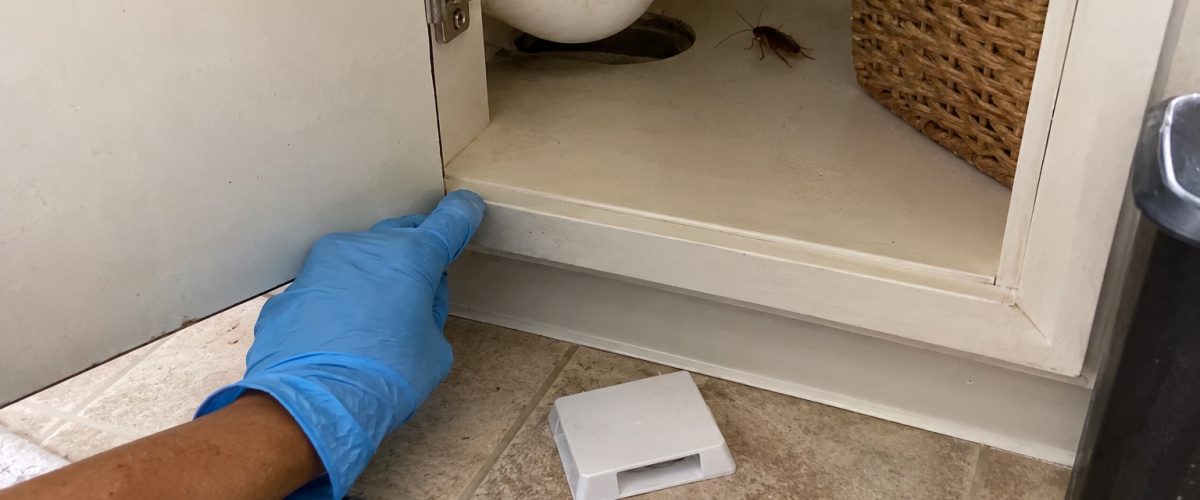
A cockroach disappearing behind the bathroom cabinet is a reason to look closer, not simply spray perfume and shut the door. Bathrooms supply the moisture, shelter, and quiet corners that these insects use. A useful homemade setup begins with a simple map of the room, a flashlight, and a few well-positioned monitoring traps. Together, they help you find the route before the problem spreads into adjoining rooms.
Sugar, detergent, pepper, vinegar, and cinnamon may sound like an easy solution, but drops of this mixture are not a dependable cockroach trap. They can leave sticky residue without identifying or controlling the infestation. Keep the practical part of the idea: target hiding places precisely, remove what attracts insects, and measure what happens next.
Find the damp, dark route first
Start under the sink. Use a flashlight to examine pipe openings, the back corners of the cabinet, and the wall where the plumbing enters. Look for insects, shed skins, egg cases, and dark spotting. Also check behind the toilet, beside the laundry basket, and beneath removable storage units. Avoid reaching blindly into gaps.
A bathroom cockroach does not automatically mean insects are coming through the drain. Gaps around pipes, damaged screens, and neighboring rooms can also provide access. Identifying the route matters because pouring a mixture into the bowl or drain may miss the actual problem completely.
Gather a small inspection kit
You need a flashlight, disposable gloves, paper towels, a rubbish bag, and enclosed cockroach monitoring traps suitable for the setting. Add a pencil and a piece of paper for a room sketch. This homemade tracking system costs little and makes each trap useful rather than decorative.
Use traps according to their instructions and place them beyond the reach of children and animals. An enclosed design can reduce accidental contact, but it does not make every location suitable. Keep adhesive traps away from wet surfaces, splashes, and places where they can stick to skin or fur.
Build your bathroom trap map
- Draw the sink, toilet, door, and main storage units on your paper. Mark places where insects or spotting appeared.
- Number the monitoring traps and write the date beside each number. Place them against edges where their directions allow, rather than in the middle of the room.
- Put one near the suspected route under the sink and another near a separate hiding area. Keep them dry and accessible for inspection.
- Check them regularly, following the replacement interval on the package. Record both catches and empty traps instead of relying on memory.
A catch shows that an insect crossed that location. An empty trap does not prove the room is clear. Placement, moisture, dust, and insect activity all affect what a monitor collects. Use the pattern across several checks to decide where to concentrate cleaning and repairs.
Remove the water supply
Dry the sink surround after use and repair dripping taps or leaking joints. A persistent damp patch beneath a bottle may be ordinary condensation, a spill, or a plumbing fault. Empty the cabinet so you can distinguish between them. Do not hide dampness beneath a fresh shelf liner.
Hang towels so they can dry, keep bathmats from remaining saturated, and use the bathroom ventilation system as intended. Empty standing water from cleaning buckets. These changes make the room less hospitable while also helping you notice a new leak before it damages the cabinet.
Clean without leaving attractive residue
Remove hair, packaging, soap buildup, and clutter. Wash compatible surfaces with an appropriate cleaner, rinse when required, and dry them. Use separate cloths for the toilet and sink. Keep toiletries in washable containers so the cabinet can be inspected without moving dozens of loose objects.
Do not scatter sugar around pipe gaps or squeeze detergent into cracks. A homemade food mixture can attract activity to an awkward location and make cleanup harder. Strong spice smells are not a reliable substitute for reducing shelter and using a product designed for cockroach control.
Turn the findings into action
Seal suitable gaps around pipes and damaged trim after checking that the material and location allow it. Do not obstruct ventilation, access panels, or necessary drainage. If you rent, document leaks and entry points and report them promptly. In a shared building, treatment may need to extend beyond your bathroom.
Monitoring traps help locate activity; they are not the same as insecticidal bait. When control products are needed, choose ones labeled for cockroaches and the intended indoor location. Follow every placement instruction. Avoid spraying around bait stations, since this can interfere with how the bait is intended to work.
Repeated daytime sightings, continuing catches, or insects in several rooms warrant professional help. Keep your notes and photographs: they can make the visit more productive and help distinguish a recurring entry problem from an established indoor population.
Does this really work?
Monitoring traps, moisture control, cleaning, and closing suitable entry points can help you find and manage bathroom cockroach activity. They do not guarantee an empty room by tomorrow. The detergent, sugar, pepper, vinegar, and cinnamon mixture has no dependable basis as an overnight elimination method. The useful result is a clearer picture of the problem and a targeted control plan, with professional treatment when household measures are not enough.


