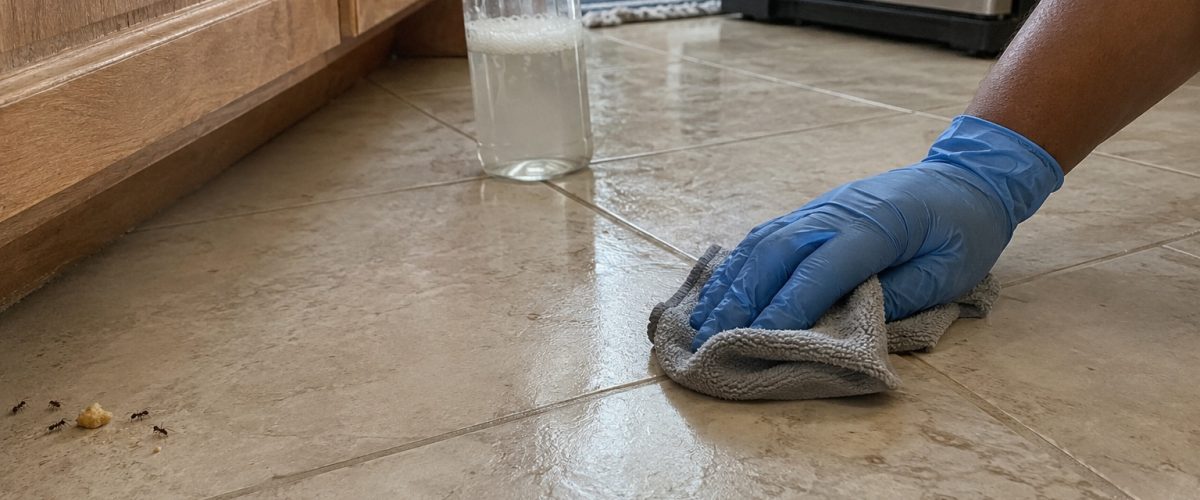
A clean-looking kitchen floor can still hold the crumbs, sticky spills, and greasy edges that keep pests coming back. The most useful cleaning mixture is often the simplest: water with a small amount of a cleaner approved for your floor. Used carefully, it lifts food residue and helps remove ant trails. Follow that cleanup with attention to entry points and you have a much stronger routine than fragrance alone.
Cloves, cinnamon, vinegar, and detergent are familiar kitchen supplies, but combining them does not create a proven treatment that eliminates ants and cockroaches on the first day. The goal here is practical and visible: remove the food on the floor, leave less residue behind, and make continuing insect activity easier to spot.
Start with the floor you actually have
Check the flooring care instructions before mixing anything. Ceramic tile, sealed wood, natural stone, laminate, and vinyl do not all tolerate the same products. Vinegar can damage some stone and finishes; excess water can affect wood and laminate. A strong cleaning smell tells you nothing about compatibility.
For washable, water-resistant surfaces whose instructions permit mild detergent, use warm water and only the small amount directed for that product. A full two tablespoons in one glass of water can leave a highly concentrated, slippery film. More foam is not a sign that the floor is cleaner.
Your simple cleaning kit
Gather a vacuum or broom, a bucket, a clean microfiber mop, a small cloth for edges, and the floor-compatible cleaner. Keep a second clean cloth for drying small wet areas. Gloves may be helpful if the product instructions recommend them or your skin is sensitive.
Leave ground spices out of the bucket. Cinnamon can collect in grout and corners, and whole cloves add debris you will need to remove later. If you enjoy their smell, keep them separate from the floor-cleaning process. Their presence does not turn ordinary wash water into a dependable insecticide.
Clear the food before adding water
Move lightweight chairs and bins, then collect crumbs around table legs, beneath the cabinet overhang, and beside the cooker. Vacuum crevices using the appropriate attachment. Do not pull out heavy appliances alone or disturb gas, electrical, or water connections just to reach a hidden crumb.
Pay attention to pet feeding areas. Wash the feeding mat and remove leftover food promptly, while keeping fresh drinking water available for the animal. Empty food rubbish regularly and clean the rim and underside of the bin lid. These small areas can undo the effect of an otherwise thorough floor wash.
Wash in manageable sections
- Prepare the cleaner exactly as its floor-use instructions specify. Test an inconspicuous area if compatibility is uncertain.
- Work from the far side of the kitchen toward the exit. Use a damp mop rather than flooding the floor.
- Pause over sticky marks long enough for the permitted cleaner to loosen them, then wipe gently. Do not grind abrasive powder into the finish.
- Change dirty water and rinse the mop frequently. Remove cleaner residue where the product or flooring instructions require rinsing.
- Allow the floor to dry before letting children or pets back into the wet area. Check for slippery patches.
Wash the mop head after the job and let it dry completely. A dirty, damp mop can redistribute old food residue and leave an odor that makes a newly cleaned kitchen feel unfinished.
Use ant trails as a clue
If you see a line of ants, follow it visually before wiping it away. Note the entry point and the food destination. Cleaning a compatible surface with mild soapy water can remove the trail, but it does not necessarily affect the nest. More ants may appear if the food source or access route remains.
Store sugar, cereal, and opened snacks in closed containers. Wipe syrup from bottle threads and clean beneath small appliances once they are safely unplugged. Seal appropriate gaps around windows and skirting. Keep a brief record of where ants reappear so you can address the route instead of repeatedly washing the whole room.
Handle cockroaches as a separate problem
Cockroaches need more than a freshly mopped floor to disappear. Inspect warm, sheltered areas, repair water leaks, and reduce cardboard clutter. Monitoring traps can help identify where activity is concentrated. Place them only where their directions allow and where children and pets cannot reach them.
When a control product is necessary, select one labeled for the pest and location. Do not mix insecticides into mop water or spray over bait stations. Persistent sightings, especially in several rooms or a shared building, may require a coordinated professional response.
Does this really work?
A suitable mild cleaning solution can remove grease, crumbs, and ant trails, making the kitchen less attractive to pests. That is a worthwhile result, but it is not the same as eliminating an ant colony or a cockroach infestation. Cloves, cinnamon, vinegar, and extra detergent do not provide a reliable first-day guarantee. Cleaning works best as one part of a plan that also addresses food storage, moisture, entry points, monitoring, and appropriate pest control.


