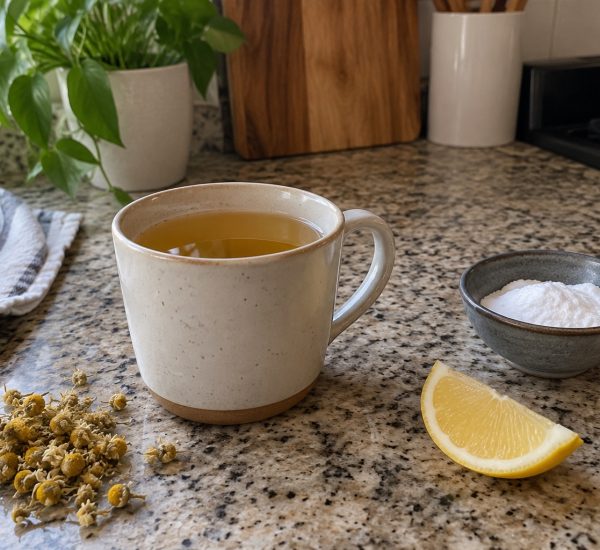
A warm drink can feel comforting when your throat is scratchy, but roasted lemon does not clear blocked bronchial passages or cure the cause of a cough. Keep this preparation in the kitchen as an optional drink, not a substitute for breathing treatment or medical assessment. Difficulty breathing, chest pain, coughing blood, or being unable to swallow calls for prompt medical help rather than a stronger homemade mixture.
For mild throat discomfort, the useful idea is simple: choose a drink at a comfortable temperature, dilute sharp flavors, and pay attention to how you feel. Roasting changes the lemon’s culinary character; it does not turn the fruit into a medicine with a guaranteed fast result.
Keep the ingredients ordinary
You need a fresh lemon, drinking water, a clean mug, and a strainer if you prefer to remove seeds and pulp. Salt is unnecessary in the drink. Adding it does not establish a bronchial-clearing effect, and a salty acidic mixture may be less pleasant to swallow than plain warm water.
Wash the lemon under running water before cutting it. Choose fruit without visible mold or damaged, spoiled areas. Clean the knife, board, and preparation surface. These ordinary food-handling steps matter more than creating a dramatic darkened peel.
Roasting is optional
If you enjoy roasted citrus as a flavor, halve the lemon and place it cut-side up in an oven-safe dish. Heat it in an ordinary moderate oven until warmed and lightly colored, checking it rather than leaving it unattended. There is no medicinal target temperature or special therapeutic degree of browning.
Use oven gloves to remove the dish and allow the fruit to cool enough to handle. Heated juice can burn, so do not squeeze a very hot lemon directly over your hand or take a sip immediately from the roasting dish. Keep children away from the hot tray.
You can skip the oven completely and use a little fresh lemon juice. If the purpose is a comfortable drink, there is no need to spend time or energy roasting a fruit when you feel unwell. Plain water is also a reasonable choice if citrus does not suit you.
Make one mild serving
- Put drinking water in a clean mug at a comfortably warm temperature.
- Add a small squeeze of lemon juice, then taste only after checking that the drink is not too hot.
- Dilute further if the flavor feels sharp. Strain out seeds if needed.
- Sip slowly rather than drinking a concentrated shot.
- Stop if it stings, worsens discomfort, or triggers reflux.
This is a drink to suit your taste, not a dose schedule. There is no need to repeat it at fixed intervals, take it on an empty stomach, or force down a whole lemon because you want a quicker result. More acidity does not mean more relief.
Separate comfort from treatment
A throat may feel temporarily easier after sipping a warm fluid, but that sensation does not prove an infection has cleared or mucus has been removed from the lungs. Coughs have different causes, including respiratory infections, allergies, and reflux. The right response depends on the cause and severity.
Continue prescribed inhalers or other treatment as directed. Do not use a lemon drink to decide whether you still need them. If you are unsure about a cough medicine or a product for a child, ask a pharmacist or clinician rather than combining several remedies.
Make the rest period comfortable
Keep a clean drink within easy reach, use tissues for coughing and sneezing, and wash your hands after handling them. Avoid smoky air and unnecessary throat irritation. A quiet rest and ordinary fluids can fit into the day without turning every sip into a test of whether a remedy is working.
Choose food and drink that you can tolerate. Cool or soft foods may feel better than something acidic. If lemon repeatedly causes burning or heartburn, leave it out. The goal is comfort, not proving that one familiar ingredient must suit everyone.
Know when to change the plan
Seek medical advice for a cough lasting more than three weeks, worsening symptoms, or a sore throat that is not improving. Get urgent help for breathing difficulty, chest pain, blood in the cough, severe difficulty swallowing, or rapid deterioration. Do not wait for a promised overnight transformation.
When asking for help, note when symptoms began, whether you have a fever, and what medicines you already use. That information is more useful than how dark the lemon peel became. Keep the preparation as a food choice while letting symptoms guide the need for care.
Does this really work?
A mild warm lemon drink may offer temporary comfort to some people, while others find its acidity irritating. Roasting lemon and adding salt have not been shown to clear bronchial passages, stop a cough at its cause, or rapidly cure a sore throat. Use a comfortable drink if you enjoy it, avoid burns and concentrated acidity, and seek appropriate care when symptoms are persistent, severe, or affecting breathing or swallowing.