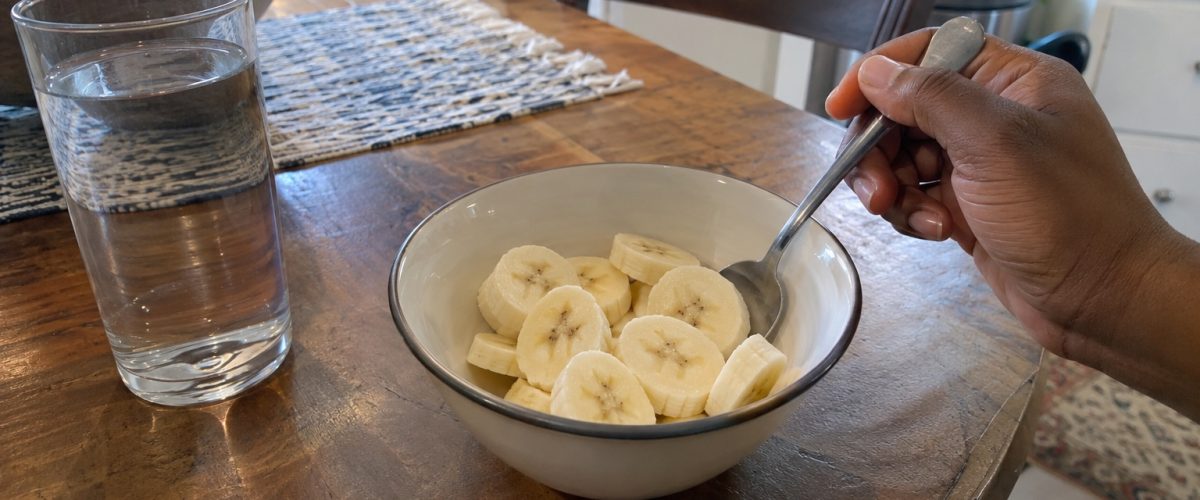
A ripe banana can become an easy snack in less time than it takes to search for a miracle circulation recipe. Peel it, slice it, or mash it into a bowl and you have ordinary food that fits many meals. What you do not have is a preparation that cleans arteries, cures high blood pressure, or explains unexplained leg pain.
There is no special banana-cutting method that turns the fruit into an artery treatment. Keep it as a food choice while taking blood-pressure measurements, prescribed treatment, and persistent circulation symptoms seriously. A convenient snack and proper medical care can belong in the same day without one replacing the other.
Choose a banana you will enjoy eating
A ripe banana should be easy to peel and soft enough for your preferred texture. Some people like a firmer slice, while others prefer the sweetness and softness of a more spotted fruit. Avoid fruit with obvious mold, leaking spoilage, or an unpleasant smell.
Wash your hands and use a clean plate, knife, and fork. Keep the peel away from the prepared food once removed. The preparation needs no powder, supplement, salt, or oil to activate it. Ordinary food handling is the useful starting point.
Make a simple mashed-fruit bowl
- Peel one banana and place the flesh in a clean bowl.
- Slice it into manageable pieces with a clean utensil.
- Mash gently with a fork until the texture suits you, or leave the slices whole.
- Eat it as part of a snack or meal that fits your normal appetite.
- Refrigerate leftovers promptly in a covered food container rather than leaving them beside the bed overnight.
This is a serving suggestion, not a medical dose. There is no required fasting period, bedtime schedule, or number of days that makes it clear the arteries. You can eat a banana at a convenient time without treating that timing as a hidden mechanism.
Build a meal around the fruit
Banana can sit beside breakfast, be sliced over oats, or be served with a food you already enjoy. Choose the rest of the meal according to your needs and preferences. A fruit bowl does not need to replace a balanced lunch simply because its preparation is easy.
If you are planning meals for someone else, ask about allergies, texture needs, and any dietary restrictions. Do not assume a fruit that is ordinary for you is appropriate in unlimited amounts for everyone. A useful household recipe remains flexible enough to fit the person eating it.
Understand the potassium connection
Bananas contain potassium, but that fact does not mean they dissolve artery deposits. Nutrition affects health through an overall pattern, and blood pressure is influenced by more than one food. Eating a banana is not a reliable way to judge whether a blood-pressure medicine is still needed.
Some people with kidney disease or specific medical advice need to limit or manage potassium intake. If that applies to you, follow your clinician’s or dietitian’s plan rather than adding bananas as a daily treatment. Do not change medicines or supplements based on a kitchen recipe.
Take leg symptoms seriously
Leg pain has many possible causes. Pain associated with walking, discomfort at rest, unusual coldness, skin changes, or wounds that do not heal should be discussed with a clinician. A circulation condition needs assessment; it cannot be identified by whether a snack seems to make you feel better.
Seek urgent medical help for sudden severe limb pain, a cold or pale limb, or other rapidly developing symptoms. Do not wait several days to test a fruit preparation. If symptoms are gradual but persistent, keep a note of when they occur and what brings relief.
Make a useful record for an appointment
Write down which leg is affected, whether walking triggers the discomfort, and whether resting changes it. Include any swelling, skin changes, or recent injury. Bring a list of medicines and supplements rather than trying to remember them under pressure during the appointment.
If you monitor blood pressure at home, follow the technique and schedule recommended for your device and care plan. Do not compare a reading taken while rushing with one taken after sitting quietly and attribute the difference to the banana you ate in between.
Keep the easy habit, lose the secret promise
Having fruit available can make a snack decision simpler. Buy an amount you can use, check ripeness, and plan ways to serve it before it spoils. Those practical habits are worthwhile without claiming that a food industry is concealing a cure.
Choose health goals that can be discussed and followed over time, including the eating pattern, movement plan, and treatment appropriate for you. A single ingredient should not carry the entire responsibility for managing a condition.
Does this really work?
A ripe banana is a convenient food, and slicing or mashing it can make it easy to include in a meal. It does not clean arteries, cure hypertension, or reliably relieve circulation-related leg pain. Potassium content does not change that conclusion, and some people need individualized potassium limits. Enjoy the fruit when it fits your diet while using appropriate assessment and treatment for blood-pressure or leg symptoms.


