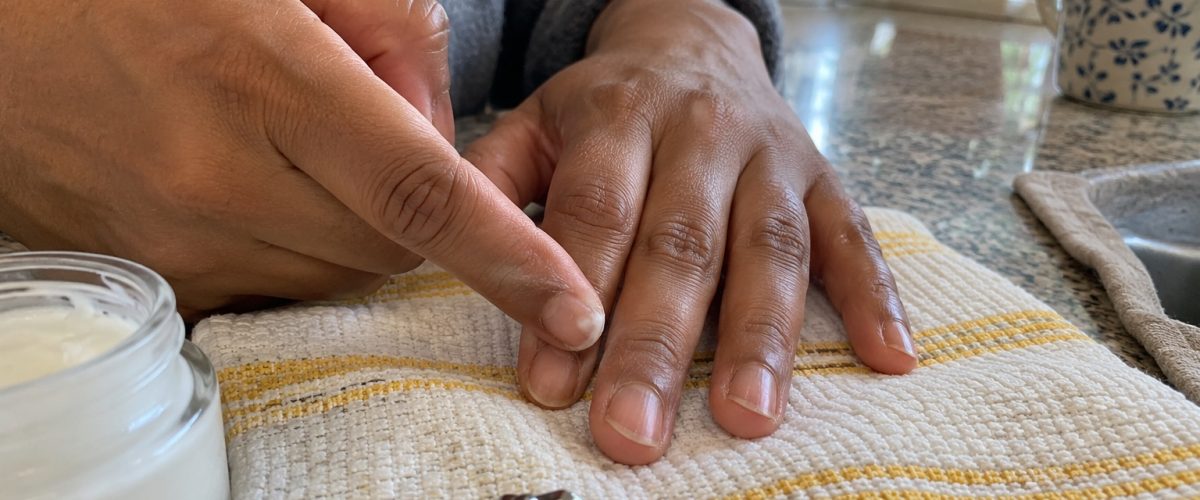
Brittle nails need protection, not a stronger sting. When the edges keep splitting or peeling, start by reducing repeated damage and giving the surrounding skin a gentle routine. Baking soda, menthol ointment, and vinegar do not form a proven nail-strengthening treatment, and their combination may irritate the skin around an already fragile nail.
There is also an important naming distinction: food-grade spirit vinegar is not white spirit paint solvent. Never put paint thinner or white spirit solvent on nails or skin as a care treatment. Read the actual container, and keep household chemicals separate from personal-care supplies.
Look at the pattern before choosing a product
Notice whether one nail is affected or several, whether the change followed a manicure or cleaning task, and whether there is pain, swelling, discoloration, or lifting. A small split from catching a nail on something is different from a persistent change across many nails.
Do not assume every weak nail has a fungal infection or a nutrient deficiency. Nail changes have several possible causes, and appearance alone is not enough to choose treatment. A clinician can help when the problem is persistent, unexplained, painful, or accompanied by changes in the surrounding skin.
Prepare a three-part care kit
For an uncomplicated daily routine, gather a gentle cleanser, a suitable fragrance-free moisturizer, and protective gloves for wet household work. These are separate supplies with separate jobs. You do not need to mix them into a cream or store a homemade preparation beside the sink.
Keep your own clean nail file and clippers available for ordinary maintenance. Choose a well-lit place to use them and put them away dry. A tool that is blunt, damaged, or difficult to control is not a good solution for a nail that already splits easily.
Wash without trying to scrub weakness away
Clean your hands normally with a gentle cleanser and water, then rinse thoroughly. Do not dig beneath the nail with a sharp object or repeatedly scrub the nail plate to remove an appearance you dislike. The aim is hygiene, not thinning the surface until it looks different.
Dry your hands and the accessible areas around the nails. If you wash frequently, keep a moisturizer nearby so applying it becomes part of the routine. You should not need an elaborate soak every time your hands have been in water.
Moisturize the surrounding skin
Apply a suitable moisturizer to the hands and around intact nail folds, following the product instructions. Use gentle movements rather than pushing hard at the cuticle. If the skin is cracked, inflamed, or painful, ask about an appropriate product instead of experimenting with menthol or acidic ingredients.
A cooling sensation from menthol is not proof of deeper cleaning or stronger nails. Baking soda and vinegar reacting together also does not establish a treatment effect. Leave those ingredients out of the nail routine rather than interpreting fizzing, tingling, or temporary shine as repair.
Reduce the damage during ordinary tasks
- Use appropriate gloves for washing dishes and cleaning, keeping the inside dry and comfortable.
- Use a tool to open packaging or lift tabs rather than using the nail edge as a lever.
- Keep nails at a practical length that is less likely to catch during your usual work.
- Stop picking at loose layers or biting the edge when it feels uneven.
- Give irritated nails a break from cosmetic procedures that seem to worsen the problem.
Gloves should suit the task and the cleaning product. Remove them if the inside becomes wet, and dry your hands before using another pair. Protection works best when it reduces exposure without leaving the skin damp for long periods.
Manage a small rough edge carefully
If a nail has a minor snag and the area is not painful, use a clean suitable file to smooth the accessible edge gently. Do not file deeply into the side or scrape away layers across the whole nail. Leave a split that extends into tender tissue for professional advice.
Do not tear off a lifted portion or cover an unexplained damaged nail with an artificial nail to hide it. Cosmetic coverage can make changes harder to inspect. Keep the area visible enough to notice whether it is improving or becoming inflamed.
Give growth time and keep useful notes
Take an occasional photograph in similar light if the appearance is changing. Note new products, repeated wet work, and any painful episodes. This simple record can help a clinician understand the pattern without relying on memory.
Nails do not become newly grown overnight. Avoid switching between several harsh preparations because the existing damaged edge remains visible. A steady, gentle routine supports care while the cause is identified and any needed treatment has time to work.
Does this really work?
Gentle cleaning, moisturizing, and protection from repeated wet work or mechanical damage can support ordinary nail care. Baking soda, menthol ointment, and vinegar are not a proven strengthening cream, and paint solvent must never be substituted for vinegar. Persistent brittleness, pain, lifting, or discoloration deserves assessment. The useful goal is less damage and appropriate care over time, rather than a dramatic sensation from an improvised mixture.


