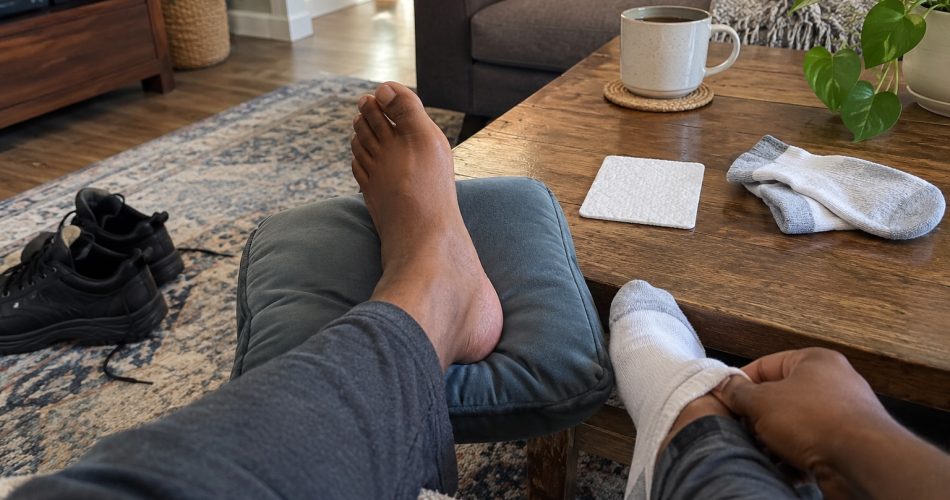
Sore feet after a long shift deserve relief, but recurring swelling should not be covered with a homemade patch and ignored. Menthol, toothpaste, and salt on an absorbent pad are not an established treatment for swollen feet. Keeping that mixture pressed beneath a sock can irritate skin. Start by removing pressure, checking the feet, and deciding whether the symptoms need medical attention.
Unexplained swelling in one leg or foot, sudden severe swelling, redness, warmth, or significant pain needs urgent advice. Swelling accompanied by chest pain or shortness of breath is an emergency. Do not massage the area or wait overnight for a patch to work.
Check what changed during the day
Notice whether discomfort began after new shoes, a longer shift, an injury, or an unusual amount of walking. Check whether both feet are affected and whether the pain is at the heel, arch, toes, or ankle. These details help distinguish a pressure problem from symptoms that need assessment.
Look for blisters, cuts, color changes, or a sock seam that has pressed into the skin. If you have diabetes, poor circulation, or reduced sensation, get advice early about a new foot problem. A foot that feels numb may not warn you reliably about damage.
Give the feet a comfortable break
Sit in a supported position and remove tight footwear carefully. Let the feet rest without forcing them into a stretch. If ordinary mild puffiness has no warning signs and elevation is comfortable, support the legs on a suitable cushion or footrest while you take a break.
Do not balance the legs on an unstable pile or leave pressure concentrated on a narrow edge. Adjust the position if it causes tingling, pain, or numbness. Rest should reduce strain rather than introduce another uncomfortable pressure point.
Clean and inspect without harsh ingredients
Wash gently when needed using comfortably warm water, then dry carefully, including between the toes. Avoid prolonged hot soaking, vigorous scrubbing, or scraping at thick skin. Keep a clean towel beneath the feet and make sure the floor stays dry.
For ordinary dry intact skin, use an appropriate moisturizer as directed. Do not put toothpaste, salt, or a mixture of household products onto broken skin. A burning or cooling sensation does not demonstrate that swelling is being treated.
Leave the improvised patch out
An absorbent pad is not a medical foot dressing simply because it fits inside a sock. Added ingredients can remain against the skin for longer than intended, and the pad may bunch up, change shoe fit, or create friction. Avoid sleeping with a medicated homemade mixture sealed against the sole.
If you choose a labeled topical pain product, use it only for the conditions and body areas described on its package. Do not mix it with toothpaste or salt, cover it tightly, or add heat unless its instructions explicitly allow that use. Ask a pharmacist if you are unsure whether it suits your symptoms.
Check the shoes before the next shift
- Inspect the inside for rough seams, worn lining, debris, or a folded insole.
- Check that the toes have room and the shoe does not press across a swollen area.
- Choose socks that fit without tight bands or bunching beneath the foot.
- Let footwear dry between uses where practical.
- Replace or repair footwear that no longer provides a comfortable fit.
Do not add several thick pads to a shoe that is already tight. Extra cushioning is not helpful if it reduces space and increases pressure. A podiatrist or other qualified professional can advise when ordinary footwear adjustments are not enough.
Build short breaks into long standing days
Where your work allows, alternate positions and take brief opportunities to sit or move comfortably. A suitable work arrangement may reduce the continuous load on the feet. Discuss recurring discomfort with the person responsible for workplace equipment or scheduling when appropriate.
Keep movement gentle and within your usual ability. Do not exercise through acute pain or unexplained swelling. If a clinician has given you a specific activity or compression plan, follow that plan rather than adding a generic routine from a household tip.
Record recurring symptoms
Note which footwear you wore, how long you stood, when swelling appeared, and whether it improved after rest. Include any new medicines or health changes when you discuss the pattern with a clinician. A photograph can help show swelling that is less obvious by the appointment time.
Persistent swelling, worsening pain, or symptoms that keep returning need assessment of the cause. Do not assume that standing explains everything, especially if one side is different or the skin changes. Early attention can prevent a small problem from being repeatedly aggravated.
Does this really work?
Rest, comfortable footwear, appropriate skin care, and changes to prolonged standing may help ordinary tired feet. A menthol, toothpaste, and salt patch is not a reliable treatment for pain or recurrent swelling and can irritate skin. Swelling has several possible causes, so use warning signs and persistence to guide medical assessment rather than relying on a cooling sensation or an overnight homemade dressing.


