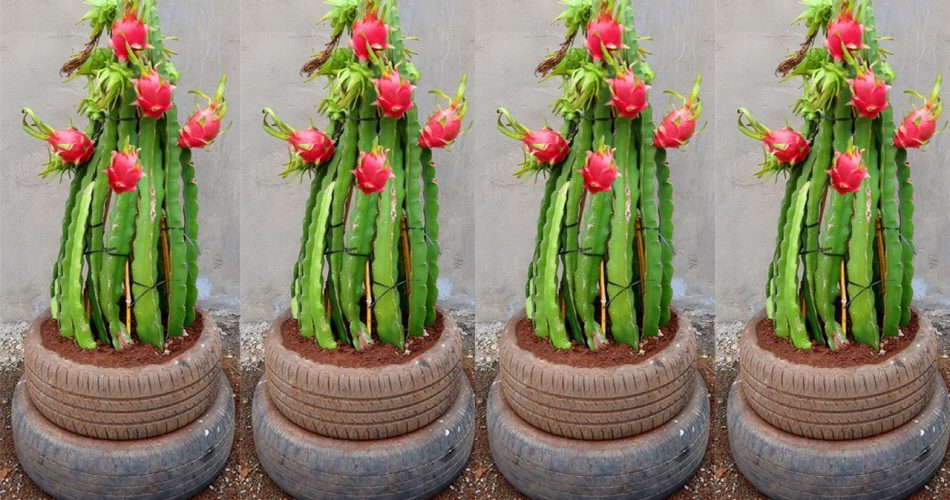
Dragon fruit, also known as pitaya or pitahaya, is a tropical fruit that is relatively easy to grow, making it suitable for beginners. Here’s a simple guide on how to care for and plant dragon fruit:
Materials Needed:
- Dragon fruit cuttings or seeds
- Potting mix or well-draining soil
- Containers or pots with drainage holes
- Support structure (trellis, stakes, or similar)
- Fertilizer (balanced or cactus-specific)
- Watering can or hose
- Full sunlight
Procedure:
1. Obtain Dragon Fruit Cuttings or Seeds:
- You can start growing dragon fruit from cuttings or seeds. Cuttings are a more common and quicker method for beginners.
2. Prepare Containers:
- Use containers or pots with drainage holes to prevent waterlogging. Fill them with a well-draining potting mix or cactus mix.
3. Plant Dragon Fruit Cuttings:
- If using cuttings, allow them to dry and callus for a day or two. Plant the cuttings in the containers, burying them about 2-3 inches deep. If using seeds, plant them according to the instructions on the seed packet.
4. Watering:
- Water the dragon fruit cuttings or seeds thoroughly after planting. Allow the top inch of the soil to dry out before watering again. Dragon fruit prefers slightly drier conditions.
5. Sunlight:
- Dragon fruit plants thrive in full sunlight. Place the containers in a location where they receive at least 6-8 hours of direct sunlight per day.
6. Provide Support:
- Dragon fruit plants are climbing plants. Install a trellis, stakes, or another support structure for the dragon fruit to climb as it grows.
7. Fertilize:
- Fertilize the dragon fruit plants with a balanced or cactus-specific fertilizer. Follow the recommended application rates on the fertilizer package. Fertilize during the growing season and reduce or stop during the dormant season.
8. Watering During Flowering and Fruiting:
- Increase watering slightly when the dragon fruit plants are flowering and fruiting. However, always ensure that the soil doesn’t become waterlogged.
9. Pruning (Optional):
- Prune the dragon fruit plants as needed to control their growth and shape. Removing excess branches can help improve air circulation.
10. Harvesting:
- Dragon fruit typically starts to produce fruits within one to two years. Harvest the fruits when they are fully ripe. The color of the skin (usually pink or red) and a slight softness to the touch are indicators of ripeness.
Additional Tips:
- Protect dragon fruit plants from frost, as they are sensitive to cold temperatures.
- Watch out for pests, such as scale insects or aphids. Control them using natural or organic methods.
Growing dragon fruit is a rewarding experience, and with proper care, you can enjoy the exotic fruits at home. Dragon fruit plants are hardy and can adapt to different growing conditions. As a beginner, focus on providing well-draining soil, adequate sunlight, and proper support for the climbing vines, and you’ll likely have success with growing dragon fruit.


