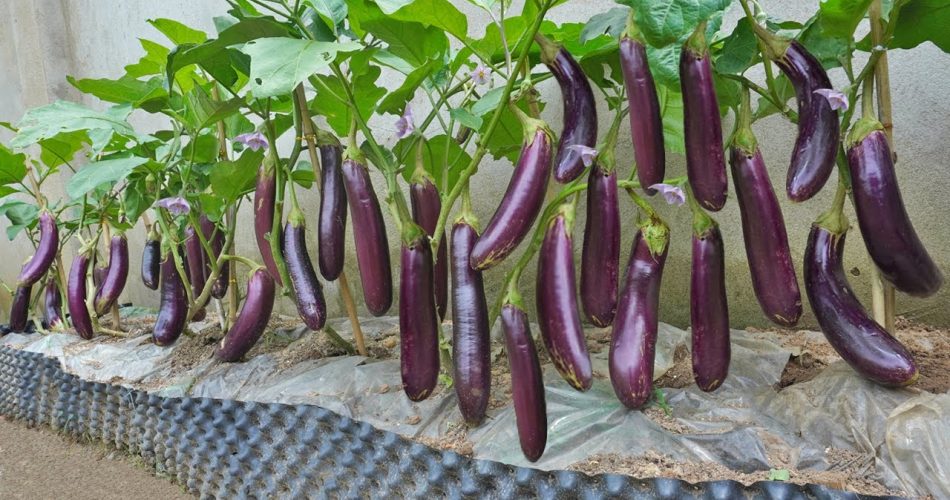
Growing a thriving eggplant garden at home can be a rewarding experience. Here’s a step-by-step guide to help you grow a bountiful eggplant garden—a housewife’s dream:
1. Choose the Right Eggplant Varieties:
- There are various eggplant varieties available, each with its unique size, shape, and color. Choose varieties that suit your taste preferences and growing conditions.
2. Start with Quality Seeds or Seedlings:
- Obtain high-quality eggplant seeds or seedlings from a reputable source. You can start seeds indoors before the growing season or purchase seedlings from a local nursery.
3. Plan the Garden Layout:
- Select a sunny location for your eggplant garden. Eggplants thrive in full sunlight, so choose a spot that receives at least 6-8 hours of direct sunlight per day.
4. Prepare Well-Draining Soil:
- Eggplants prefer well-draining soil with a slightly acidic to neutral pH. Incorporate organic matter, such as compost or well-rotted manure, to enhance soil fertility.
5. Planting:
- If starting from seeds, sow them indoors 6-8 weeks before the last expected frost. Transplant seedlings into the garden once the soil has warmed. If using seedlings, plant them at the recommended spacing based on the specific variety.
6. Watering:
- Keep the soil consistently moist but not waterlogged. Eggplants require regular watering, especially during dry periods. Water at the base of the plants to prevent fungal issues.
7. Mulching:
- Apply a layer of organic mulch, such as straw or shredded leaves, around the base of the eggplants. Mulch helps retain soil moisture, suppress weeds, and regulate soil temperature.
8. Fertilize:
- Use a balanced fertilizer or one formulated for vegetables. Follow the recommended application rates on the fertilizer package. Fertilize at planting and periodically throughout the growing season.
9. Support the Plants:
- Eggplants can benefit from support, especially as they begin to bear fruit. Install stakes or cages to support the plants and prevent the branches from bending under the weight of the fruit.
10. Pruning (Optional):
- While not strictly necessary, some gardeners choose to prune eggplants to encourage bushier growth. Remove the lower leaves and suckers to improve air circulation.
11. Monitor for Pests and Diseases:
- Keep an eye out for common eggplant pests such as aphids, flea beetles, and tomato hornworms. Apply organic or chemical solutions as needed. Also, watch for signs of diseases and address them promptly.
12. Harvesting:
- Harvest eggplants when they reach the desired size and have a glossy appearance. Use pruning shears or a sharp knife to cut the eggplants from the plant, leaving a short stem attached.
13. Rotate Crops:
- To prevent soil-borne diseases and maintain soil health, consider rotating your eggplant crops to a different part of the garden in subsequent seasons.
Growing a successful eggplant garden requires attention to soil quality, sunlight, water, and pest management. By following these steps and regularly caring for your eggplant plants, you can create a thriving garden that produces a bountiful harvest—a true housewife’s dream!
Show Comments


