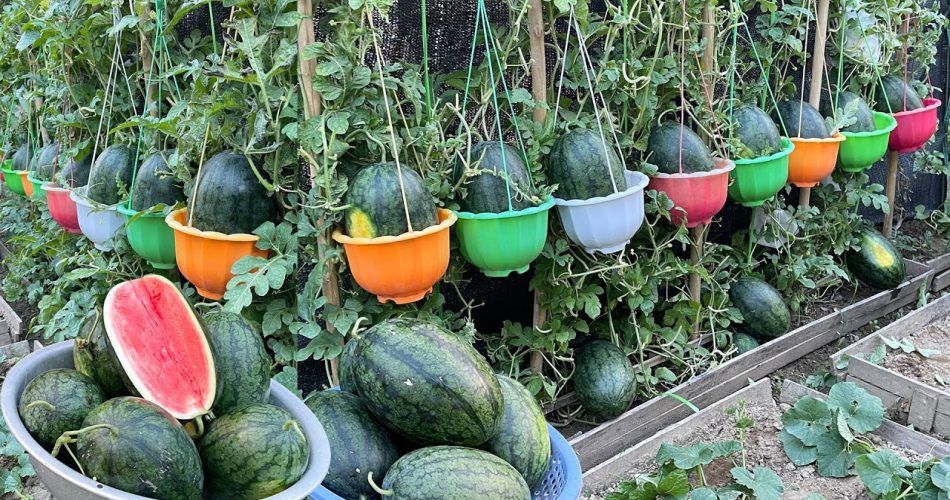
Introduction: There’s nothing quite like biting into a sweet, juicy slice of homegrown watermelon on a hot summer day. While growing watermelon may seem daunting to some, it’s surprisingly easy with the right approach. In this guide, I’ll share a straightforward method for cultivating mouthwatering watermelons that will leave you amazed by the results.
Start with Quality Seeds or Seedlings: To kickstart your watermelon-growing journey, begin with high-quality seeds or seedlings. Choose a variety suited to your climate and growing conditions, ensuring optimal success. Watermelon seeds can be sown directly into the soil or started indoors and transplanted once the weather warms up.
Select the Perfect Location: Watermelons thrive in warm, sunny environments, so choose a spot in your garden that receives full sunlight throughout the day. Ensure the soil is well-drained and rich in organic matter, as watermelons prefer slightly acidic to neutral soil pH levels.
Prepare the Soil: Before planting, prepare the soil by loosening it to a depth of at least 12 inches and incorporating compost or aged manure to improve fertility and drainage. Watermelons are heavy feeders, so providing nutrient-rich soil is essential for robust growth and bountiful fruit production.
Plant with Care: When the soil has warmed to at least 70°F (21°C), it’s time to plant your watermelon seeds or seedlings. Space the plants approximately 3 to 5 feet apart in rows, allowing plenty of room for the sprawling vines to spread. Plant the seeds or seedlings at the same depth as they were in their pots, gently patting the soil around them to ensure good contact.
Water Wisely: Watermelons require consistent moisture to thrive, especially during the flowering and fruiting stages. Keep the soil evenly moist but not waterlogged, as excess moisture can lead to rot and other problems. Consider using a soaker hose or drip irrigation system to deliver water directly to the roots while minimizing moisture on the leaves.
Support the Vines: As your watermelon plants grow, provide support for the heavy fruit by placing straw or cardboard beneath them to prevent direct contact with the soil. This helps prevent rot and keeps the fruit clean and free from blemishes.
Monitor for Pests and Diseases: Keep an eye out for common pests and diseases that can affect watermelon plants, such as aphids, cucumber beetles, and powdery mildew. Regularly inspect your plants for signs of trouble and take appropriate measures to address any issues promptly.
Harvest at the Right Time: Knowing when to harvest your watermelons is key to enjoying them at their peak flavor and sweetness. Look for signs such as a dull, yellowish underside, and a firm, slightly springy texture when thumped. Use a sharp knife to cut the fruit from the vine, leaving a short stem attached.
Conclusion: With these simple steps, growing watermelon at home is a breeze, yielding amazing results that will impress family and friends alike. From planting to harvest, the process is straightforward and rewarding, culminating in sweet, succulent watermelons that are sure to be the highlight of your summer garden. So roll up your sleeves, grab your gardening tools, and get ready to enjoy the delicious fruits of your labor!


