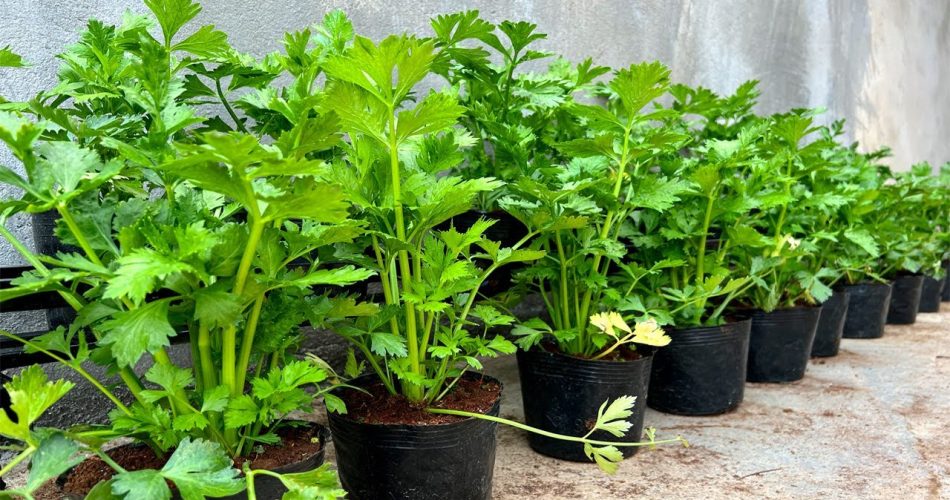
Growing celery at home in containers can be a rewarding experience, and it allows you to enjoy fresh, crisp celery right from your own garden. Here’s a step-by-step guide on how to plant celery in containers:
Materials Needed:
- Celery Seeds or Starter Plants: You can start celery from seeds or purchase starter plants from a nursery.
- Container: Choose a deep container with good drainage. Celery has long roots, so a container that is at least 12 inches deep is recommended.
- Potting Mix: Use a high-quality potting mix that is well-draining.
- Fertilizer: Choose a balanced, all-purpose fertilizer.
- Watering Can or Hose: For watering the plants.
- Mulch (optional): Mulch helps retain soil moisture and suppress weeds.
Steps:
- Choose the Right Container:
- Celery has a long taproot, so choose a container that is at least 12 inches deep. The width should be sufficient to accommodate several celery plants.
- Fill the Container with Potting Mix:
- Fill the container with a well-draining potting mix, leaving about an inch from the top.
- Planting Seeds or Starter Plants:
- If starting from seeds, sow them about 1/8 to 1/4 inch deep in the soil. Space the seeds or seedlings according to the recommendations on the seed packet.
- If using starter plants, transplant them into the container at the recommended spacing.
- Watering:
- Water the soil thoroughly after planting. Keep the soil consistently moist throughout the growing season. Celery prefers evenly moist conditions.
- Fertilizing:
- Fertilize the celery plants with a balanced, all-purpose fertilizer according to the package instructions. Repeat the fertilization process every few weeks.
- Sunlight:
- Celery prefers full sun but can tolerate partial shade. Place the container in a location where the plants receive at least 6-8 hours of sunlight per day.
- Thinning (if applicable):
- If you started from seeds and the plants are too close together, thin them to provide adequate space for each plant to grow.
- Mulching (optional):
- Applying a layer of mulch around the plants can help retain soil moisture, suppress weeds, and regulate soil temperature.
- Harvesting:
- Celery is typically ready to harvest when the stalks are large and crisp. You can harvest individual stalks as needed or cut the entire plant at the base.
- Overwintering (optional):
- In colder climates, you can attempt to overwinter celery by bringing the container indoors before the first frost. Trim the tops and keep the soil consistently moist.
Remember that celery requires consistent moisture, so monitor the soil regularly and water when needed. With proper care, you can enjoy homegrown celery from your container garden.
Show Comments


