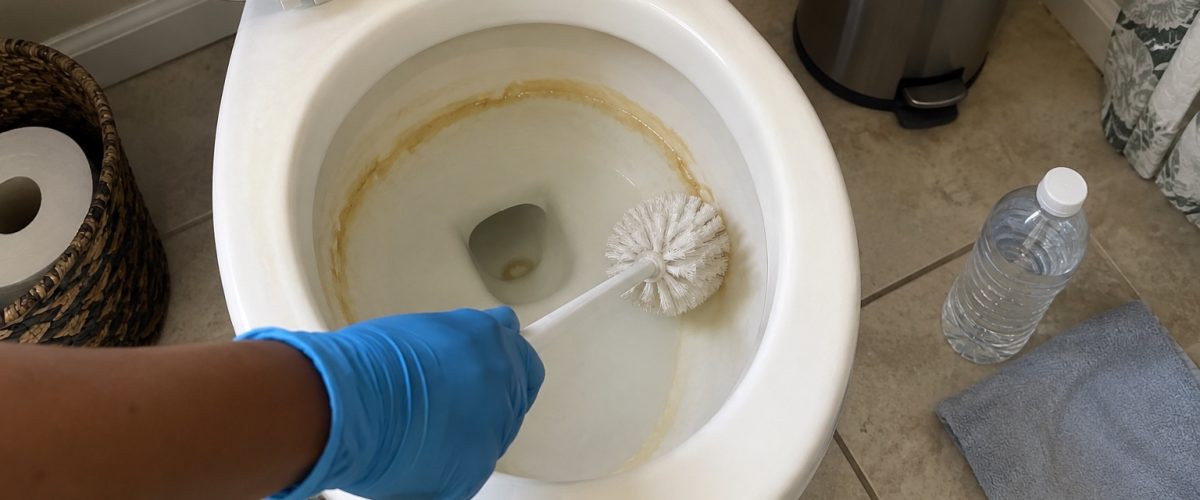
A yellow toilet ring and a stubborn urine smell need two clear questions: what is staining the bowl, and where is the odor coming from? They may not have the same source. Before cleaning, one rule is essential: never mix bleach with vinegar, detergent, or other cleaners. Bleach and vinegar can release dangerous chlorine gas. Do not add boiling water to a toilet or use foaming as a measure of cleaning power.
A controlled routine can improve ordinary stains and surface residue, but instant removal is not guaranteed. Use one compatible product at a time and investigate the cause. That approach protects the toilet and gives you a better chance of solving the smell instead of briefly covering it.
Identify what is already in the toilet
Check whether a cleaning block, cistern additive, or recently applied product is present. Read labels before introducing anything else. If you do not know what was used, stop and establish that first rather than adding another chemical to an unknown mixture.
Keep all cleaners in their original labeled containers and ventilate according to their directions. Wear the specified protection. If cleaners have accidentally been mixed and irritating fumes develop, leave the area for fresh air and contact emergency or poison-control help as appropriate. Do not lean over the bowl to investigate or add another substance to neutralize it.
Separate the stain from the smell
A yellow or brown ring may involve mineral deposits, organic residue, or staining associated with the water supply. A persistent urine smell can come from seat hinges, the bowl exterior, the nearby floor, or a contaminated mat. Cleaning only the ring may leave the odor source untouched.
Remove the bathmat and inspect the toilet base for moisture. Check the brush holder and waste bin too. Note whether the toilet rocks or whether the smell resembles sewage, since those details may point toward a plumbing issue rather than ordinary dirt.
Prepare a surface-specific kit
Gather a toilet brush, dedicated cloths or disposable towels, appropriate gloves, and a bowl cleaner suitable for the toilet. Use a separate cleaner for the seat and exterior if their care instructions require it. Keep toilet cloths away from the sink and kitchen.
Leave the vinegar, bleach, baking soda, and detergent bottles out of a shared mixing container. You are choosing a compatible method, not building a chemical combination. A toilet bowl is not a safe place to experiment with several products because they are individually familiar.
Clean the bowl in a measured way
- Confirm that the chosen cleaner is compatible with the toilet and any existing product restrictions.
- Apply it according to the label, including the recommended amount and contact time.
- Brush accessible stained areas gently with a suitable toilet brush.
- Flush or rinse exactly as directed and allow the water to settle.
- Inspect the result before deciding whether a further permitted treatment is needed.
If a mineral ring remains, consult the toilet’s care guidance for a compatible descaling product. Treat descaling as a separate task, with all previous product removed as instructed. Never put an acidic descaler into bleach-containing water.
Remove the odor from the outside
Wipe the lid, both sides of the seat, the hinges, and the exterior of the bowl. Follow the product’s instructions for contact time and residue removal. Use fresh cloth sections as you move toward dirtier areas.
Clean the floor around the base without flooding joints, then dry it. Wash the bathmat according to its care label and return it only when fully dry. Clean the brush holder and bin if needed; these small containers can remain dirty even after the toilet looks brighter.
Stop before damaging the surface
Do not scrape the bowl with metal utensils or use rough abrasives that the manufacturer does not permit. Scratches can make the appearance worse and create areas where residue is harder to remove. A remaining stain is not a reason to keep increasing pressure indefinitely.
Boiling water adds burn risk and can damage toilet materials through sudden temperature changes. It is unnecessary for this routine. Likewise, a large burst of foam does not demonstrate that urine residue or mineral scale has disappeared.
Investigate a smell that returns
If the bathroom smells again after the cleaned surfaces are dry, check for leaks, a damaged seal, or nearby drainage problems. A plumber can assess a rocking toilet, unexplained moisture, or a persistent sewer-like odor. Do not seal over a leak simply to hide it.
Keep a short note of when the smell appears and what was cleaned. That information helps identify the source and prevents repeated, unnecessary product changes. Small regular wipe-downs and dry accessories can maintain the improvement once the underlying problem is addressed.
Does this really work?
Appropriate bowl cleaning and attention to the seat, hinges, floor, and accessories can reduce ordinary staining and urine residue. Instant removal is not guaranteed, and plumbing faults need repair. The bleach, vinegar, detergent, boiling-water, and baking-soda combination is unsafe and should not be prepared. Use one compatible product at a time, follow its directions, and judge the result after the room is clean and dry.


