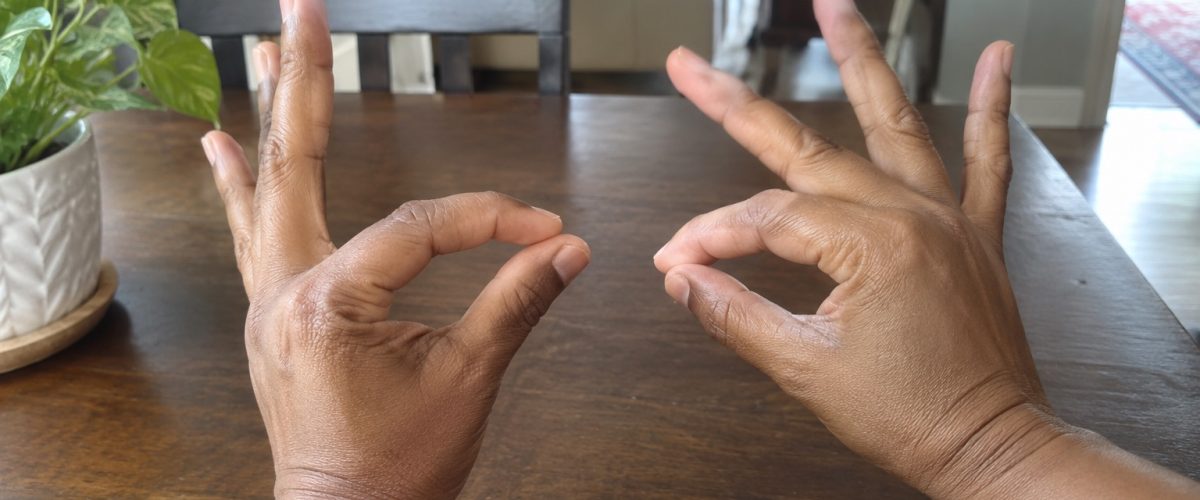
A simple finger pattern can become surprisingly tricky when you ask both hands to do it together. This ten-repetition challenge gives you a small coordination task to try at a table, with no equipment and no need to rush. Treat it as a skill game: practice the sequence, notice where you lose the order, and make it easier when necessary.
Completing it without mistakes does not prove that your brain is healthy, and difficulty does not diagnose a problem. Familiarity, attention, fatigue, hand pain, and ordinary differences between the hands can all affect performance. The challenge is an activity, not a medical screening test.
Set up comfortably
Sit at a stable table with your forearms supported and shoulders relaxed. Place both hands where you can see them clearly. Remove rings only if they interfere with comfortable movement, and avoid a position that bends the wrists sharply.
Try the sequence when you are not driving, carrying something hot, or doing another task that requires attention. A quiet minute is enough to begin. You do not need a stopwatch, an app, or someone judging every movement.
Learn the pattern on one hand
Touch the thumb lightly to the index fingertip, then the middle fingertip, then the ring fingertip, and finally the little fingertip. Release between touches. Keep the other fingers as relaxed as possible rather than stretching them rigidly.
One complete trip from index to little finger counts as one repetition. Return to the index finger to begin the next repetition. Start slowly enough that you can name the finger you are about to touch without feeling hurried.
Try the ten-repetition round
- Complete one slow sequence on your first hand and count it as one.
- Continue through the same four touches, adding one to the count after each full sequence.
- Pause if you lose your place, then resume without squeezing or speeding up.
- Stop at ten complete sequences or sooner if the hand feels uncomfortable.
- Rest briefly, then try the other hand using the same pattern.
You do not have to restart from zero after a mistake. If that turns the activity into frustration, simply note the point where you lost track and continue. The useful challenge is learning the order, not meeting a perfect score on the first attempt.
Make it easier when needed
Use only the index and middle fingers at first, then add the ring and little fingers when the shorter pattern feels familiar. You can also say the finger names aloud or watch each touch closely. These adjustments reduce the amount you need to remember at once.
If touching a particular fingertip is painful or restricted, skip that movement rather than forcing it. Hand arthritis, injury, or other conditions may need a tailored exercise plan. This general activity is not a replacement for instructions from a hand therapist or clinician.
Try both hands together
Once each hand can perform the sequence comfortably, try matching the same fingertips on both hands at the same time. Begin with a few repetitions rather than immediately demanding another ten. Keep the shoulders relaxed and the forearms supported.
Notice whether one hand leads or whether you look back and forth between them. That is simply information about the task. Practice can make a familiar movement smoother without proving a wider change in memory, intelligence, or brain health.
Add variety without adding pressure
On another occasion, reverse the order from little finger back to index finger. Keep that as a separate round so the rule remains clear. You can also alternate one hand and then the other rather than moving both together.
Change only one feature at a time: the order, the hand, or whether both hands move. Adding speed, a new sequence, and a memory rule all at once makes it hard to understand what you are practicing. A clear small challenge is usually more enjoyable.
Know what the result cannot tell you
A ten-repetition finger game cannot rule out a neurological condition, establish dementia risk, or certify that the brain is “in shape.” A good round should not reassure you about new symptoms, and a clumsy round should not make you diagnose yourself.
Sudden weakness or numbness, facial drooping, speech trouble, or a new abrupt loss of coordination can be an emergency. Seek urgent help rather than repeatedly trying the challenge to see whether you can pass it. Persistent gradual changes also deserve medical advice.
Keep the activity small and enjoyable
Finish while the hands still feel comfortable. If you want to practice again, choose another quiet moment rather than repeating until the fingers become tired. A brief playful activity can fit into a break without becoming a daily performance obligation.
You may notice the pattern becomes easier through familiarity. Enjoy that as learning a particular skill, while keeping broader health questions separate from the score.
Does this really work?
The challenge lets you practice a simple finger sequence and pay attention to coordination. Repetition may make that sequence easier, but ten successful rounds do not prove brain health or prevent neurological disease. Keep the movements gentle, adapt them to your comfort, and use medical advice rather than a finger-game result to assess new weakness, numbness, or coordination changes.


