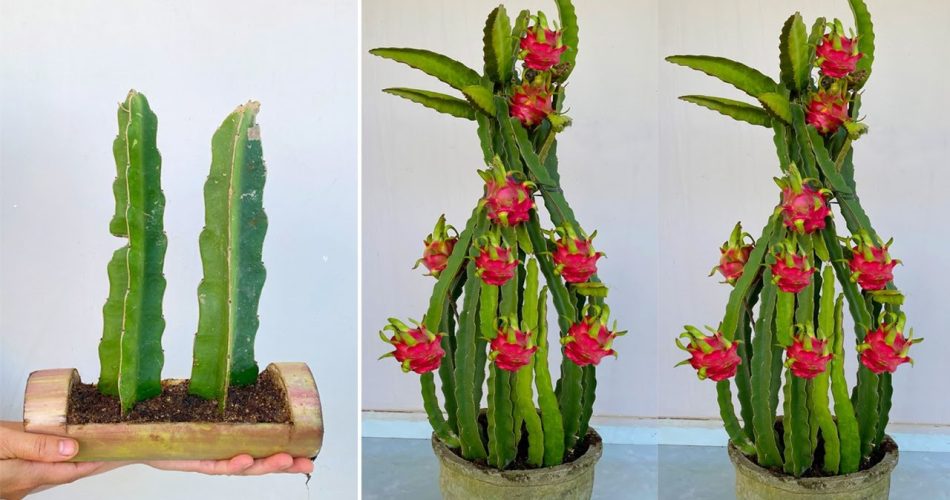
Growing dragon fruit (pitaya or pitahaya) can be a rewarding experience, and maximizing yield involves providing the right growing conditions and care. Here’s a guide on the best way to grow dragon fruit for maximum yield:
1. Selecting Dragon Fruit Varieties:
- Choose a dragon fruit variety that is well-suited to your climate. Common varieties include Hylocereus undatus (white-fleshed) and Hylocereus costaricensis (red-fleshed).
2. Site Selection:
- Dragon fruit plants prefer well-draining soil with a slightly acidic to neutral pH. Sandy loam or loamy soil is ideal.
- Ensure good sunlight exposure, as dragon fruit plants thrive in full sun. A location with at least 6-8 hours of sunlight per day is optimal.
3. Planting:
- Plant dragon fruit cuttings or seedlings in the spring when the soil has warmed up.
- Space the plants at least 10 feet apart to allow for proper growth.
4. Support Structures:
- Dragon fruit plants are climbers. Provide a sturdy support structure, such as a trellis or post, for the plants to climb and sprawl.
5. Watering:
- Dragon fruit plants require regular watering, especially during dry periods. However, they are sensitive to waterlogged conditions. Use a well-draining soil mix.
- A drip irrigation system is ideal for consistent moisture without waterlogging.
6. Fertilization:
- Use a balanced fertilizer during the growing season, typically from spring to early fall.
- Incorporate organic matter into the soil and feed with a low-nitrogen, high-phosphorus fertilizer to promote flowering and fruiting.
7. Pruning:
- Prune the dragon fruit plants to encourage branching and more flowering sites.
- Remove any dead or damaged stems to maintain plant health.
8. Pollination:
- Dragon fruit plants are generally self-pollinating, but providing additional pollination by hand may increase fruit set.
- Use a small brush or cotton swab to transfer pollen between flowers.
9. Protecting from Frost:
- Dragon fruit is sensitive to frost. If you’re in an area with occasional frost, consider providing protection to young plants.
10. Harvesting:
- Harvest dragon fruit when the skin color changes, and the fruit becomes slightly soft to the touch. The time from flowering to harvest is typically around 30-50 days.
- Use pruning shears to cut the fruit from the plant.
11. Pest and Disease Management:
- Keep an eye out for pests such as aphids and scale insects. Treat infestations promptly.
- Practice good sanitation to prevent the spread of diseases.
12. Mulching:
- Mulch around the base of the dragon fruit plant to conserve soil moisture and regulate temperature.
13. Patience:
- Dragon fruit plants may take some time to establish and start producing significant yields. Be patient and provide consistent care.
14. Continuous Care:
- Dragon fruit plants are perennial, so ongoing care is essential for sustained yield. Continue proper watering, fertilization, and maintenance.
By following these guidelines, you can create optimal conditions for growing dragon fruit and maximize your yield over time. Regular monitoring and adjustments to the care routine will contribute to the overall success of your dragon fruit garden.
Show Comments


