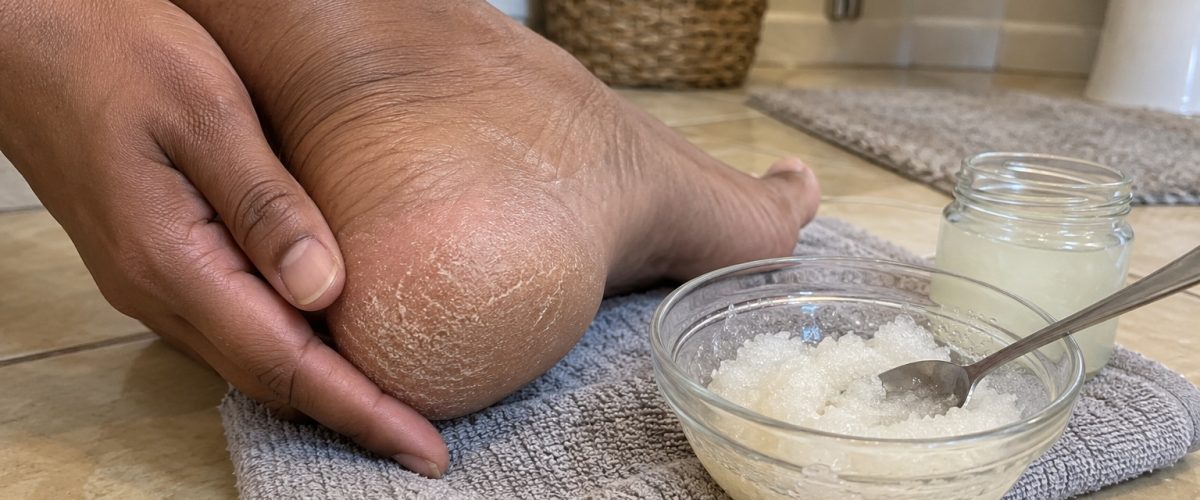
When your heels catch on socks or feel rough against the bedsheets, a little attention can make everyday foot care feel worthwhile again. You do not need an elaborate spa setup to start. The useful goal is softer, more comfortable skin, with a routine gentle enough that you can maintain it.
A sugar-and-coconut-oil scrub is one familiar option for mild surface roughness on intact skin. It is not a treatment for open cracks, painful fissures, infection, or an underlying foot condition. That distinction comes first: a rough heel and a broken heel should not receive the same treatment.
Check your heels before mixing anything
Look at the skin in good light. If it is simply dry and slightly flaky, gentle care may be enough to improve how it feels. If you see bleeding, open splits, marked redness, swelling, or drainage, skip the scrub and get advice.
People with diabetes, reduced circulation, or reduced sensation in their feet should ask a clinician or podiatrist about foot care before trying an abrasive homemade treatment. An area that does not hurt can still be injured when sensation is reduced.
Do not attempt to cut away thick skin with scissors, blades, or other sharp tools. Removing more skin is not the same as restoring a comfortable protective surface.
The two-ingredient scrub
Combine three tablespoons of ordinary sugar with enough coconut oil to make a soft paste. You will also need a small clean bowl, a spoon, warm water for rinsing, a clean towel, and a plain moisturizer suitable for your skin.
Choose fine sugar rather than large, sharp crystals. Add the oil gradually, stirring until the grains are lightly coated and the mixture can be picked up without running everywhere. It should not feel like a harsh scouring paste.
The exact amount of oil depends on its consistency and the sugar, so a fixed measurement is not essential. Make only what you need for a session, use clean utensils, and discard the remainder rather than treating a kitchen mixture as a preserved skincare product.
Start with clean, comfortable skin
Wash your feet gently with warm water and a mild cleanser, then pat them dry. Avoid prolonged hot soaking, which can leave dry skin more uncomfortable. Take another look at the heel before using any grains on it.
If you have not used coconut oil on your skin before, try a small amount on an intact area first and watch for irritation. A small test cannot guarantee that a larger application will suit you, but it can help you avoid continuing with something that already causes a reaction.
Use a light touch
- Sit somewhere stable. Put a towel beneath the foot and keep the bowl within reach. Do not balance on one oily foot in a shower.
- Use a small amount. Spread a little paste over intact rough skin on the heel, avoiding any cracks or tender areas.
- Make a few gentle passes. Move your fingertips lightly instead of grinding the sugar into the skin. Stop if the area stings, feels hot, or becomes red.
- Rinse thoroughly. Remove the grains with comfortably warm water. There is no need to leave the scrub sitting on the skin as a treatment.
- Dry carefully. Blot the heel with a towel and dry between the toes. Check that the foot and floor are not slippery before standing.
Keep the massage brief and comfortable instead of aiming for a fixed two-minute session. Pressure and skin response matter more than a timer. A scrub that leaves your heels sore has gone beyond useful cosmetic care.
Make moisturizing the main event
After rinsing, apply a fragrance-free moisturizer to the dry heel. A suitable heel cream or plain ointment can be easier to use consistently than repeatedly mixing a scrub. Follow the product’s directions, particularly if it contains ingredients intended to soften thick skin.
A thin layer of plain petroleum jelly before bed is another familiar way to help limit moisture loss. Clean socks can keep it from transferring to bedding. Avoid leaving a slippery coating on the sole before walking.
Regular moisturizing is more important than trying to remove all roughness in one session. You are caring for skin that has to tolerate standing, walking, and footwear every day.
Keep the routine comfortable
A twice-weekly scrub schedule is not a requirement. Some skin will tolerate occasional gentle exfoliation; other skin will do better with moisturizing alone. Allow any irritation to settle and do not repeat the scrub simply because a calendar says it is time.
Choose well-fitting shoes that support the heel, and notice whether particular footwear rubs or leaves the skin more uncomfortable. If roughness becomes painful, deep cracks develop, or basic care is not helping, arrange a foot-care assessment rather than increasing the pressure or adding stronger ingredients.
Does this really work?
A gentle sugar scrub may remove some loose surface flakes, while coconut oil can leave intact skin feeling smoother. That immediate feel is not proof that cracks have healed, and the mixture cannot promise renewed feet from the first day. For mild dryness, careful moisturizing and suitable footwear are the more useful foundation. Keep exfoliation optional, avoid broken skin, and seek advice for persistent or painful problems. The aim is comfortable heels, not a dramatic result achieved by scrubbing harder.


