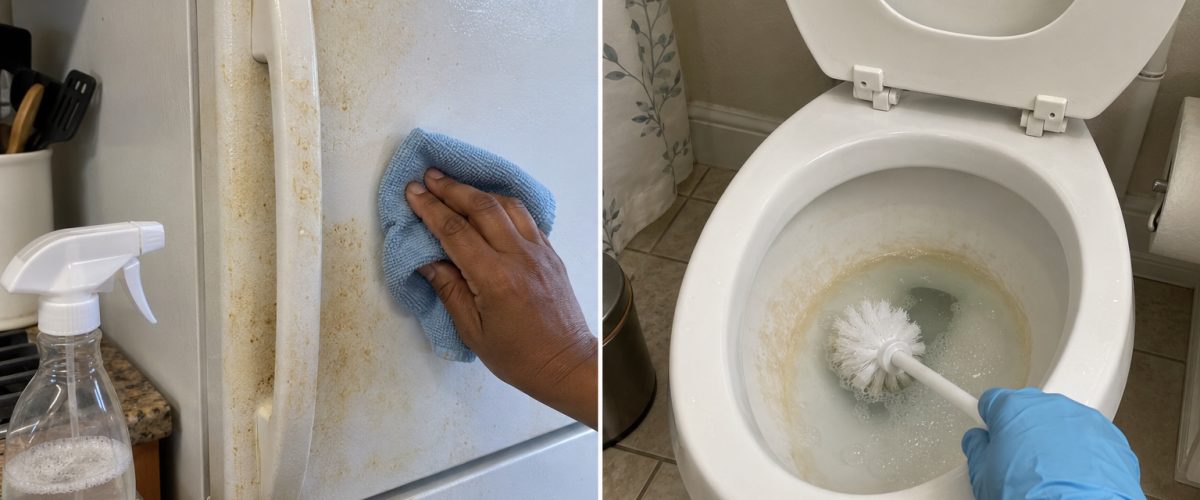
A yellowed fridge door and a stained toilet bowl can make an otherwise tidy home look overdue for a deep clean. You wipe, rinse, and look again, only to find the same dull marks staring back. Before reaching for a harsher scrubber, start with a simple homemade cleaning mixture and a method that suits the surface.
The useful trick is to loosen removable grime before you scrub. Warm water, a little mild dish soap, and the right cleaning tools can tackle everyday buildup. For stubborn toilet deposits, the next step depends on what is causing the stain.
First, work out what has turned yellow
On a refrigerator, yellowish marks can come from cooking grease, fingerprints, and accumulated surface dirt. These are different from plastic that has changed color with age or exposure to light. Cleaning can remove a dirty film; it cannot guarantee that aged plastic will return to its original white.
Inside a toilet bowl, yellow or brown staining may involve mineral deposits or other buildup. A slippery film and a hard, chalky ring need different attention. Identifying that difference helps you avoid repeatedly scrubbing a stain with something that cannot remove it.
The simple homemade mixture
For a gentle first clean on compatible washable surfaces, gather:
- 500 milliliters of warm water.
- One teaspoon of mild liquid hand-dishwashing soap.
- A clean container reserved for cleaning.
- A soft microfiber cloth and a second cloth for rinsing.
- A separate toilet brush, bathroom cloths, and household gloves.
This is a starting mixture for ordinary dirt and grease, not a whitening treatment or disinfectant. Check the appliance and toilet manufacturers’ care instructions before using it, especially on coated, textured, or specialty finishes.
Prepare it without making a mountain of foam
Pour the warm water into the container, add the dish soap, and stir gently. The mixture should be lightly soapy rather than thick or heavily foaming. More detergent can leave more residue to rinse away.
Prepare a fresh batch for the cleaning session. Keep the kitchen cloths, bathroom tools, and their cleaning water separate. Never bring a cloth or sponge used around the toilet back into the kitchen.
How to clean the yellowed refrigerator surface
- Check a hidden spot. Test the diluted cleaner on a small, inconspicuous area, wipe it off, and let the surface dry before continuing.
- Dampen the cloth. Dip it into the mixture and wring it out well. It should not drip into seams, controls, vents, or electrical parts.
- Work on a small area. Gently wipe the greasy marks around handles and other frequently touched spots. For stuck-on residue, hold the damp cloth against the patch briefly, then wipe again.
- Remove the soap. Follow with a separate cloth dampened with clean water, changing the water as it becomes dirty.
- Dry and inspect. Buff gently with a dry, soft cloth. Judge the result once the surface is dry, because moisture can temporarily change how marks look.
Use light pressure. If the yellow color remains after the surface feels clean, stop escalating the scrubbing. A scoured finish can look worse than the original mark.
How to tackle the toilet bowl
Put on household gloves and ventilate the bathroom. First check whether another toilet cleaner or an in-tank cleaning product is present. Do not add a homemade mixture to an existing cleaner. Follow that product’s instructions before changing methods.
For ordinary surface residue, and where the toilet’s care instructions allow it, use a fresh, separate batch of the mild mixture with a toilet brush. Scrub gently around the affected area and flush to rinse. Keep bathroom cleaning tools in the bathroom.
If a hard yellow ring remains, more dish soap is unlikely to solve the problem. Choose a toilet cleaner or descaler specifically labeled for the bowl’s material and the type of deposit. Follow its application directions, contact time, ventilation requirements, and rinsing instructions.
Use one cleaning product at a time. Never mix bleach with vinegar, acidic toilet cleaners, ammonia, or other cleaning products. Avoid metal scourers and aggressive abrasives that can scratch the surface.
What about salt and hydrogen peroxide cream?
Salt and peroxide cream are sometimes presented as shortcuts to a whiter finish, but neither belongs in a universal refrigerator-and-toilet recipe. Undissolved salt can act as an abrasive; once dissolved, it no longer behaves like gritty sandpaper. Abrasion is especially undesirable on a coated appliance.
Hydrogen peroxide cream may be a hair developer with a concentration and added ingredients intended for hair coloring. It is not interchangeable with a surface cleaner. Leave it out of this mixture, and only use a peroxide-based cleaning product where its label specifically permits the intended application.
Keep the brighter appearance longer
Wipe refrigerator handles and nearby greasy marks regularly, before the film becomes difficult to remove. Rinse away detergent and dry the surface instead of leaving streaks to build up.
In the bathroom, regular brushing and a suitable cleaning product can help keep deposits from accumulating. If staining returns quickly, consider whether the water or toilet needs attention.
Start gently, remove the residue, and match the next step to the stain. A cleaner-looking fridge and toilet begin with a consistent routine that protects their finishes while tackling the dirt you can actually remove.


