A doorstep should welcome visitors, not greet them with the smell of an old pet accident. If the same corner keeps attracting attention from a dog or cat, start by cleaning the surface thoroughly and changing how the animal reaches it. A stronger smell is not necessarily a better deterrent.
The most useful homemade step is a gentle cleaning solution for compatible washable surfaces. Pair it with an appropriate pet-urine cleaner when needed and a practical access plan. This gives you a clear routine instead of repeatedly covering the area with powders that wash away or irritate an animal’s paws.
Start with the surface beneath the mess
Check whether the entrance is glazed tile, concrete, painted wood, sealed stone, or another material. Liquid can behave very differently on each one. A puddle on glazed tile may remain near the surface, while urine can soak into an absorbent doormat or unfinished material.
Move the mat, shoes, and any loose items before cleaning. Look at the edge of the door frame and the joint between the step and the wall. Cleaning only the middle of the visible mark can leave residue in nearby corners.
Prepare a gentle cleaning mixture
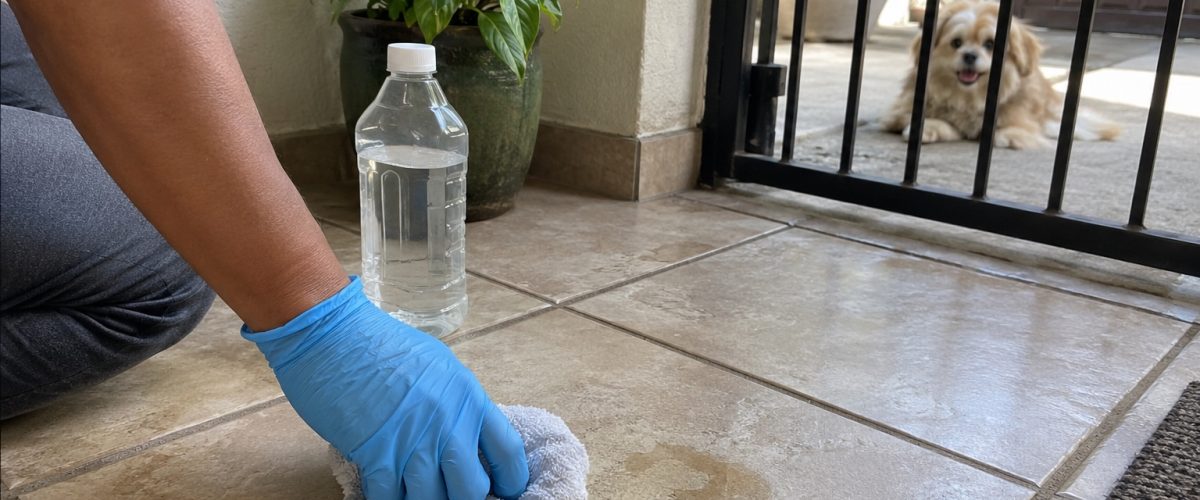
For a surface that permits mild soap and water, combine 500 milliliters of comfortably warm water with a few drops of ordinary mild dishwashing liquid. Stir gently in a clean container. Keep a separate container of plain water and two washable cloths nearby.
Use a small amount of detergent. The aim is to lift ordinary residue, not create a thick layer of foam that takes repeated rinsing. This mixture is a cleaning aid; it is not a disinfectant, a guaranteed odor remover, or a reliable animal repellent.
Leave irritating powders out
Do not scatter ground pepper, salt, or cinnamon where animals will sniff, lick, or walk. Pepper can irritate sensitive eyes and noses, and a powder-covered entrance creates exposure without addressing why an animal returns. Never spray a cleaning mixture at an animal.
Vinegar is also not suitable for every doorstep. Acid-sensitive stone and some finishes can be damaged, and a sharp smell does not establish that a pet will stop marking. Keep cleaners separate and follow the surface manufacturer’s instructions rather than increasing the concentration.
Clean the area in a sensible order
- Keep animals away while you work. Use a closed door or temporary barrier so the surface can be cleaned and dried without interruption.
- Blot fresh liquid. Wear household gloves and use absorbent material to collect it. Avoid rubbing the liquid over a larger area.
- Test an inconspicuous spot. Apply a little diluted cleaner, rinse, and let it dry before working across the entrance.
- Wipe the affected surface. Use the lightly soapy cloth on washable areas, including accessible corners. Do not flood door seals or porous edges.
- Remove the loosened residue. Rinse the cloth frequently, then wipe with clean water so dirty solution is not left behind.
- Let the area dry. Keep the barrier in place until the surface is no longer wet or slippery.
If odor remains, choose a pet-urine cleaning product suitable for the material. Follow its instructions for preparation, contact time, and drying. Do not mix it with vinegar, bleach, fragrance products, or another cleaner. A washable mat may need laundering or replacement if residue has penetrated it.
Change the repeated opportunity
Cleaning is easier to maintain when the animal cannot immediately revisit the same spot. A gate, supervised access, or moving an attractive object may help interrupt the pattern. Use calm management rather than punishment; frightening the animal does not explain where it should toilet.
For your own dog, maintain regular outdoor toilet opportunities and reward appropriate toileting. For a cat, check whether the litter tray is accessible, clean, and in a comfortable location. A change in the household or tension with another animal can also matter.
If the animal belongs to a neighbor, discuss the repeated visits calmly and focus on access and cleanup. Avoid leaving anything outside that could harm visiting pets or wildlife. Physical management is more predictable than a stronger homemade scent.
Notice when the pattern changes
Keep a short record of when marking occurs and which part of the entrance is affected. Note whether it follows walks, encounters with other animals, or a change in the home. This can make a conversation with a veterinarian or behavior professional more useful.
New accidents, discomfort, frequent attempts to urinate, or a sudden change in a previously reliable pet deserve veterinary attention. Straining with little or no urine, especially in a cat, needs urgent care rather than another cleaning session.
Does this really work?
Thorough cleaning and sensible access management can reduce the opportunity for repeated marking, but a homemade mixture cannot guarantee that dogs or cats will stay away. Soap and water can remove ordinary surface residue; persistent urine odor may need a suitable pet cleaner. Pepper, salt, cinnamon, and strong vinegar do not provide a dependable five-day barrier. The most useful routine combines cleaning, drying, understanding the animal’s behavior, and addressing any health problem that could be contributing.


