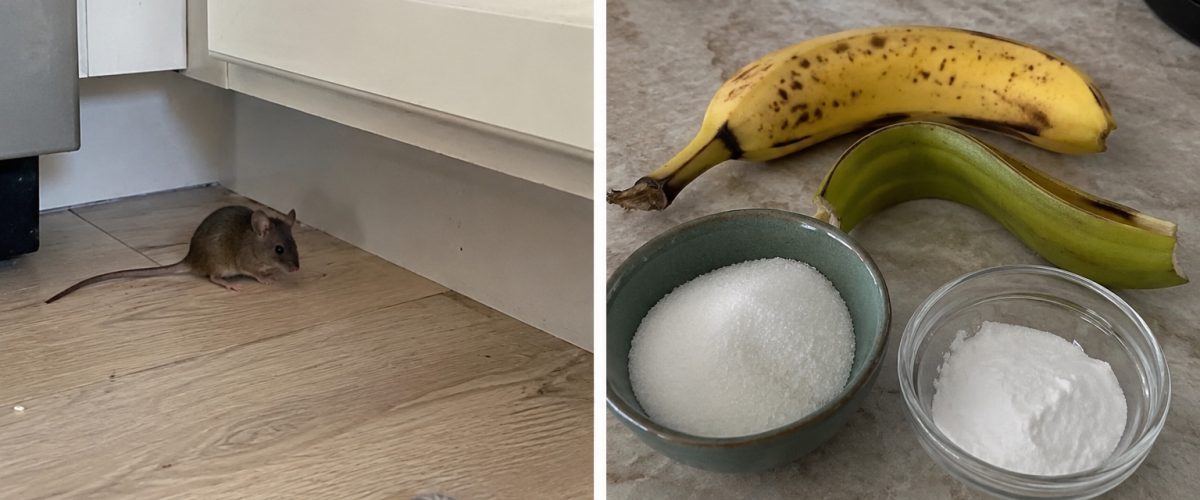
Scratching behind the refrigerator and a cockroach crossing the floor call for a plan, not a bowl of fruit left in the dark. Rats and cockroaches are different pests with different habits. A useful response identifies what is present, protects food, closes suitable entry points, and uses control methods intended for the animal or insect involved.
Ripe banana, green banana peel, sugar, and baking soda do not form a dependable overnight treatment for both pests. Food disappearing from a homemade bait only shows that something may have eaten it; it does not prove the animal was controlled or that the home is clear.
Identify the signs before setting anything out
Look for gnawed packaging, droppings, greasy rub marks, insect egg cases, or actual sightings. Take photographs from a safe distance and note the location. Do not reach blindly behind appliances or move a connected cooker without understanding its services and stability.
If you find rodent droppings, do not sweep or vacuum them dry. Follow appropriate public-health cleanup guidance using gloves and a suitable disinfectant before wiping up contamination. Extensive contamination, inaccessible nests, or uncertainty about safe cleanup are good reasons to seek professional help.
Protect the food first
Discard food that may have been contaminated or chewed. Move unaffected dry goods into sound, closed food-storage containers. Wipe sticky residue from jars and clean the cupboard before putting items back. Check pet-food storage as well as the family’s cereal and flour.
Keep rubbish contained and remove food waste regularly. Clean the bin’s rim and base, not just the visible lid. Avoid leaving homemade fruit baits around the kitchen, where they can spoil, attract other insects, and become another food source to manage.
Remove the easy shelter
Reduce cardboard clutter and inspect quiet storage corners. Keep necessary items organized so the floor and wall edges remain visible. A crowded space is harder to clean, monitor, and treat without disturbing a hidden animal.
Repair leaks and dry persistent wet areas. Check the cabinet beneath the sink and the accessible area around appliance water connections. Do not remove an animal’s needed drinking water; instead, manage spilled food, clean feeding areas, and address unwanted water elsewhere.
Use a rodent-specific approach
For confirmed rats or mice, select traps or other control products designed for that species and the intended indoor setting. Follow every placement and checking instruction. Keep trapping devices away from children, pets, and places where a person could accidentally touch the mechanism.
If rodenticide is used, choose an appropriate labeled product in the required protective bait station and follow local rules and directions. Do not mix poisons into banana or another food yourself. Misuse can harm animals other than the intended pest and create risks beyond the kitchen.
Inspect entry points as part of the plan. Gaps around doors, pipes, and damaged building materials may need repair with suitable materials. Do not block ventilation or seal an unknown service opening. A professional can help when access routes are difficult to locate or repair safely.
Handle cockroaches separately
Use suitable monitoring traps to locate cockroach activity. Number the monitors and write down where catches occur. This gives you a clearer picture than scattering bait in every room and then forgetting where it was placed.
When treatment is necessary, use products labeled for cockroaches and follow their directions around food and occupied areas. Keep sprays away from bait placements unless the instructions allow the combination. Clean up competing food sources so the control plan is not undermined by crumbs and spills.
Make a simple household action sheet
- Record the pest signs, dates, and locations.
- List food-storage problems, leaks, and gaps that need attention.
- Mark every monitoring or control device on a rough room plan.
- Record product names and keep the original instructions.
- Check progress at the recommended intervals and arrange help if activity continues.
Share the practical tasks with everyone in the home. One person sealing food will have limited effect if another leaves rubbish open overnight. Consistency makes it easier to see whether the problem is improving and which access points still need work.
Know when the problem is larger than one kitchen
Repeated rodent sightings, signs in several rooms, or activity in a shared building may require coordinated professional control. Contact the property manager where relevant. The source may extend into service spaces, neighboring units, or outside areas that cannot be addressed with one indoor device.
Keep the inspection record after the first treatment. A quiet night does not prove permanent elimination, and new entry routes can develop later. Continue food storage and maintenance habits even when the visible activity falls.
Does this really work?
Identification, food protection, sanitation, entry-point repair, and correctly used pest-specific controls can reduce rodents and cockroaches. A banana, sugar, and baking-soda bait does not reliably eliminate either problem overnight, and disappearance of the food is not proof of success. Treat rats and cockroaches as separate control tasks, monitor the result, and involve a qualified professional when activity persists or safe access is difficult.


