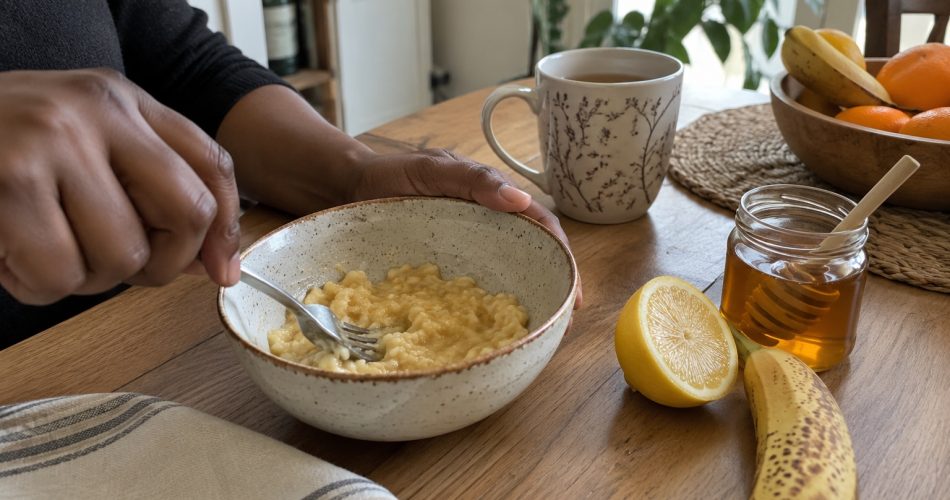
A soft banana mixture may be easy to eat when you feel unwell, but it does not remove phlegm from the lungs or cure a cold or flu. Honey may soothe a cough for some people, while lemon is mainly a flavor choice here. Do not give honey to a baby under one year old. Breathing difficulty, chest pain, coughing blood, or rapid deterioration needs medical attention rather than another spoonful.
Use this preparation as an optional food for someone who can swallow safely and tolerates the ingredients. There is no established three-day course that clears a chest infection, and a persistent cough should not be judged by whether a sweet mixture temporarily feels pleasant.
Keep the ingredients simple
For an adult food serving, choose a ripe banana, a small amount of lemon juice to taste, and a little honey if desired. The amounts are culinary choices, not medicinal doses. You do not need a full lemon or a thick layer of honey to make the preparation useful as a snack.
Use sound fruit and clean utensils. Wash the lemon before cutting it and remove seeds from the juice. Avoid ingredients that you know cause an allergy or discomfort. If swallowing is difficult or unsafe, seek advice instead of trying a thicker homemade mixture.
Prepare one fresh bowl
- Peel the banana and place it in a clean bowl.
- Mash it with a fork until the texture is comfortable for you.
- Add a small squeeze of lemon only if you tolerate acidic foods.
- Stir in a little honey for sweetness if appropriate.
- Eat a comfortable portion as food, without forcing yourself to finish it.
You can leave out the lemon if it stings a sore throat or triggers reflux. Plain mashed banana is also an option. Changing the taste does not break a special treatment formula because this mixture is not a standardized medicine.
Make only what you expect to eat. Refrigerate leftovers promptly in a clean covered container and follow ordinary food-storage guidance. Do not leave the mixture beside the bed for repeated use over several days.
Understand the honey limit
Honey must not be given to infants younger than twelve months because of the risk of infant botulism. Mixing it with banana, lemon, or warm water does not remove that restriction. For an older child, check that the food texture and ingredients are appropriate and ask for advice about concerning symptoms.
Honey is still a source of sugar. If you manage diabetes or follow a specific meal plan, account for the banana and honey as food. Do not assume that calling something a remedy makes its carbohydrate content irrelevant.
Make comfort the modest goal
A soft food or a comfortable drink can make a rest period more pleasant, but it does not show what is happening inside the lungs. Mucus color, a temporary change in coughing, or a cooling sensation is not enough to establish a diagnosis or prove that an infection has cleared.
Rest as needed, drink appropriate fluids, and avoid smoke. Continue prescribed treatment, including inhalers, as directed. Ask a pharmacist before combining cough products, particularly for a child or someone taking other medicines.
Do not wait on a three-day promise
If you may have flu and are at higher risk of complications, contact a clinician promptly. Antiviral treatment can be time-sensitive, and a homemade preparation should not delay that conversation. Mention pregnancy, chronic conditions, immune suppression, and when symptoms began.
Seek advice for a cough lasting more than three weeks or symptoms that worsen rather than improve. Get urgent help for difficulty breathing, chest pain, blood in the cough, severe weakness, or an inability to maintain fluids. A familiar kitchen ingredient cannot make those signs safe to ignore.
Keep useful information nearby
Write down when the cough started, whether you have fever, and what medicines you have taken. Note whether symptoms interfere with sleep, eating, or ordinary movement. This information helps a clinician assess the situation more than a record of how many spoonfuls of banana you ate.
Keep medicine packaging and follow the stated doses. Do not add extra doses because you are also using a food preparation, and do not assume different cold products contain different active ingredients. A pharmacist can help avoid accidental duplication.
Separate recovery from the recipe
Symptoms can change naturally over time, so improvement after eating the mixture does not prove that it caused recovery. Enjoy the snack if it suits you, but keep watching the overall pattern. A comfortable hour is welcome without being evidence of a cure.
When appetite returns, move back toward a varied ordinary diet as tolerated. There is no need to continue a sweet preparation as a preventive course or to give it to everyone in the household.
Does this really work?
Banana can provide a soft food, and honey may offer limited cough soothing for some people old enough to have it. The banana, lemon, and honey mixture has not been established as a three-day treatment that clears lung phlegm or eliminates flu. Never give honey to infants under one, use the ingredients as food rather than a prescription, and seek timely care for persistent or serious symptoms.


