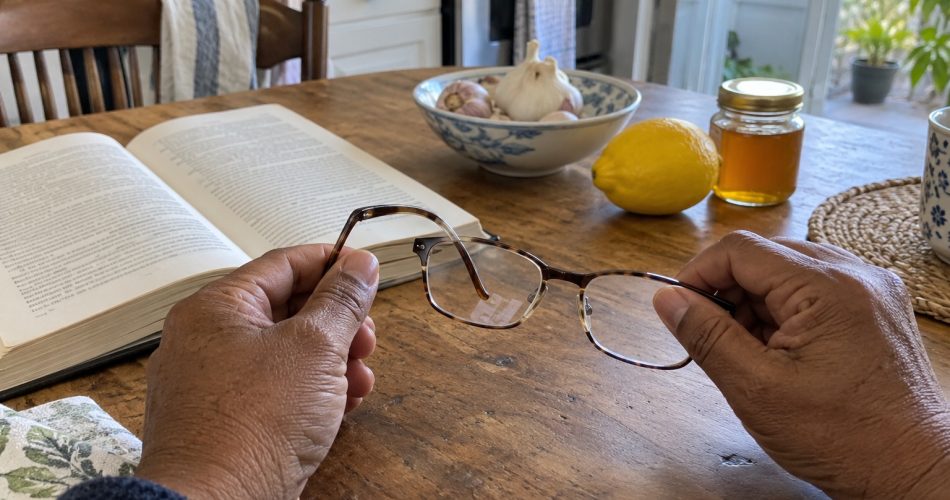
Garlic, olive oil, lemon, and honey cannot make cataracts disappear or restore sight without appropriate eye care. Do not put these ingredients into the eyes or apply a homemade mixture around them as a treatment. A cataract involves clouding of the eye’s natural lens, and surgery is the established way to remove it. The timing of surgery depends on an eye assessment and how vision affects everyday life.
These familiar foods belong in the kitchen, not in an eye-drop bottle. A bedtime schedule does not turn them into a cataract medicine. If vision is changing, the useful next step is an eye examination and a clear plan for protecting daily function.
Confirm the reason vision has changed
Blurring, glare, difficulty reading, or trouble seeing at night can have more than one cause. Do not diagnose cataracts solely from age or a description that sounds familiar. An eye-care professional can examine the eyes and determine what needs attention.
Sudden vision loss, new severe eye pain, or an abrupt change should be treated urgently rather than assumed to be a slowly developing cataract. Seek emergency or urgent eye care as appropriate. Do not spend the evening trying a food mixture first.
Keep all four ingredients in their food role
Garlic, olive oil, lemon juice, and honey can be used in ordinary cooking when they suit your diet. Eating them does not establish a cataract treatment, and there is no reliable bedtime dose that clears the lens. Do not replace an appointment, prescribed eye medicine, or planned procedure with the mixture.
Kitchen preparations are not sterile eye products. Acidity, plant material, and other components can irritate or injure the eye. Do not transfer food liquids into an old eye-drop bottle, since that can make accidental use more likely.
If a substance gets into the eye, obtain prompt poison-control or medical advice and follow appropriate first-aid instructions. Keep the product or ingredient information available. Do not add another household substance to try to neutralize it.
Prepare for the eye appointment
Make a short list of the activities that have become harder: reading a label, recognizing faces, working at a screen, or coping with headlights. Specific examples help explain the effect on daily life more clearly than simply saying everything looks worse.
Bring your current glasses, a medicine list, and details of previous eye treatment. Mention any supplements or homemade preparations you have used. If your vision makes travel difficult, arrange help getting to and from the appointment rather than driving when you cannot see safely.
Ask practical questions
- What is causing the vision change, and is a cataract the main problem?
- Would an updated glasses prescription or changes at home help for now?
- How should the condition be monitored?
- When would surgery be worth considering for my daily activities?
- What symptoms should lead me to seek help sooner?
Write down the answers or ask for written instructions. It is easy to forget details during an appointment, particularly when a new diagnosis is worrying. A clear next step is more useful than searching for an increasingly complicated home preparation.
Make the home easier to use
Improve task lighting where you read or prepare food, while avoiding uncomfortable glare. Keep walkways clear and place frequently used items in consistent locations. Check that stairs and changes in floor level are easy to see.
Use larger text or appropriate accessibility settings on devices if they help. Ask for assistance with small labels rather than guessing medicine instructions. These adjustments support daily life; they do not remove a cataract, so continue the recommended follow-up.
Discuss treatment without rushing or delaying
Not every cataract requires immediate surgery, but delaying assessment because of a promised food cure can leave avoidable difficulties unaddressed. An eye specialist can explain the likely benefits, risks, alternatives for the present stage, and what recovery would involve.
If surgery is planned, follow the clinic’s preparation and aftercare instructions. Ask which medicines to continue and what help you may need afterward. Do not apply homemade drops alongside prescribed treatment or change the care plan without checking.
Keep claims separate from personal outcomes
A story about someone seeing better after a bedtime recipe does not confirm that a cataract disappeared. Vision can seem different with lighting, glasses, fatigue, and other factors. Only appropriate examination can establish the condition and its course.
Do not use a bright-room reading test at home as proof that professional care is unnecessary. Keep appointments and report meaningful changes, especially new symptoms. Food can remain enjoyable without carrying an impossible promise about restoring sight.
Does this really work?
The garlic, olive oil, lemon, and honey preparation has not been established as a cataract cure, whether eaten at bedtime or applied around the eyes. Never put it into the eyes. Surgery is the established way to remove a cataract, while the timing and supporting measures depend on an eye examination. Protect vision by seeking appropriate assessment and following a clear care plan rather than relying on an unsupported restoration claim.


