Recurring stomach pain deserves an explanation, and raw potato juice with olive oil cannot guarantee that gastritis or ulcers will never return. These conditions can need specific testing and treatment. Do not replace prescribed care with a fasting drink. Vomiting blood, vomit that resembles coffee grounds, black tarry stools, fainting, or sudden severe abdominal pain requires urgent medical help.
Potatoes and olive oil can be ordinary meal ingredients. That is a different role from healing an ulcer or removing its cause. Build your home routine around food you tolerate, useful symptom notes, and the treatment plan recommended for your situation.
Find out what is causing the discomfort
Burning or aching in the upper abdomen does not by itself establish an ulcer. Gastritis, reflux, medication effects, and other problems can produce overlapping symptoms. A clinician may ask about timing, medicines, previous infections, and signs that need further investigation.
Common ulcer causes include infection with Helicobacter pylori and use of certain anti-inflammatory pain medicines. Treatment depends on the cause and may involve acid-reducing medicine, antibiotics for confirmed infection, or changes to a medicine plan. Do not stop prescribed aspirin or another essential medicine without medical advice.
Leave the raw-juice routine out
Grating a raw potato and squeezing out its liquid does not produce a standardized treatment. Adding olive oil does not establish a protective coating that cures an ulcer. There is no reliable household dose, fasting schedule, or number of days that guarantees permanent relief.
Avoid green, sprouted, bitter, or spoiled potatoes, which can contain higher levels of naturally occurring toxins. Cooking is not a reason to use a clearly unsuitable potato. Choose sound food and discard questionable pieces rather than trying to extract a supposedly medicinal part.
Use the ingredients as a simple cooked meal
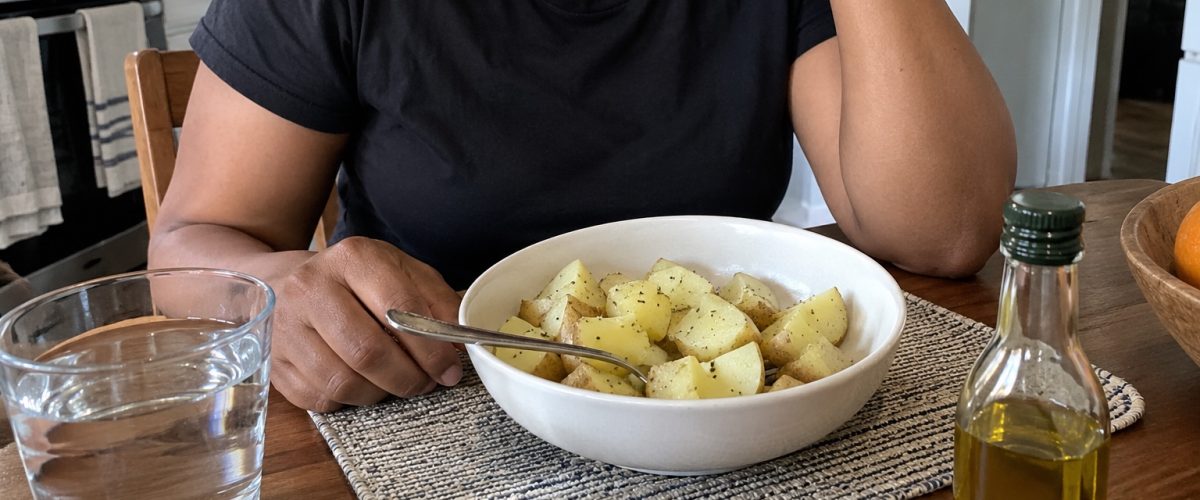
If potatoes suit your usual diet, prepare a modest serving as food. Wash a sound potato, peel it if preferred, cut it into manageable pieces, and cook it thoroughly by a familiar safe method. Handle hot water and pans carefully and allow the food to cool to a comfortable eating temperature.
A small amount of olive oil can be added for flavor if you tolerate it. This is a culinary choice, not a required treatment ratio. You can serve the potato alongside other foods that fit your appetite and care plan rather than making it the only thing you eat.
There is no need to eat it before breakfast, swallow oil separately, or force a portion when you feel nauseated. If a food makes symptoms worse, note that and discuss persistent difficulties. A meal should support ordinary nourishment, not become a test you feel obliged to complete.
Make a useful symptom note
- Write down where the discomfort occurs and how it feels in your own words.
- Note when it starts, how long it lasts, and whether it relates to meals or nighttime.
- Record nausea, vomiting, appetite changes, and any concerning stool changes.
- List medicines, supplements, and over-the-counter painkillers you use.
- Bring the record to a medical appointment instead of relying on memory.
Do not turn the notebook into an increasingly restrictive diet without guidance. One uncomfortable meal does not prove every ingredient caused harm. Look for patterns while allowing a professional to assess the wider picture.
Follow treatment through
If you receive a treatment plan, ask how and when to take each medicine and what to do if side effects occur. Complete prescribed courses as directed. Feeling better before the end does not automatically mean the underlying cause has been addressed.
Ask whether follow-up testing is needed, especially after treatment for H. pylori. Keep the appointment and medication instructions together so they are easy to find. A homemade drink should not become a reason to skip a check that confirms whether treatment worked.
Keep daily meals manageable
Choose portions and foods that you tolerate rather than chasing a universal ulcer menu. Avoid repeatedly testing ingredients that clearly worsen your symptoms. If eating has become difficult or you are losing weight unintentionally, seek help rather than gradually replacing meals with liquids.
Plan simple meals and keep safe leftovers refrigerated promptly. A small set of familiar foods can reduce the effort of cooking when you feel uncomfortable. It should remain varied enough to support nutrition unless a clinician has advised a specific temporary restriction.
Respond to change instead of waiting it out
Arrange assessment for persistent or recurring pain, ongoing vomiting, difficulty swallowing, unexplained weight loss, or symptoms that worsen despite treatment. Seek urgent help for bleeding signs, fainting, or severe sudden pain. These are not situations for waiting to see whether another fasting preparation works.
Take your medicine list and symptom notes with you. Clear information can help the clinician decide what needs attention and whether the current plan should change.
Does this really work?
Cooked potatoes and olive oil can be meal ingredients when tolerated, but raw potato juice mixed with oil has not been established as a cure for gastritis or ulcers. It cannot promise that symptoms never return. Lasting improvement depends on identifying and treating the cause, following the care plan, and responding promptly to warning signs. Keep the ingredients in their food role rather than using them to replace medical treatment.


